Faris Adani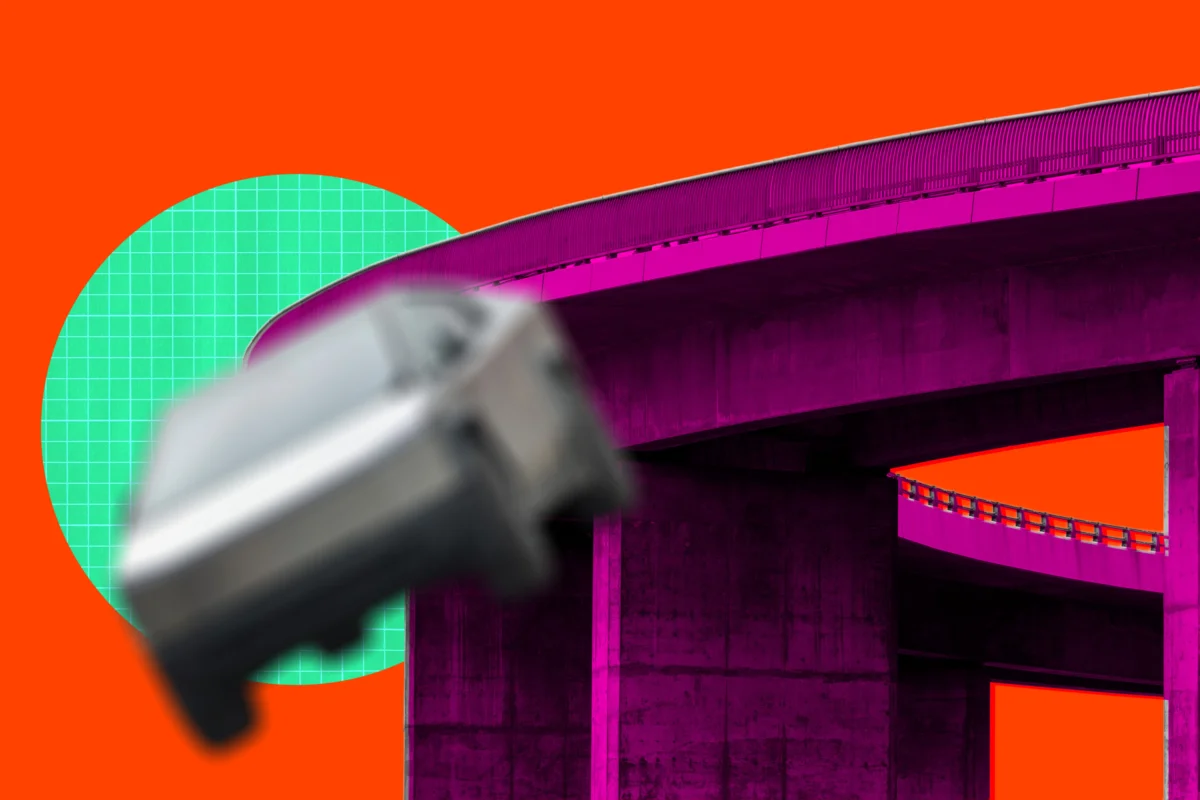
Futurism
Sign up to see the future, today
Can’t-miss innovations from the bleeding edge of science and tech
Woman Sues Tesla After Cybertruck Allegedly Tries to Drive Her Off Houston Bridge
A groundbreaking lawsuit accuses Tesla’s “Full Self-Driving” system of catastrophic failure, leading to a violent crash and severe injuries on a Houston overpass.
In a fresh challenge to the ambitious yet often criticized promises of autonomous vehicle technology, a Houston woman has filed a lawsuit against Tesla, alleging her Cybertruck, operating under its “Full Self-Driving” (FSD) feature, dangerously veered towards the edge of a bridge, causing a severe crash and significant injuries. The incident, which reportedly occurred in August 2025, casts a stark light on the ongoing debate surrounding the capabilities and safety of Tesla’s self-driving systems, which CEO Elon Musk has long touted as revolutionary but critics argue are far from infallible. The lawsuit, first reported by Chron and the Austin American-Statesman, adds another critical chapter to the regulatory and public scrutiny faced by the electric vehicle giant.
A Terrifying Ordeal on a Houston Overpass
The harrowing event unfolded in August 2025 when Justine Saint Amour, the owner of a distinctive Tesla Cybertruck, engaged the vehicle’s “Full Self-Driving” (FSD) system while navigating a Houston overpass. According to the lawsuit, the futuristic pickup truck, known for its angular stainless-steel exoskeleton, “suddenly and without warning” accelerated aggressively towards the perilous edge of the structure. Specifically, the vehicle was ascending an overpass ramp on the 69 Eastex Freeway, approaching a critical curve that connects to a complex Y-shaped interchange, a common feature in urban highway networks that demands precise navigation.
Dashcam footage, crucial evidence in the case and widely circulated since the lawsuit’s filing, paints a chilling picture of the moments leading up to the collision. The video shows the Cybertruck increasing its speed as it climbed the ramp. However, instead of decelerating and smoothly following the intended rightward curve of the road, the vehicle maintained its speed, barreling straight ahead. It ploughed through a series of traffic cones designed to separate lanes, demonstrating a clear failure to perceive or react to the roadway’s geometry. The trajectory culminated in a violent impact with a concrete sidewall, sending the truck into a chaotic spin and scattering pieces of its hood across the freeway. The lawsuit dramatically asserts that the Cybertruck “attempted to drive straight ahead into the concrete barrier and the freeway below,” suggesting a catastrophic misinterpretation of the driving environment by the FSD system.
A Houston driver was in a Cybertruck in August 2025 when the Autopilot-controlled vehicle drove straight into a concrete barrier on a Y-shaped overpass on 69 Eastex Freeway. The vehicle was expected to follow a curve to the right, but when it failed to do so, she disengaged the… pic.twitter.com/LopI3y5elg
— Austin Statesman (@statesman) March 6, 2026
Severe Injuries and a Fight for Accountability
Ms. Saint Amour recounted her desperate attempt to regain control of the vehicle. Perceiving the truck accelerating too rapidly up the ramp and failing to adjust for the curve, she tried to disengage FSD and manually steer. However, the rapidity and unexpected nature of the incident left her with precious little time to react effectively, making her intervention insufficient to prevent the crash. The force of the impact was severe, inflicting “substantial” injuries to her neck, shoulders, and back. Medical diagnoses following the crash revealed two herniated discs in her lower back and another in her neck, sprained tendons in her wrist, and concerning numbness and weakness in her right hand. These injuries highlight the immediate physical trauma endured and underscore the potential long-term health consequences of such a high-speed collision, requiring extensive medical treatment and rehabilitation.
The lawsuit brought by Saint Amour is not merely a claim for personal injury; it’s a direct challenge to Tesla’s marketing and engineering philosophy. It accuses the company of negligence, product liability, and, crucially, false advertising regarding the capabilities of its “Full Self-Driving” system. The legal filing emphasizes that despite its name, the FSD mode is fundamentally incapable of truly autonomous driving and necessitates constant human supervision, a reality often downplayed by Tesla’s public statements and CEO Musk’s persistent declarations of impending full autonomy.
Elon Musk’s Vision vs. Reality: The “Vision-Only” Debate
This incident is the latest in a series of alarming events that have consistently called into question the reliability and safety of Tesla’s advanced driver-assistance systems. At the heart of much of this controversy lies Elon Musk’s steadfast commitment to a “vision-only” approach for Tesla’s self-driving technology. Unlike many competitors in the autonomous vehicle space, such as Waymo and Cruise, which heavily integrate a suite of sensors including LiDAR (Light Detection and Ranging), radar, and ultrasonic sensors, Tesla primarily relies on an array of high-resolution cameras combined with sophisticated neural networks to perceive and interpret the driving environment.
Musk has famously dismissed LiDAR as an “expensive crutch,” arguing that human drivers navigate effectively with just their eyes and brains, and therefore, a sufficiently advanced AI system, combined with cameras, should be able to replicate this. However, critics, including many engineers and safety advocates, argue that relying solely on cameras introduces significant vulnerabilities, particularly in challenging conditions like adverse weather (heavy rain, fog), low light, or situations where visual cues are ambiguous or obstructed by glare. The lawsuit echoes these technical criticisms, stating, “While engineers at Tesla recommended the super-human vision of LiDAR be included for self-driving vehicles, and competitors like Waymo and Cruise relied heavily on LiDAR, Musk chose instead to rely only upon cheap video cameras.” This choice, the suit implies, compromises safety in favor of cost-saving and an ideological adherence to a specific technical pathway.
Intensifying Regulatory Scrutiny and Legal Repercussions
The dubious capabilities of Tesla’s self-driving systems have not gone unnoticed by government regulators, leading to escalating scrutiny. The National Highway Traffic Safety Administration (NHTSA), the federal agency responsible for vehicle safety, has launched multiple probes into Tesla’s Autopilot and FSD systems following numerous crashes, some of them fatal. One notable investigation was initiated last year after a Tesla running FSD struck and killed an elderly pedestrian on the side of the road. Dashcam footage from that incident revealed a critical flaw: the vehicle’s front camera had been temporarily blinded by direct sunlight, preventing it from detecting the pedestrian. This specific failure highlights a potential limitation of the vision-only system in real-world, dynamic lighting conditions, where human drivers might instinctively squint or adjust their vision.
Beyond federal investigations, Tesla has also faced legal challenges on the state level. The California Department of Motor Vehicles (DMV) filed a lawsuit against Tesla for false advertising, specifically targeting the “Full Self-Driving” moniker. The DMV contended that the name misleadingly implies a level of autonomy that the system does not possess, requiring drivers to be constantly vigilant and ready to intervene. In response to this pressure, Tesla subtly modified its branding, appending “(Supervised)” to “Full Self-Driving” – a tacit acknowledgment of the system’s current limitations. However, the legal battle continues, with Tesla filing a counter-suit against the California DMV, seeking to reverse the false advertising ruling and defend its branding choices.
A Troubling Record: Accidents, Fatalities, and Financial Penalties
The Cybertruck incident in Houston is not an isolated event but rather another entry in a growing ledger of mishaps and serious accidents linked to Tesla’s driver-assistance technologies. These incidents range from minor collisions to tragic fatalities, drawing significant public concern and legal action. In one particularly high-profile case, Tesla was found partially responsible for the death of a 22-year-old woman who was struck by a Tesla operating on Autopilot, FSD’s predecessor. A judge subsequently ordered Tesla to pay a staggering $243 million to the woman’s grieving family, a verdict that sent shockwaves through the autonomous vehicle industry and underscored the profound legal and financial liabilities associated with such technology.
Other documented cases include instances where Tesla vehicles on FSD have driven into barriers, veered into wrong lanes, or exhibited “phantom braking” – suddenly braking without an apparent reason, often in the absence of an obstacle. Such occurrences not only pose dangers to Tesla occupants but also to other road users, raising fundamental questions about the safety validation processes for these advanced systems before their widespread deployment on public roads. Critics argue that Tesla’s approach amounts to using its customers as beta testers for technology that is still in its experimental stages, with potentially life-threatening consequences.
The Road Ahead: Trust, Technology, and the Future of Autonomy
The lawsuit filed by Justine Saint Amour encapsulates the core tension at the heart of Tesla’s self-driving ambitions: the gap between ambitious promises and current technological reality. Bob Hilliard, Saint Amour’s attorney, articulated this sentiment clearly in a statement to Chron: “This company wants drivers to believe and trust their life on a lie: that the vehicle can self-drive and that it can do so safely. It can’t, and it doesn’t.” This direct challenge to Tesla’s narrative highlights the erosion of consumer trust that can result from perceived overpromises and underperformance, especially when safety is at stake.
As the autonomous vehicle industry continues to evolve, incidents like the Cybertruck crash serve as critical reminders of the immense responsibility involved in developing and deploying such transformative technology. The outcome of Saint Amour’s lawsuit, alongside ongoing regulatory investigations, will undoubtedly have significant implications not only for Tesla but for the broader future of autonomous driving, shaping public perception, regulatory frameworks, and the very definition of what constitutes “self-driving” safety on our roads. The balance between pushing innovation and ensuring absolute safety remains the paramount challenge.