Faris Adani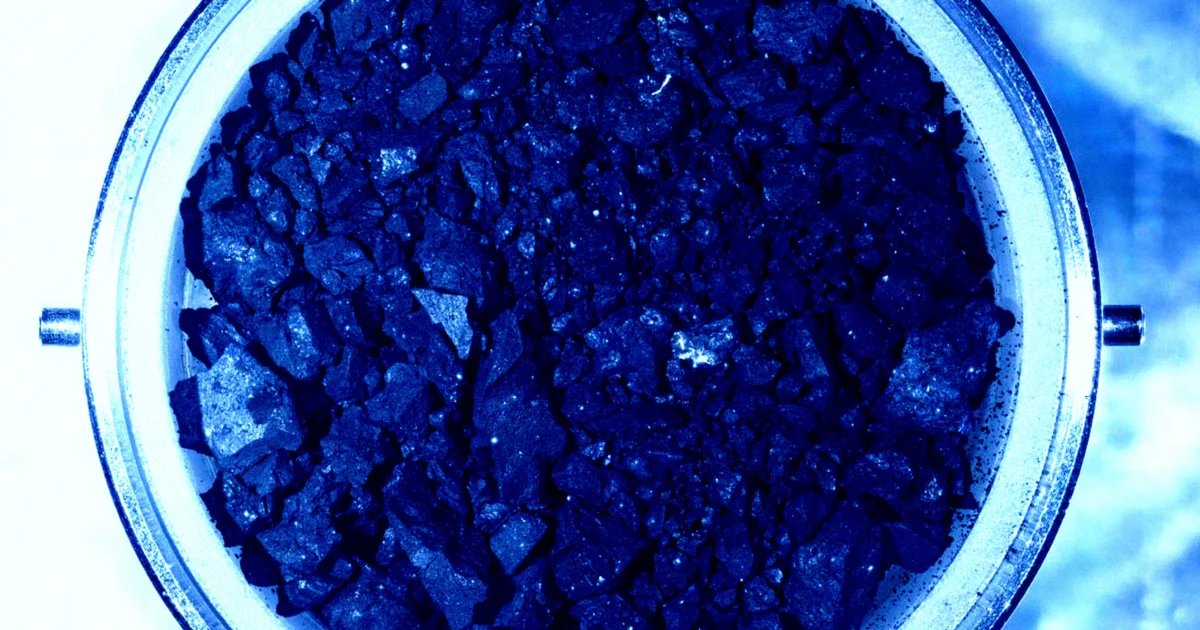
The recent revelation from the Hayabusa2 mission samples of asteroid Ryugu marks a monumental stride in astrobiology, confirming the presence of all five primary nucleobases – the fundamental chemical units that construct DNA and RNA, the very blueprint of life on Earth. This profound discovery, published in the prestigious journal Nature Astronomy, significantly reinforces the long-standing theory that extraterrestrial bodies, such as asteroids and comets, may have played a crucial role in seeding our planet with the essential ingredients for life billions of years ago. Far from being inert space rocks, these celestial wanderers appear to be veritable cosmic delivery trucks, carrying the raw materials that underpin biological existence across the vast expanse of the solar system.
The journey to this groundbreaking insight began in June 2019, when the meticulously engineered Japanese spacecraft Hayabusa2 executed a daring maneuver, touching down on the rugged surface of Ryugu. This particular asteroid, a roughly 3,000-foot-wide diamond-shaped celestial body orbiting the Sun some 185 million miles from Earth, is classified as a C-type asteroid, rich in carbon and volatile compounds. Such asteroids are considered primordial remnants from the early solar system, having undergone minimal geological alteration since their formation. This makes them invaluable time capsules, preserving the conditions and chemical compositions of the nascent solar nebula.
Hayabusa2’s mission was not merely to observe but to interact. Following its initial contact, the spacecraft deployed a projectile, firing a metal bullet into Ryugu’s surface to dislodge pristine subsurface material. This ingenious method allowed the spacecraft’s "sampling horn" to collect uncontaminated samples, shielded from the harsh solar radiation and micrometeorite impacts that alter surface materials over eons. After a complex journey back to Earth, these exceedingly rare samples were delivered in December 2020, encased in a specialized capsule designed to maintain their pristine state. Since then, an international consortium of scientists has been meticulously analyzing every speck of the returned material, driven by the hope of unraveling the mysteries of planetary evolution and, more profoundly, the genesis of life itself.
The latest findings, spearheaded by researchers in Japan including lead author Toshiki Koga from the Japan Agency for Marine-Earth Science and Technology and co-author Yasuhiro Oba from Hokkaido University, represent a pinnacle of this analytical effort. Through sophisticated analytical techniques, likely involving advanced liquid chromatography-mass spectrometry, the team identified all five primary nucleobases: adenine (A), guanine (G), cytosine (C), thymine (T), and uracil (U). These compounds are pivotal. In DNA, adenine pairs with thymine, and guanine with cytosine, forming the iconic double helix. In RNA, uracil replaces thymine, playing a crucial role in gene expression and protein synthesis. The detection of all five in Ryugu’s samples is not just a scientific curiosity; it’s a profound statement about the chemical complexity present in the early solar system and the potential for life’s precursors to form extraterrestrially.
This discovery significantly bolsters the panspermia hypothesis, or more specifically, exogenesis, which posits that life or its essential building blocks originated elsewhere in the universe and were transported to Earth. In this scenario, asteroids and comets, bombarded by cosmic radiation and stellar winds, might have served as natural chemical reactors, synthesizing complex organic molecules. Subsequently, through impacts with early Earth, these bodies could have delivered a substantial inventory of carbon-based compounds, including amino acids, sugars, and crucially, nucleobases. On a young Earth, still tectonically active and rich in hydrothermal vents and volcanic activity, these extraterrestrial components could have then combined with terrestrial elements to spark the intricate chain of reactions that ultimately led to the first self-replicating molecules and, eventually, living cells.
While the presence of these nucleobases on Ryugu is immensely exciting, researchers are quick to clarify its implications. As Toshiki Koga emphasized, "this does not mean that life existed on Ryugu." The asteroid itself is a barren, airless body, utterly inhospitable to life as we know it. Rather, "their presence indicates that primitive asteroids could produce and preserve molecules that are important for the chemistry related to the origin of life." This distinction is critical: Ryugu is a repository of building blocks, not a cradle of life. The conditions necessary for the assembly of these molecules into functional biological systems, such as the presence of liquid water for extended periods, suitable energy sources, and protective environments, were likely unique to early Earth, or potentially other planetary bodies.
The Ryugu findings gain even greater weight when considered alongside parallel discoveries from another asteroid sample return mission. Just last year, NASA scientists announced that dust samples from asteroid Bennu, collected by its OSIRIS-REx spacecraft in October 2020, similarly contained a rich array of organic compounds, including amino acids and the requisite nucleobases. Bennu, another C-type asteroid, is thought to be a primitive body like Ryugu. The corroboration from two independent missions, sampling different asteroids, strongly suggests that the formation and preservation of these crucial organic molecules are not isolated anomalies but rather a widespread phenomenon throughout the solar system. This "ubiquity," as Yasuhiro Oba noted, is a powerful indicator that the raw ingredients for life were readily available across the early solar system, increasing the statistical probability of life emerging wherever conditions were favorable.
The implications extend beyond understanding Earth’s past. This knowledge profoundly informs our search for extraterrestrial life. If asteroids can readily form and transport these complex organic molecules, then other planetary bodies, especially those with subsurface oceans like Jupiter’s moon Europa or Saturn’s moon Enceladus, could have received similar deliveries. Coupled with their internal heat sources and the presence of liquid water, these icy moons become even more compelling candidates in the quest for life beyond Earth. The study of Ryugu and Bennu samples thus provides a tangible framework for interpreting data from future missions to these potentially habitable worlds.
Ongoing research into Ryugu’s samples will delve deeper, seeking to understand the precise chemical pathways through which these nucleobases formed in the harsh conditions of space. Scientists are also investigating the role of water-rock interactions within the asteroid, as evidence suggests the presence of hydrated minerals, indicating past or present water activity within Ryugu. This aligns with a previous finding from Ryugu samples that hinted at "flowing water" – more accurately, the alteration of minerals by water, suggesting a history of aqueous processes within the asteroid. Such processes are crucial for facilitating the chemical reactions that synthesize complex organic molecules.
Ultimately, the analysis of these minuscule fragments of a distant asteroid is helping to piece together one of humanity’s most profound questions: Where did we come from? The emerging picture is one where our solar system, far from being a sterile void, was a dynamic chemical laboratory. Asteroids acted as cosmic chemists, synthesizing and transporting the very building blocks that underpin all known life. As University of Alcala astrobiologist Cesar Menor Salvan, who was not involved in the study, aptly put it, we now have a "very clear idea of which organic materials can form under prebiotic conditions anywhere in the universe."
The findings from Ryugu underscore the immense value of sample return missions. Direct analysis of extraterrestrial material provides an unparalleled level of detail and certainty that cannot be achieved through remote sensing alone. As we continue to probe the secrets held within these ancient space rocks, the story of life’s origin becomes increasingly intertwined with the grand narrative of cosmic evolution. The samples from Ryugu are not just rocks; they are messengers from the dawn of our solar system, carrying the promise of a deeper understanding of our place in the universe and the remarkable cosmic journey that led to life on Earth. This quest, fueled by the dedication of scientists and the ingenuity of space exploration, continues to reveal that the origins of life are not confined to a single planet but are, perhaps, a universal phenomenon waiting to be fully discovered.