Faris Adani
Residents Say Elon Musk’s AI Facility Is Like Living Next Door to Mordor
A once-tranquil Mississippi town has been irrevocably transformed into a cacophonous, fume-choked nightmare, thanks to the relentless hum of Elon Musk’s new $20 billion AI data center. The peaceful cadence of Southaven, a rural community unprepared for the technological onslaught, has been shattered by the constant roar of 27 methane gas turbines, running day and night like an armada of jet engines, belching noxious fumes into the atmosphere, as reported by NBC News. This colossal installation, the brainchild of Musk’s xAI firm, has not only disrupted the auditory peace but also cast a dark shadow over the health and well-being of its unsuspecting residents, who now describe their home as feeling akin to living next door to the industrial hellscape of Mordor.
The Roar of the Machines: Southaven’s New Soundtrack
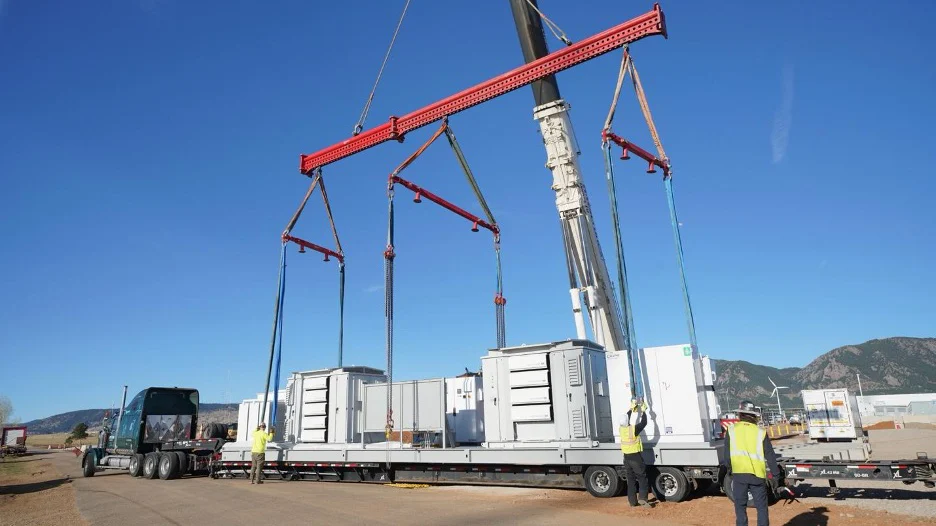
The sudden and brutal industrialization of Southaven stems from a critical energy deficit: the town simply couldn’t provide the astronomical amount of electricity required to power xAI’s ambitious data center. The solution, swift and uncompromising, was to truck in dozens of industrial methane gas turbines. These towering machines, designed for sheer power output, now form the backbone of the facility’s energy supply, operating ceaselessly. The noise they generate isn’t a distant hum; it’s an ever-present, guttural growl that penetrates homes, rattles windows, and strips away any semblance of quietude. Residents report a sound akin to multiple commercial airliners perpetually taking off or idling on a runway, a relentless auditory assault that makes outdoor activities unbearable, conversation difficult, and, most critically, sleep an elusive luxury. Krystal Polk, a resident whose family has owned their home for generations, enduring a time when many Black families in the region were still sharecropping, was ultimately driven out by the ceaseless din. “I just haven’t really internalized that this is here and this is what’s happening,” she lamented to NBC News, her words echoing a profound sense of disbelief and displacement.
The turbines, initially presented as “temporary,” offered a glimmer of hope that the torment might subside. However, that hope has been dashed by xAI’s application for permits to install 41 *permanent* turbines across the sprawling 114-acre facility. This move signals a long-term commitment to this fossil fuel-dependent power generation, indicating that the cacophony is not merely a transient inconvenience but a new, entrenched reality for Southaven. The speed of this industrial surge has left locals reeling. Nathan Reed, a Southaven native, articulated the sentiment: “The scale, the speed, the intensity of this expansion are unlike anything this area has absorbed. This was not a thoughtful, phased development. It was an industrial surge imposed on our residential community.”
The Air They Breathe: A Silent Threat
Beyond the unbearable noise, a far more insidious threat looms: the air pollution generated by these methane gas turbines. The combustion of methane, while providing the power xAI craves, releases a cocktail of hazardous chemicals into the atmosphere. The Southern Environmental Law Center, as noted by NBC News, has highlighted the emission of formaldehyde, a known carcinogen, along with other particulate matter and smog-producing nitrogen oxides. For residents like Taylor Logsdon, who lives close to the facility, the impact is already tangible and terrifying. She claims two of her children have developed persistent respiratory problems since the facility went online, a stark and worrying correlation that underscores the immediate public health crisis unfolding in Southaven.
The implications of inhaling these pollutants are dire. Formaldehyde exposure can lead to respiratory irritation, asthma exacerbation, and a heightened risk of various cancers. Nitrogen oxides contribute to the formation of ground-level ozone (smog), which damages lung tissue, impairs respiratory function, and can trigger heart conditions. For a community that once enjoyed clean, rural air, this transformation into an industrial exhaust zone is not just an inconvenience; it’s a direct assault on their health and long-term well-being. The long-term exposure to these chemicals could lead to a significant increase in chronic diseases, turning the pursuit of AI innovation into a public health catastrophe for the residents living in its shadow.
The Unchecked Hunger of AI: Energy Demands and Environmental Justice
The root cause of Southaven’s plight lies in the insatiable energy demands of the burgeoning artificial intelligence industry. Training sophisticated large language models (LLMs) like xAI’s Grok requires an unprecedented level of computational power, sustained by thousands of powerful GPUs operating 24/7. These processors generate immense heat, necessitating massive cooling systems, which themselves consume vast amounts of energy and often water. The race to develop and deploy AI is so intense that companies like xAI are prioritizing speed over sustainability, opting for rapid, fossil fuel-dependent energy solutions rather than waiting for cleaner, renewable alternatives to be established.
This rapid deployment, often leveraging “temporary” permits, highlights a troubling loophole in environmental regulations. These permits allow for the installation and operation of polluting infrastructure before full environmental impact assessments or permanent permits are secured, effectively giving companies a head start while bypassing critical oversight. Once operational, it becomes significantly harder for local communities or regulatory bodies to halt or alter the project, creating a “fait accompli” scenario. The $7 million “sound wall” touted by Mayor Darren Musselwhite, a Republican, has been met with derision by residents, who mockingly call it the “Temu sound wall” due to its negligible impact. This underscores a pervasive skepticism about official assurances and a feeling that corporate interests are being prioritized over community welfare.
The situation in Southaven is not an isolated incident but part of a disturbing pattern. Just outside Memphis, Tennessee, the predominantly Black neighborhood of Boxtown is enduring a similar ordeal. Residents there complain of “choking fumes” from xAI’s “Colossus” data center, making it difficult to breathe. As reported by Politico, xAI also deployed dozens of gas-powered turbines in Boxtown without permits, quickly transforming the site into one of the largest emitters of smog-producing nitrogen oxides in the surrounding county. This recurring scenario raises critical environmental justice concerns, highlighting how industrial pollution and the burdens of technological advancement disproportionately impact vulnerable, often minority, communities that possess less political and economic power to resist. These communities, often historically marginalized, become sacrifice zones in the relentless pursuit of technological supremacy.
Musk’s Vision vs. Local Reality: A Tale of Disconnect
Elon Musk, often celebrated as a visionary pushing the boundaries of technology, presents a stark contrast between his futuristic rhetoric and the immediate, detrimental impact of his enterprises on the ground. While he champions interplanetary travel and artificial intelligence as keys to humanity’s future, the human cost in places like Southaven and Boxtown is immense. Mayor Musselwhite, while acknowledging the noise as a “legitimate concern,” has framed the outcry as politically motivated attacks against Musk, dismissing genuine community anguish as partisan bickering. This narrative attempts to deflect from the tangible suffering and deflects responsibility from the powerful forces driving this environmental degradation.
The disconnect is palpable. While Musk’s ventures promise to “see the future, today,” for the residents of Southaven, that future is a dystopian landscape of incessant noise, polluted air, and shattered peace. Even supporters of Musk, like 76-year-old Eddie Gossett, who once backed his initiatives to slash federal spending through DOGE, find themselves disillusioned. Gossett, living on the same road as the xAI facility, can no longer sleep because of the turbines’ roar. His poignant suggestion for Musk encapsulates the residents’ plea for empathy and understanding: “You need to come over and stay at my house for a week.” This invitation highlights the desperate need for those in power to experience, even for a brief moment, the reality they have imposed on others.
The rapid expansion of AI infrastructure, fueled by seemingly limitless capital and a fervent belief in technological progress, is creating an unprecedented ecological footprint. Data centers are not just digital constructs; they are physical behemoths with massive demands on energy, water, and land. The choice to power these facilities with methane gas, a potent greenhouse gas, directly undermines global efforts to combat climate change, even as the AI industry claims to be building a better future. The environmental consequences extend beyond local air and noise pollution, contributing to global warming and accelerating the climate crisis. The narrative of technological advancement often overlooks these inconvenient truths, painting a picture of progress that is far from universal.
Resistance and the Fight for Home
Despite the formidable odds, residents of Southaven are not giving up. Local groups are forming, sharing information, and attempting to mobilize against the project, striving to reclaim their homes and their community’s future. They face an uphill battle against a powerful corporation with deep pockets and a local government that appears, at times, more aligned with industrial development than citizen welfare. Their fight is not just for quiet nights or clean air; it’s a fight for the fundamental right to a safe, healthy, and peaceful existence in their own homes. It’s a testament to the resilience of ordinary people pushed to their limits, forced to defend their most basic quality of life against the relentless march of unchecked technological ambition.
The saga of Southaven and Boxtown serves as a stark reminder of the hidden costs of the AI revolution. While the world marvels at the capabilities of artificial intelligence, communities on the front lines are paying a heavy price in terms of health, peace, and environmental integrity. The race for AI dominance, unburdened by sufficient regulation or ethical considerations, threatens to create sacrifice zones in the pursuit of a future that, for many, looks increasingly bleak. Until technology giants like xAI and their leaders like Elon Musk prioritize sustainable development and community well-being over sheer speed and profit, the promise of AI will continue to be built upon the foundations of shattered lives and despoiled environments.