isnaini azizah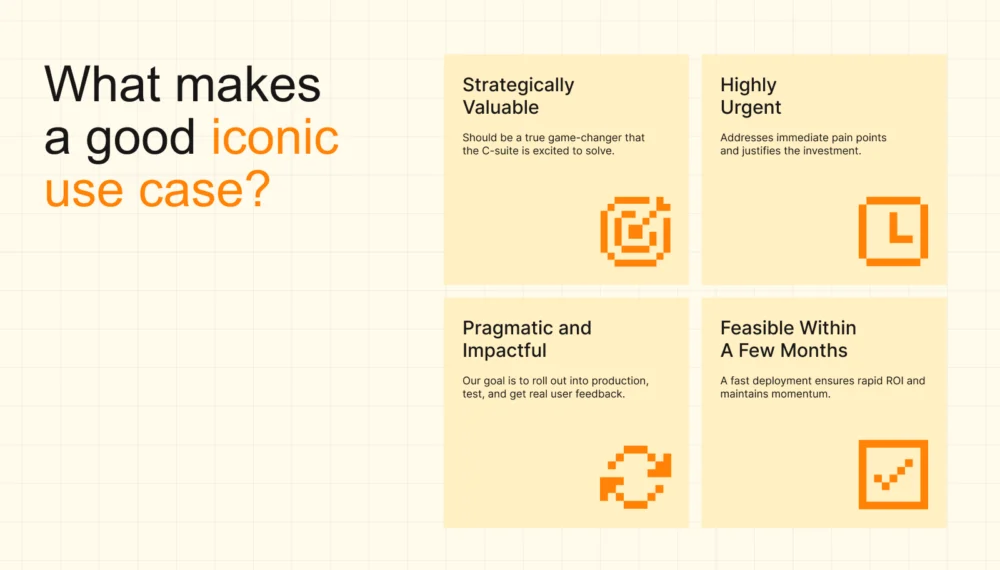
Many organizations, eager to capitalize on the generative AI revolution, found themselves rushing into pilot projects only to witness them falter, failing to deliver tangible value. This has shifted the corporate mindset; companies are now demanding measurable outcomes from their AI investments. The critical question then becomes: how can organizations strategically design AI systems for guaranteed success? At Mistral AI, our approach is rooted in deep collaboration with global industry leaders, co-designing bespoke AI solutions that tackle their most formidable challenges. Our partnerships, exemplified by enhancing customer experience productivity with Cisco, developing more intelligent vehicles with Stellantis, and accelerating product innovation with ASML, all begin with leveraging open frontier models. We then meticulously customize these AI systems to deliver impactful results, precisely tailored to each company’s unique objectives and pain points.
Our proven methodology hinges on the identification of an "iconic use case." This serves as the bedrock for any successful AI transformation, providing a clear blueprint for future AI initiatives. The selection of the right use case is not merely a matter of preference; it’s the decisive factor that distinguishes genuine, transformative progress from a protracted cycle of endless tinkering and testing.
Identifying an Iconic Use Case: The Strategic Pillars of AI Success
Mistral AI employs a rigorous framework, built upon four essential criteria, when evaluating potential use cases: strategic value, urgency, impact, and feasibility.
Firstly, a use case must possess strategic value. This means it needs to address a core business process or unlock a fundamentally new, transformative capability. It should transcend simple optimization, aiming instead for a paradigm shift that redefines competitive advantage. Crucially, a strategically valuable use case must be compelling enough to capture the attention and secure the enthusiastic buy-in of an organization’s C-suite and board of directors. Consider the distinction between an internal-facing HR chatbot, which, while beneficial, offers limited scope for innovation and is relatively straightforward to implement, and an externally facing banking assistant. This advanced assistant not only addresses customer queries but also empowers users to perform critical actions like blocking cards, executing trades, and receiving personalized upsell and cross-sell recommendations. This is how a basic customer support tool evolves into a powerful, revenue-generating strategic asset.
Secondly, the most promising use case exhibits a high degree of urgency. It must address a business-critical problem that is causing immediate concern and demanding attention from stakeholders. The implementation of such a project will inevitably consume valuable time and resources from individuals across the organization. Therefore, it needs to be significant enough to justify this investment and directly alleviate pressing pain points for business users.
Thirdly, the use case must be pragmatic and impactful. Our shared objective from the outset of any engagement with our clients is to deploy solutions into real-world production environments swiftly. This allows for immediate testing with actual users and the rapid collection of invaluable feedback. All too often, AI prototypes languish in the "graveyard" of impressive but impractical demonstrations, deemed unsuitable for customer deployment and lacking the necessary infrastructure for ongoing evaluation and improvement. Mistral AI actively collaborates with clients to ensure that prototypes are not only stable enough for release but are also supported by robust governance frameworks and the requisite scaffolding for continuous enhancement.
Finally, the ideal use case is feasible. While numerous urgent projects might present themselves, selecting one that can deliver a rapid return on investment (ROI) is paramount for sustaining the momentum essential for continued growth and scaling. This translates to identifying projects that can be deployed into production within a three-month timeframe, with a functional prototype live in a matter of weeks. Getting a prototype into the hands of end-users as quickly as possible is vital for gathering feedback, confirming the project’s trajectory, and enabling necessary pivots.
Where Use Cases Fall Short: Avoiding Common Pitfalls
Navigating the complexities of enterprise environments and charting a clear path forward can be challenging. To effectively sift through the myriad of possibilities and pinpoint the ideal inaugural use case, Mistral AI conducts intensive workshops. These sessions are conducted in close collaboration with subject-matter experts and end-users, fostering a shared understanding and collective decision-making process. Representatives from various functional departments present their processes and articulate business cases that hold potential as initial use cases. Together, we collectively identify and agree upon the most promising candidate.
It is equally important to recognize types of projects that typically do not qualify as iconic first use cases:
- Moonshots: These are ambitious, high-stakes initiatives that may excite leadership but lack a clear, achievable pathway to a quick ROI. While they can be strategically sound and urgent, they often fall short on the critical requirements of feasibility and immediate impact.
- Future Investments: These represent long-term strategic plays that, while important, can afford to wait. They might be strategically aligned and feasible, but they generally lack the urgency and immediate impact needed for an initial AI push.
- Tactical Fixes: These are reactive "firefighting" projects that address immediate operational pain points but fail to drive significant, needle-moving progress for the business. While they may be urgent and feasible, they often lack the strategic vision and long-term impact necessary for a foundational AI initiative.
- Quick Wins: While valuable for generating initial momentum and demonstrating progress, these projects are often not transformative in nature. They might be impactful and feasible, but they typically don’t possess the strategic depth or urgency to set the stage for broader AI adoption.
- Blue Sky Ideas: These are conceptually groundbreaking initiatives that have the potential to be game-changers, but they require further maturity and development before becoming viable. While they can be strategic and impactful, they often fail to meet the immediate urgency and feasibility criteria for a first project.
- Hero Projects: These are high-pressure, often solitary initiatives that suffer from a lack of executive sponsorship or realistic implementation timelines. While they may be urgent and impactful, they frequently lack the strategic alignment and feasibility to be successful as a first AI endeavor.
Moving from Use Case Identification to Successful Deployment
Once a clearly defined and strategically aligned use case has been identified and validated as ready for development, the next critical phase is validation. This involves conducting an initial exploration and mapping of relevant data, identifying a suitable pilot infrastructure, and selecting the target deployment environment. This stage also encompasses agreeing upon a draft pilot scope, identifying the key participants for the proof of concept, and establishing a robust governance process to guide the initiative.
Following the successful completion of the validation phase, the process moves into the building phase. Organizations that partner with Mistral AI collaborate directly with our in-house applied AI scientists, who are at the forefront of developing our frontier models. This co-creation process ensures that the first solution is designed, built, and deployed collaboratively.
Throughout this building phase, our focus is on deep co-creation. This ensures a seamless transfer of knowledge and skills to the client organization, empowering them to achieve self-sufficiency in AI operations and innovation in the long term. The ultimate output of this phase is a fully deployed AI solution, complemented by empowered teams equipped to manage, maintain, and further develop AI initiatives independently.
The First Step is Everything: Laying the Foundation for AI Transformation
The success achieved with the initial "iconic use case" is not an endpoint but a powerful catalyst. It is imperative to leverage the momentum and the invaluable learnings derived from this first win to identify and implement subsequent high-value AI solutions across the organization. True success is realized when a scalable AI transformation blueprint emerges, populated by multiple impactful solutions that drive value across the enterprise.
However, none of this transformative journey can commence without the successful identification of that pivotal first iconic use case. This initial step transcends mere project selection; it is about laying the fundamental groundwork for your entire AI transformation strategy. It represents the critical divergence between a collection of disconnected experiments and a cohesive, strategic, and scalable journey toward measurable business impact. At Mistral AI, we have consistently observed how this deliberate approach unlocks significant value, harmonizes stakeholder alignment, and cultivates the essential momentum required for sustained AI advancement. The path to enterprise AI success, therefore, begins with a single, meticulously chosen use case – one that is bold enough to inspire, urgent enough to demand immediate action, and pragmatic enough to deliver tangible, impactful results.