Faris Adani
If Elon Musk’s public persona and business dealings over the past few years have often felt like a grand, unpredictable three-ring circus, brimming with dramatic turns, unexpected pronouncements, and a distinct air of showmanship, then perhaps there’s a deeper, more literal reason for that perception than anyone could have imagined. In a revelation that has sent ripples of amusement and genuine surprise through both the legal and tech communities, new reporting has unveiled a fascinating duality in the life of one of the billionaire’s most crucial legal strategists. It turns out that this key player in Musk’s formidable legal arsenal isn’t just a highly skilled intellectual property attorney by day, navigating the complex labyrinths of corporate law; by night, or perhaps in his off-hours, he transforms into a professionally trained – and currently practicing – clown.
This isn’t a hyperbolic turn of phrase or a metaphorical jab at the often-theatrical nature of high-stakes litigation. We genuinely wish it were mere jest, but the compelling details uncovered by Business Insider lay bare the astonishing tale of Jaymie Parkkinen. Parkkinen is an intellectual property lawyer who represents Elon Musk, handling intricate legal challenges in the cutthroat world of technology and innovation. Yet, away from the solemn halls of justice and the intense pressure of courtroom battles, he dedicates himself to the art of clowning.
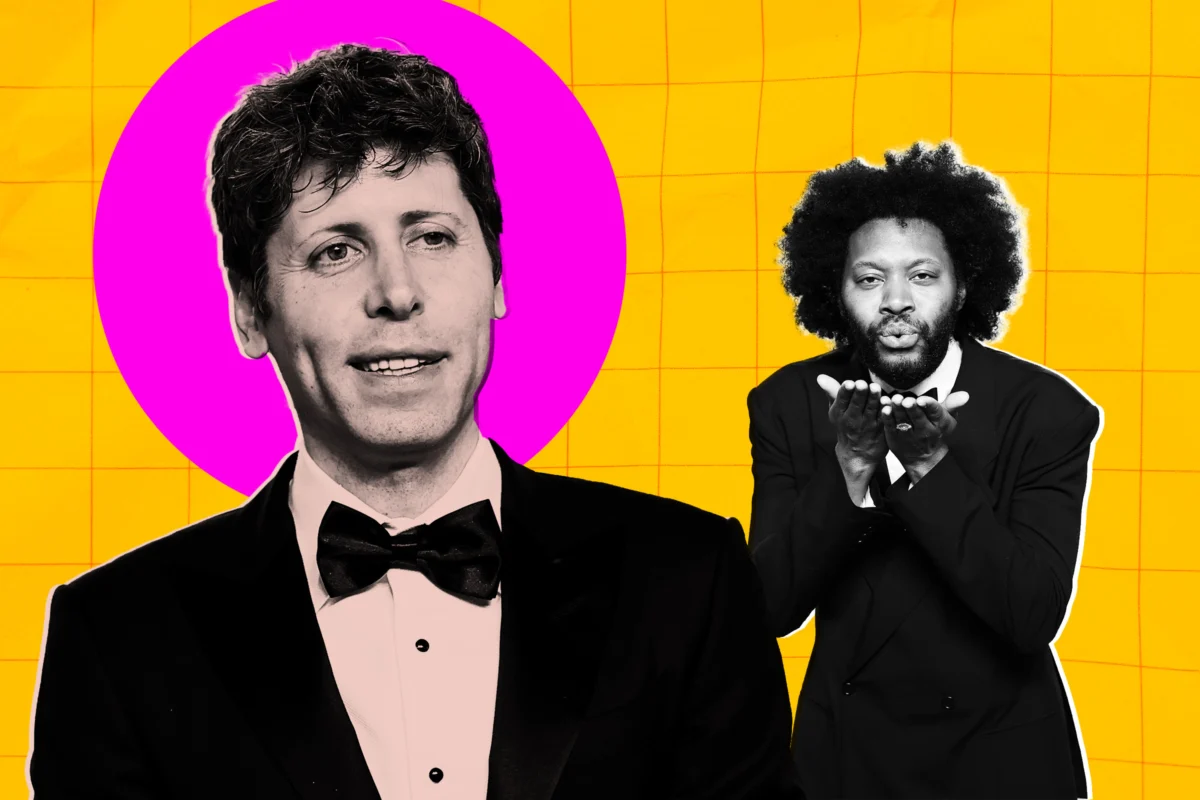
The timing of this revelation is particularly piquant, unfolding amidst one of the most significant and publicly scrutinized courtroom dramas currently gripping the tech world. This massive legal entanglement pits Elon Musk against OpenAI CEO Sam Altman, a clash of titans over the very future and principles of artificial intelligence. It’s a multibillion-dollar dispute laden with implications for intellectual property, corporate governance, and the philosophical direction of AI development. In this high-octane legal arena, Parkkinen has found himself in the spotlight, occasionally going it alone against the formidable and esteemed counsel representing OpenAI and its powerful ally, Microsoft, all on behalf of one of the world’s wealthiest and most controversial figures. His legal prowess is clearly not in question, yet the image of this seasoned litigator engaging in a completely disparate, almost whimsical, profession adds an entirely new dimension to the narrative.
The contrast between these two worlds could not be starker, nor more intriguing. "All of my comedy friends — none of them can believe I’m a lawyer," Parkkinen confessed to Business Insider, perfectly encapsulating the incredulity from one side of his life. "And none of my lawyer friends can believe I do clown." This statement alone paints a vivid picture of a man straddling two seemingly irreconcilable realities, each demanding a unique set of skills, a different mindset, and an entirely separate public persona.
For Parkkinen, "clown" is not merely a noun evoking images of red noses and oversized shoes. It is his preferred term for the act of performing onstage in the slapstick tradition, an intransitive verb, much like "improv" or "vogue" dance. This linguistic distinction is crucial, underscoring that for Parkkinen, clowning transcends the superficial trappings often associated with circuses and children’s parties. Instead, he views it as a profound artistic craft, a nuanced discipline akin to the silent artistry of mimes or the meticulous comedic techniques honed by vaudeville performers. It is a rigorous practice that delves deep into physical comedy, emotional expression, and the subtle art of connection with an audience.
His philosophical approach to clowning further illuminates his dedication to the art form. "When you strip away all the social masks that we all wear, if you strip away gender and politics and money and status and power, and you’re just your raw human self without all of the trappings of society — who are you?" Parkkinen mused to Business Insider. "Clown tries to answer that question." This introspective and existential understanding elevates his pursuit from a mere hobby to a profound exploration of the human condition. It suggests that his clowning is not about concealing himself behind makeup and exaggerated gestures, but rather about revealing a fundamental truth about humanity, about vulnerability, and about the shared experience of being alive. This level of self-awareness and philosophical inquiry stands in stark contrast to the often-rigid, logical frameworks demanded by intellectual property law, yet perhaps it offers a unique balance to the intensity of his legal career.
Parkkinen has even ingeniously found a way to monetize his passion, merging the worlds of performance and wellness through a unique venture called Clown Cardio. It is, more or less, precisely what it sounds like, a concept that gained national attention when featured in a 2024 New York Times article. Described as an hour-long class, Clown Cardio invites participants to engage in improv troupe warm-ups, enhanced with vaudeville-themed aerobics and playful, clownish props. Imagine a fitness class where laughter is as important as lunges, and where movement is infused with comedic timing and theatrical flair. This innovative approach speaks volumes about Parkkinen’s creativity and his ability to bridge seemingly disparate fields, demonstrating that even the most unconventional passions can be cultivated and shared in unexpected ways.
The dichotomy of Jaymie Parkkinen’s life—a sharp, analytical intellectual property lawyer by day, and a soulful, philosophical clown by night—offers a fascinating lens through which to view the demands and diversions of modern professional life. In an era where work-life balance is often discussed but rarely achieved, Parkkinen presents a compelling example of extreme, yet seemingly successful, compartmentalization. One might wonder if the skills honed in one domain inadvertently benefit the other. Does the art of reading an audience, understanding non-verbal cues, and commanding a stage as a clown translate into a more persuasive and empathetic courtroom presence? Does the analytical rigor required in intellectual property law lend a structured discipline to his artistic endeavors? It’s plausible that the creative problem-solving inherent in clowning offers a mental palate cleanser, a form of stress relief that recharges his mind for the high-pressure demands of legal battles. Conversely, the precise nature of law might provide a grounding structure to the free-form world of performance.
This unique revelation also adds another layer to the already complex public perception of Elon Musk and his ventures. Musk himself is a figure known for his unconventional behavior, his provocative statements, and a certain flair for the dramatic, often leading to situations that indeed resemble a "three-ring circus." From his tumultuous acquisition of X (formerly Twitter) and its subsequent rebranding, to the daring and often explosive launches of his Starship rockets—one of which, as noted in a recent report, endangered hundreds of airline passengers—Musk’s world is rarely dull. Having a key legal strategist who literally moonlights as a clown somehow feels both incredibly fitting and utterly surreal within this context. It suggests a comfort with the unconventional, perhaps even an embrace of the absurd, that permeates the highest echelons of Musk’s operations.
Heck, to each their own, as the saying goes. Whether one chooses to respect Parkkinen’s unique craft as a profound artistic expression or view it with a degree of bemused curiosity, it’s undeniably difficult to shake the vivid image that one of Elon Musk’s top litigators spends his off-hours, quite literally, as a clown. This story isn’t just about a lawyer with an unusual hobby; it’s a testament to the hidden depths and unexpected passions that lie beneath the surface of even the most demanding professions. It reminds us that behind every high-stakes corporate drama, there are individuals with rich, complex lives, capable of navigating both the gravitas of billion-dollar lawsuits and the whimsical pursuit of self-discovery through slapstick and philosophical inquiry. In a world that often demands rigid conformity, Jaymie Parkkinen stands out as a fascinating anomaly, a testament to the enduring power of personal expression and the wonderfully unpredictable nature of human identity.