Faris Adani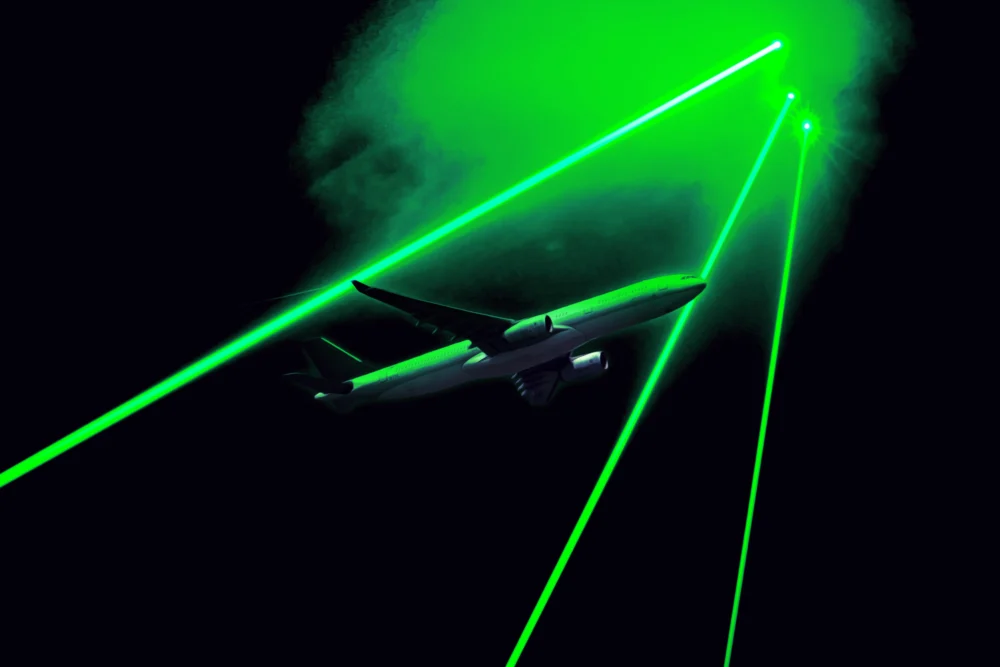
The morning of the El Paso Airport shutdown dawned with an eerie silence over the usually bustling air traffic lanes, abruptly replaced by a cacophony of online speculation and real-world anxiety. When the Federal Aviation Administration (FAA) issued its chilling directive, grounding all flights into and out of El Paso and declaring the airspace closed for "special security reasons" until late February 20th, a wave of fear rippled through the nation. The initial notice, stark and ominous, warned that "the government may use deadly force" against any aircraft deemed an "imminent security threat," immediately conjuring images of existential peril. Was it a sophisticated terrorist plot involving anti-aircraft weaponry hidden in the vast Texan desert? Had some clandestine biological threat, perhaps an early-stage zombie apocalypse as dark humor suggested, designated El Paso as its ground zero? Or, in a scenario so outlandish it bordered on satire, had the Trump administration, known for its unconventional approaches, unleashed high-energy laser weapons into the sky without so much as a public advisory? The bewildering answer, defying all conventional expectations and stretching the limits of credulity, pointed squarely to the third, most improbable option, painting a picture of a nation grappling with technological frontiers and alarming inter-agency miscommunication.
According to a bombshell report from CBS News, the surreal airspace closure was a direct order from FAA Administrator Bryan Bedford. The catalyst for this drastic measure was Bedford’s discovery that the Pentagon was poised to conduct tests of its cutting-edge, high-energy, counter-drone laser weapons at Fort Bliss, a sprawling military installation situated perilously close to El Paso International Airport. The sheer audacity of deploying such advanced, potentially dangerous weaponry adjacent to civilian flight paths, without apparent prior consultation or comprehensive risk assessment with the very agency responsible for air safety, underscores a profound breakdown in federal coordination. This wasn’t merely a lapse; it was a chasm, exposing a critical vulnerability in how high-stakes military technology is integrated, or rather, not integrated, with civilian infrastructure and safety protocols. The "special security reasons" cited by the FAA were, in essence, a desperate attempt to create a buffer zone around an unannounced military experiment, highlighting the extraordinary circumstances that forced Bedford’s hand.
To truly grasp the gravity of the situation, one must understand the nature of high-energy laser (HEL) weapons. These aren’t the fictionalized, precision-beam devices of science fiction; they are real, sophisticated directed-energy systems capable of engaging and neutralizing aerial threats with incredible speed and accuracy. Operating by focusing intense beams of electromagnetic radiation onto a target, they can overheat and disable electronics, melt structural components, or even cause catastrophic failure. The Pentagon’s investment in HEL technology, exemplified by systems like the "Guardian" or "Athena" programs, stems from an urgent need to counter the growing proliferation of drones, which pose significant asymmetric threats ranging from surveillance to weaponized attacks. Deploying such a system, often dubbed a "mega-laser" by observers, near a major civilian airport introduces a host of unprecedented risks: accidental targeting, optical hazards to pilots, and the potential for collateral damage. The sheer power required for these systems means any unintended discharge or misdirection could have devastating consequences, making the FAA’s panicked closure, in retrospect, a desperate act of precaution in the face of perceived military recklessness.
But the narrative surrounding the El Paso incident veers even further into the absurd. Separately, Fox News unveiled another astonishing detail: military personnel had, in fact, shot down a "rogue party balloon" – the kind one might find at a child’s birthday celebration – near El Paso. This occurred after the balloon was apparently misidentified as a foreign drone. The cognitive dissonance of deploying advanced military hardware, potentially including the very mega-laser that prompted the airport shutdown, to neutralize a festive, helium-filled toy is staggering. Was this ludicrous incident a dry run for the laser system, a test gone comically wrong? Or was it an indicator of hyper-vigilance reaching a fever pitch, where any unidentified object in the sky, no matter how innocuous, is now considered a potential national security threat worthy of lethal force? The implications are chilling: if highly trained personnel and sophisticated detection systems can mistake a party balloon for a hostile drone, what does that say about the reliability of such systems and the protocols for engagement, particularly when deployed in close proximity to civilian populations and airspace? The incident serves as a stark, almost farcical, illustration of the challenges inherent in distinguishing genuine threats from benign anomalies in an increasingly complex aerial environment.
Perhaps the most alarming aspect of this entire saga is the profound communication breakdown it exposed at the highest levels of government. Sources close to CBS News confirmed that the airspace closure, initiated by the FAA, occurred without alerting the White House, the Pentagon, or Homeland Security officials. This isn’t merely a procedural oversight; it represents a catastrophic failure of inter-agency communication that could have had severe national security ramifications. For the FAA Administrator to feel compelled to shut down a major airport, disrupting countless lives and economic activities, without the knowledge or approval of the nation’s top defense and security apparatus, speaks volumes about a fractured governmental ecosystem. It suggests a lack of trust, inadequate information sharing, and perhaps even a degree of insubordination or unilateral decision-making that is deeply troubling. In a crisis, effective communication is paramount; its absence here turned a potentially dangerous military exercise into a public safety nightmare and a bureaucratic embarrassment.
In Administrator Bedford’s defense, CNN reported that the military laser weapon deployment was scheduled to precede a crucial February 20th meeting intended to review the system’s potential impacts on commercial aviation. This detail adds another layer to the bureaucratic blunders, suggesting that the Pentagon was either operating under an incredibly tight timeline or exhibiting a startling disregard for established review processes. While it remains unclear whether the Defense Department did deploy the laser system before officials could convene, CNN‘s sources indicated that the Pentagon was indeed actively seeking to use the system in El Paso prior to such a sit-down. This reveals a dangerous eagerness to push the boundaries of technological deployment, potentially sacrificing comprehensive safety assessments for the sake of rapid testing or operational readiness. Such an approach, where military innovation outpaces regulatory oversight, creates a precarious environment where unforeseen consequences can easily escalate into public crises.
Further muddying these already murky waters are the unsubstantiated claims from the Trump administration. In a social media post, the administration alleged that the Pentagon had taken action to disable a vague "cartel drone incursion" just prior to the airspace shutdown. This claim, however, arrived devoid of any supporting evidence and was met with widespread skepticism. The timing was, to say the least, convenient, offering a potential narrative to justify aggressive military action and divert attention from the internal disarray. Whether this was a genuine, albeit unproven, incident, or a calculated political maneuver to frame the situation within a familiar "border security" context remains an open question. However, the lack of transparency surrounding this claim only exacerbates the sense of confusion and mistrust, further highlighting the precarious balance between national security imperatives and public accountability in an era of rapid technological advancement and often opaque governmental operations.
So, let’s recap the bewildering confluence of events that unfolded in El Paso, serving as a stark, if darkly comedic, harbinger of 2026. The FAA, acting on its own initiative, grounded all flights at a major airport due to the Pentagon’s unannounced plans to test a high-energy laser weapon system nearby. This deployment, seemingly rushed, occurred ahead of scheduled inter-agency safety reviews. In a separate, yet suspiciously related incident, military personnel reportedly shot down a child’s party balloon, mistaking it for a hostile drone, with the question lingering as to whether the mega-laser was involved in this farcical takedown. All of this unfolded against a backdrop of presidential claims of "cartel drone incursions," for which no evidence has been provided. The profound lack of communication between the nation’s top civilian aviation authority and its defense establishment is not just a bureaucratic hiccup; it’s a dangerous systemic flaw. The prospect of experimental military weaponry shutting down civilian flights, with party balloons caught in the crossfire, is not merely a sign of technological progress but a chilling indicator of a world where advanced capabilities outpace responsible governance, where public safety is inadvertently jeopardized by internal misalignments, and where the line between national defense and sheer absurdity has become alarmingly thin. Welcome to a future where we are demonstrably unprepared for the implications of our own innovations.