Faris Adani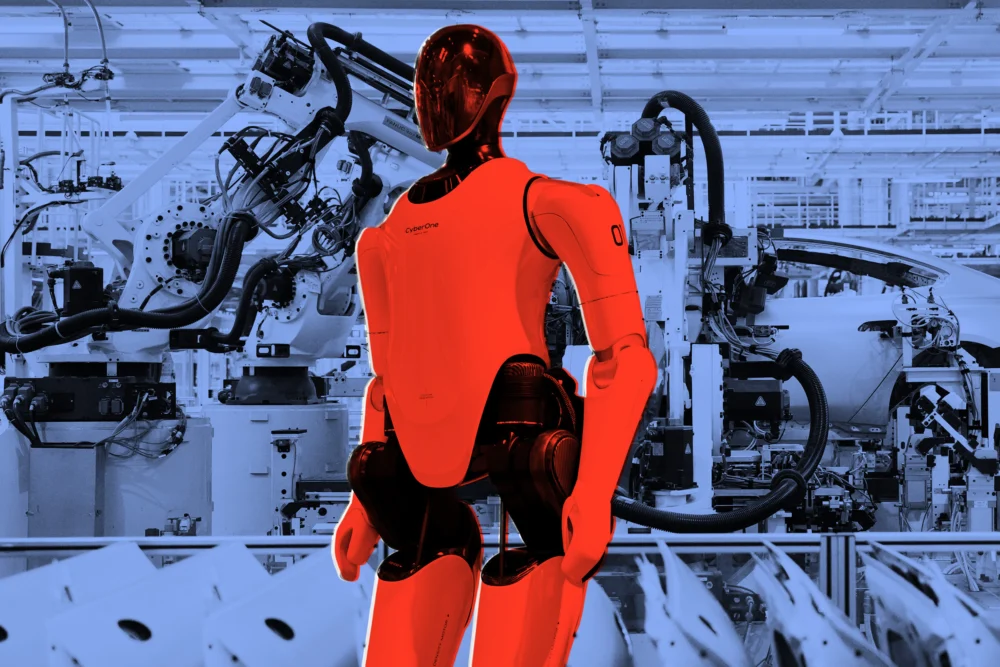
The global manufacturing landscape is on the cusp of a profound transformation, spearheaded by the increasing integration of advanced robotics, and a recent announcement from Chinese consumer electronics behemoth Xiaomi offers a compelling glimpse into this future. The company, widely recognized for its smartphones and smart home devices, has successfully deployed humanoid robot workers for a trial run at its cutting-edge electric vehicle (EV) factory in Beijing. This move is not merely an incremental step in automation but a significant leap towards the full integration of highly adaptable, bipedal machines into complex industrial production lines, hinting at an unprecedented era where assembly lines may operate with minimal human intervention.
Xiaomi’s foray into the automotive industry with its SU7 EV has been ambitious, marked by substantial investment and rapid development. The decision to trial humanoid robots within this critical new venture underscores the company’s commitment to innovation not just in its products, but also in its production methodologies. According to Xiaomi president Lu Weibing, these experimental bots demonstrated remarkable efficiency, successfully completing 90.2 percent of their assigned tasks over a three-hour period. While this figure represents an early-stage assessment, it provides tangible evidence of humanoid robots’ burgeoning potential in environments traditionally dominated by either human labor or more specialized, fixed-arm industrial robots.
A promotional video released by Xiaomi offered a visual testament to this pioneering effort. It depicted two humanoid robots positioned at opposing ends of an assembly line, meticulously applying lug nuts to a vehicle chassis. The process, observed at a cycle time of 76 seconds per operation, might initially appear slow compared to the swift movements of human workers. However, Lu Weibing clarified that the robots were indeed fast enough to maintain the factory’s rigorous production pace. "To integrate robots into our production lines, the biggest challenge is for them to keep up with the pace," Lu explained in an interview with CNBC. "In Xiaomi’s car factory, every 76 seconds, a new car gets off the assembly line. The two humanoid robots are able to keep up our pace." This statement highlights a crucial threshold that these robots have crossed: the ability to synchronize with high-speed manufacturing environments, a prerequisite for any meaningful industrial deployment.
Despite the encouraging results, Lu Weibing maintained a pragmatic perspective, likening the robots’ current role to that of "interns" rather than fully-fledged employees. This analogy, while perhaps understating the technological achievement, speaks to the ongoing developmental phase of humanoid robotics. It acknowledges that while the foundational capabilities are proving viable, significant refinement, robustification, and broader application testing are still required before widespread adoption. Nevertheless, even as "interns," these humanoid machines, likely iterations of Xiaomi’s CyberOne robot first unveiled in 2022, represent a remarkable accomplishment for both Xiaomi and China, a nation already leading the world in the deployment of industrial robots.
The broader context of humanoid robot development reveals a global race to perfect these versatile machines. Companies like Tesla with its Optimus bot, Boston Dynamics with Atlas, Agility Robotics with Digit, Figure AI, and Sanctuary AI are all investing heavily in creating robots that can navigate and interact with human-centric environments. The allure of the humanoid form factor lies in its inherent versatility. Unlike traditional industrial robots, which are typically fixed in place and specialized for repetitive tasks, humanoids are designed to operate in spaces built for humans, using tools and interfaces designed for human hands. This potential for adaptability could revolutionize industries beyond manufacturing, extending into logistics, elder care, hazardous environments, and even retail.
However, the path to widespread humanoid robot deployment is fraught with significant engineering challenges. Dexterity, balance, perception, and robust real-time decision-making are just a few hurdles. The precision required for tasks like applying lug nuts, as demonstrated by Xiaomi’s bots, demands sophisticated vision systems, fine motor control, and advanced force feedback mechanisms. Furthermore, ensuring safety in a shared workspace with humans, managing energy consumption for prolonged operation, and reducing manufacturing costs to make them economically viable are ongoing areas of intense research and development. The 90.2% success rate, while impressive, also implies a 9.8% failure rate, which, in a high-volume production environment, would still require human intervention or lead to defects. The "intern" label thus aptly captures this blend of immense potential and ongoing need for refinement.
Xiaomi’s specific achievement gains further significance when compared to other recent pilot programs. In February, UK-based firm Humanoid (not to be confused with the general term ‘humanoid’) also completed a successful pilot, achieving over 90 percent success in a tote-stacking task. While both trials highlight progress, the nature of the tasks and the robot designs differ. Humanoid’s bots, while performing industrial tasks, were reportedly affixed to a stable base, suggesting a more specialized, albeit highly effective, approach to automation. Xiaomi’s robots, in contrast, were truly bipedal, completing tasks on two legs, which presents a far greater challenge in terms of balance, locomotion, and dynamic stability within a moving factory environment. This distinction underscores the varying approaches within the humanoid robotics field and highlights Xiaomi’s commitment to a more generalized, adaptable bipedal form factor.
China’s aggressive push into robotics is a critical backdrop to Xiaomi’s announcement. The country has been strategically investing in automation for years, deploying more industrial robots than any other nation. This national strategy aims to enhance productivity, overcome labor shortages in certain sectors, and secure a leading position in advanced manufacturing. Initiatives like "Made in China 2025" explicitly prioritize robotics and AI, fostering an ecosystem where companies like Xiaomi are encouraged and supported in their endeavors to integrate cutting-edge technologies. The sheer scale of China’s industrial base also provides an unparalleled testing ground for new robotic solutions, allowing for rapid iteration and deployment.
The implications of such advancements for the future of manufacturing and the global workforce are profound. As humanoid robots become more capable and cost-effective, they could take over a wider range of repetitive, dangerous, or physically demanding tasks on assembly lines. This shift could lead to significant increases in productivity, improved quality control, and reduced operational costs for manufacturers. However, it also raises questions about the future of human labor in these sectors. While some jobs may be displaced, new roles focused on robot supervision, maintenance, programming, and specialized tasks requiring human creativity and complex problem-solving are likely to emerge. The transition will necessitate significant investment in reskilling and education to prepare the workforce for this evolving industrial landscape.
Looking ahead, the successful trial by Xiaomi represents more than just a technological feat; it’s a harbinger of a future where factories are increasingly populated by sophisticated, adaptable machines working in concert with human supervisors. As the "interns" gain more experience and their capabilities expand, the line between human and robotic labor will continue to blur, paving the way for hyper-efficient, resilient, and highly flexible manufacturing systems. The 76-second cycle time, initially a point of comparison, will likely shrink as these robots evolve, driven by advancements in AI, sensor technology, and mechanical design. While the journey to fully autonomous, humanoid-powered factories is still ongoing, Xiaomi’s latest achievement unmistakably signals that the era of the bipedal factory worker is not a distant dream, but an unfolding reality.