anjir abdul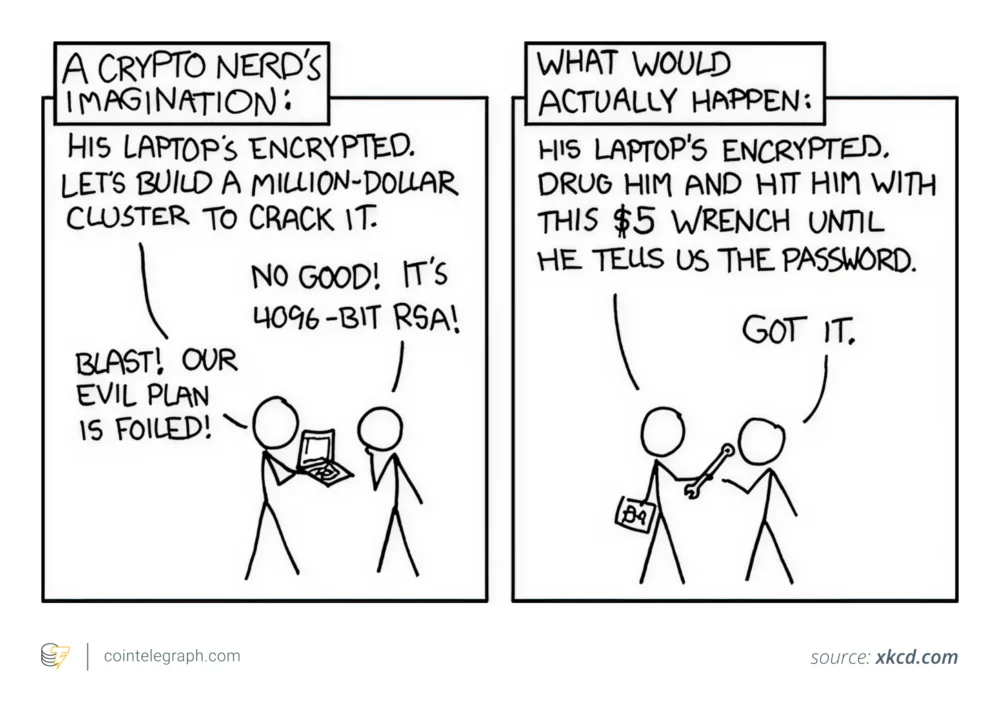
This alarming trend embodies what has become known as a "wrench attack." Unlike traditional cyberattacks that exploit digital vulnerabilities or software flaws to hack a wallet, these criminals employ threats, coercion, or outright physical force to compel the crypto holder to unlock their wallet or directly transfer funds themselves. While digital scams and hacks still dominate the sheer volume of crypto-related illicit activities, the most severe and violent incidents are increasingly characterized by this direct, physical coercion. The critical question then becomes: why is this unsettling phenomenon emerging now, and what factors are accelerating its prevalence?
A wrench attack is fundamentally a physical-world crime where assailants use threats or violence to force a cryptocurrency holder to grant access to their digital assets. This access can involve revealing credentials, unlocking a device, or directly authorizing a transfer. In essence, it is an attempt to acquire cryptocurrency by targeting the person, rather than the cryptography protecting the assets. The label itself originates from a widely circulated Xkcd comic strip, specifically #538, titled "Security." The comic humorously, yet chillingly, posits that when encryption is sufficiently strong, the most straightforward shortcut for an attacker isn’t to break the complex math, but rather to resort to coercion – famously depicted as hitting someone with a "five-dollar wrench." The term resonated and stuck because it precisely captures the qualitative shift these incidents represent compared to most forms of crypto theft. The attacker bypasses the need for sophisticated exploits or intricate hacking skills, requiring only physical proximity and leverage over an individual’s daily life. This human element, the vulnerability of the individual, becomes the ultimate weak link in an otherwise robust cryptographic security chain.
The question of whether wrench attacks are genuinely increasing or merely garnering more media attention requires a nuanced answer: both can be true simultaneously, and the available data demands careful interpretation. Haseeb Qureshi, a managing partner at Dragonfly, a prominent crypto venture capital firm, meticulously analyzed Jameson Lopp’s incident log—a public repository of reported physical Bitcoin attacks. Qureshi’s analysis suggests a clear upward trend in reported wrench attacks over time, noting that the average incident has escalated in severity in recent years. His research also identified a distinct "price effect": when the total cryptocurrency market capitalization rises, reported violence tends to increase correlatively. A simple regression model attributed approximately 45% of the variation in attack frequency directly to changes in market capitalization, highlighting the financial incentive as a primary driver.
However, two crucial caveats are essential for a complete understanding. Firstly, Lopp’s database, while invaluable, is explicitly not comprehensive. It relies solely on publicly reported incidents, meaning it inherently cannot capture cases that never make it into the news, often due to victims’ fear or law enforcement’s discretion. Secondly, academic research on wrench attacks, including studies from the University of Cambridge, points to systematic underreporting of these crimes. Victims frequently remain silent due to fear of revictimization, concerns about their personal safety, or distrust in authorities, further obscuring the true scale of the problem. This underreporting suggests that the actual prevalence of wrench attacks is likely higher than publicly available data indicates. Qureshi’s normalization point is vital here: measured per user, the reported risk might be lower than in earlier crypto cycles, even if the headlines feel more alarming. This implies that while the absolute number of incidents might be rising, the overall growth of the crypto user base could dilute the per-capita risk, though the psychological impact of such violent crimes remains profound.
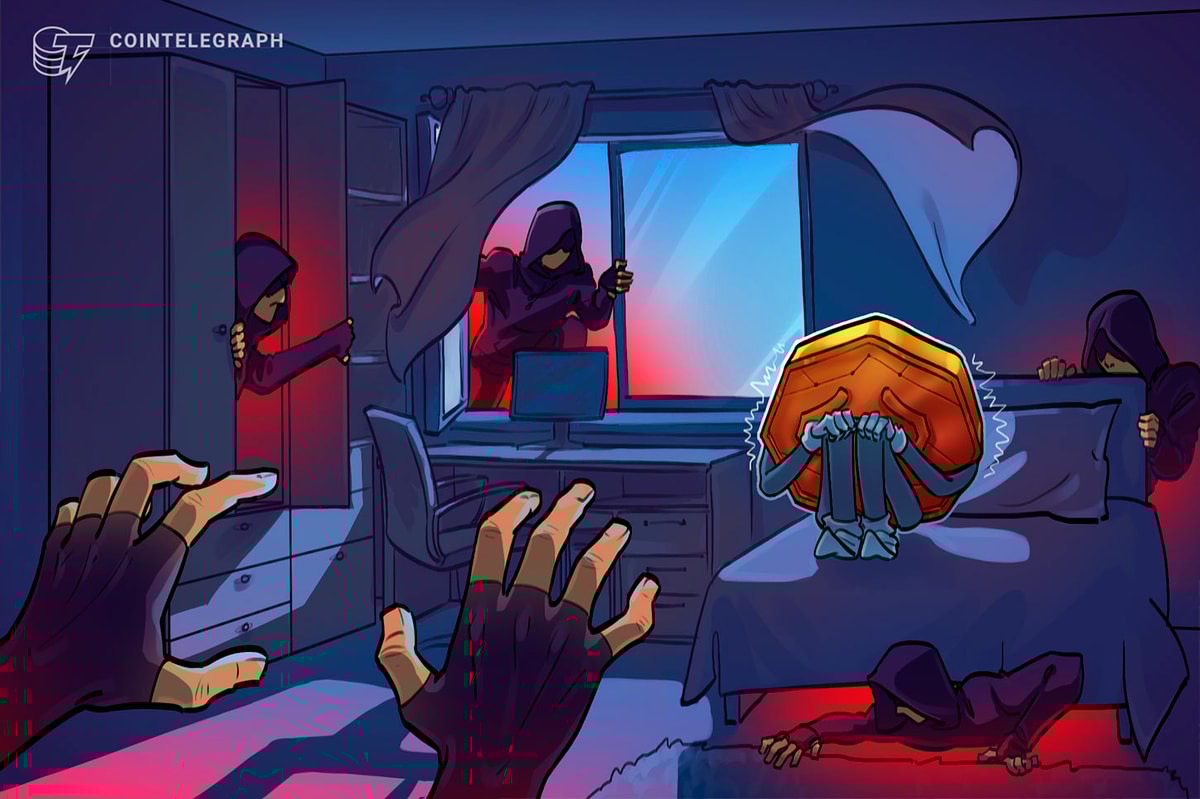
The surge in wrench attacks is propelled by a confluence of distinct factors: the allure of fast and irreversible payouts, the rising concentration of easily reachable wealth, the increasing ease of identifying and targeting individuals in the real world, and critical data leaks that transform online crypto identities into tangible offline risks.
Driver 1: The Payout is Fast, Portable, and Hard to Unwind. Unlike traditional criminal endeavors that involve laundering stolen credit cards, fencing physical goods, or navigating complex banking systems, cryptocurrency offers criminals unparalleled advantages. If attackers successfully compel a victim to transfer funds, the value can move rapidly, seamlessly crossing international borders within minutes or hours. The immutable and decentralized nature of blockchain transactions means these transfers are exceptionally difficult, if not impossible, to reverse once confirmed. This inherent speed, portability, and finality of crypto transactions make coercion a comparatively appealing and efficient modus operandi for criminals, offering a direct path to ill-gotten gains without the traditional logistical hurdles of asset conversion and movement.
Driver 2: More People Hold Reachable Wealth. As the price of cryptocurrencies fluctuates and generally trends upwards over time, the same amount of crypto holdings translates into a significantly larger and more attractive target for criminals. The "price pull" effect is evident: higher market capitalization directly correlates with increased incident frequency, suggesting that the perceived value of potential illicit gains fuels the motivation for violent crime. Furthermore, the mainstream adoption of cryptocurrencies means that a broader demographic, beyond early adopters and tech enthusiasts, now holds substantial digital wealth, making the pool of potential targets significantly larger and more diverse. This growing accessibility and value of crypto wealth democratizes the target pool for criminals.
Driver 3: Finding Targets is Easier Than It Looks. Criminals are becoming increasingly adept at leveraging public information to identify and locate potential victims. Individuals in public-facing crypto roles—such as founders, executives, developers, and prominent influencers—are inherently more exposed. Attendance at crypto meetups, participation in peer-to-peer (P2P) trading deals, and even seemingly innocuous oversharing on social media can provide attackers with crucial real-world "hooks." Researchers at the University of Cambridge have noted that these incidents represent attacks that bypass digital security norms by strategically shifting the pressure onto the human holder. Open-source intelligence (OSINT) gathering, social engineering, and even insider information can be employed to build profiles of potential victims, identifying their routines, addresses, and perceived wealth.
Driver 4: Data Exposure Turns Online Identity into Offline Risk. A critical enabler of wrench attacks is the leakage of personal data. Recent high-profile incidents highlight how names, addresses, phone numbers, and other identifying information can become exposed through third-party data breaches, phishing scams, or even insider abuse within crypto-related companies. Notable examples include Coinbase’s support-agent bribery case, where customer data was compromised, and various Ledger-related customer data exposures. Such leaks make it significantly easier for criminals to link individuals’ real-world identities to their cryptocurrency activities, transforming anonymous digital personas into vulnerable physical targets. This bridge between the digital and physical realms is a dangerous catalyst for wrench attacks.

These attacks often follow a discernible "crime script" comprising targeting and approach, coercion, and then the rapid movement of funds once access is obtained. The initial contact can manifest in various forms, from seemingly conventional street crimes like muggings or opportunistic robberies to more organized and premeditated forms of coercion, such as home invasions or kidnappings. Crucially, victims are not always random strangers; in many instances, criminals meticulously research and select their targets. In some deeply disturbing cases, wrench attacks overlap with domestic and interpersonal abuse, where access to cryptocurrency becomes an additional tool of control and subjugation within existing abusive relationships.
A chilling real-world example is the disappearance of Roman Novak and Anna Novak, a Russian couple living in Dubai. In October 2025, they vanished after being lured to a meeting with supposed investors near Hatta, close to the Oman border. Investigators later classified the case as a kidnapping directly linked to attempts to force access to their money, including cryptocurrency. This tragic incident stands as one of the most widely cited real-world examples of a wrench attack with fatal consequences, underscoring the extreme danger posed by this new breed of crime.
Wrench attacks rarely target random crypto users. Instead, they disproportionately affect individuals who are easy to identify, easy to locate, and are publicly or privately assumed to possess substantial, accessible crypto holdings. This high-risk demographic includes founders and executives of crypto companies, public-facing influencers with large followings, over-the-counter (OTC) or peer-to-peer (P2P) traders known for facilitating large transactions, and essentially anyone whose online footprint conspicuously links a real-world identity to significant cryptocurrency wealth. Geography also plays a significant role in risk assessment. Western Europe and certain parts of the Asia-Pacific region have witnessed the sharpest rise in reported incidents, suggesting varying regional vulnerabilities due to factors like local law enforcement capabilities, crypto adoption rates, and the presence of organized crime syndicates. While North America appears comparatively safer, the absolute number of cases has nonetheless increased across all regions. It’s also important to note that the principal crypto holder is not the sole target. Recent French cases, for instance, demonstrate that criminals sometimes target relatives or partners, exploiting family proximity as a powerful leverage point when the wallet owner themselves proves difficult to reach directly.
The uncomfortable but essential lesson of wrench attacks is that even the most robust digital key management practices do not automatically eliminate all risk. While strong encryption and sophisticated security protocols can make funds incredibly difficult to steal online, they can inadvertently leave the "last mile" exposed: you, your daily routines, and your personal data. For most individuals, the practical objective is to render oneself a less attractive target and to significantly reduce the amount of wealth an attacker could quickly access. This strategy typically revolves around three core themes:
- Enhance Physical Security and Situational Awareness: This includes robust home security systems, varying daily routines to avoid predictability, and being acutely aware of your surroundings, especially if you are a known crypto holder. For high-net-worth individuals, professional security services or even temporary relocation might be necessary.
- Implement Advanced Digital Security with Physical Risk in Mind: Utilize multi-signature (multi-sig) wallets that require multiple independent approvals for transactions, making it harder for a single point of failure (you) to compromise all funds. Geographically disperse your keys and seed phrases, ideally across different secure locations, making it impossible for a single physical attack to compromise all your assets. Practice plausible deniability by not carrying all your crypto wealth on you or making it easily accessible, allowing you to truthfully state that you do not have immediate access to all funds. Compartmentalize your wealth by keeping only a minimal "hot wallet" for daily transactions and storing the bulk of your assets in highly secure, less accessible cold storage.
- Practice Rigorous Operational Security (OpSec): Minimize your public digital footprint. Be extremely cautious about what you share online regarding your crypto holdings, investments, or involvement in the industry. Avoid public displays of wealth or crypto affiliation that could attract unwanted attention. Be wary of unsolicited contacts, especially those proposing in-person meetings for large transactions. Treat all personal data as sensitive, understanding that a data leak can transform an online identity into an offline risk.
Crucially, if a threat ever materializes into a real-world attack, the paramount priority is always physical safety and immediately seeking help, not protecting the wallet at all costs. This fundamental principle is precisely what makes wrench attacks one of the sharpest and most terrifying edges of crypto crime today. They brutally transform digital wealth into a direct, personal security risk, forcing the industry’s security conversation out of the abstract digital realm and into the tangible, often violent, realities of the physical world. It demands a holistic, integrated approach to security that acknowledges the human element as the ultimate point of vulnerability, emphasizing that true crypto security extends far beyond mere cryptography.