isnaini azizah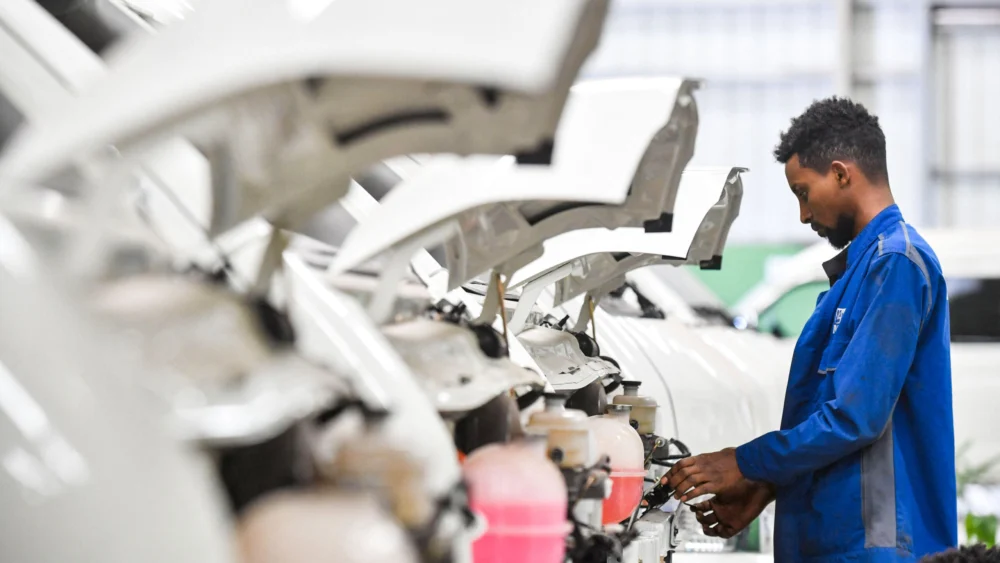
Electric vehicles (EVs) are experiencing a global surge in popularity and affordability, yet many African markets still grapple with significant technological hurdles. Challenges such as limited and unreliable grid infrastructure pose a substantial obstacle for EV owners who depend on a stable electricity supply for charging. Despite these hurdles, compelling signs of progress are emerging across the continent, driven by a confluence of economic viability, evolving government policies, expanding energy grids, and burgeoning local manufacturing capabilities.
Recent research, including a study published in Nature Energy, indicates a promising economic future for EVs in Africa. The analysis suggests that by 2040, electric options ranging from scooters to minibuses could become more cost-effective to own than their gasoline-powered counterparts. This projection is particularly significant given the vast diversity of needs, challenges, and circumstances faced by Africa’s 54 nations. The outlook for EVs is further bolstered by proactive policy development, the growth of renewable energy infrastructure, and the establishment of local manufacturing operations.
Ethiopia stands out as a trailblazer in its commitment to electric mobility, implementing policies that even surpass those of leading global EV markets. In 2024, the nation made history by becoming the first country worldwide to prohibit the importation of non-electric private vehicles. This bold move is primarily an economic strategy. Ethiopia faces high gasoline prices, and the recent commissioning of Africa’s largest hydropower dam in September 2025 promises a new, abundant, and inexpensive source of clean electricity. The nearly $5 billion project, with a five-gigawatt capacity, is set to double the nation’s peak power output, providing a robust foundation for EV charging. While a significant portion of Ethiopia’s vehicle market still consists of older, used gasoline-powered cars, this government incentive is expected to accelerate the adoption of EVs.
Other African nations are also actively encouraging the transition to electric transportation. Rwanda, for instance, implemented a ban on new registrations for commercial gasoline-powered motorbikes in its capital, Kigali, last year. This policy champions EVs as a viable alternative, a move with profound implications considering that these motorbike taxis constitute over half of the vehicles on Kigali’s streets, marking a critical turning point for urban transportation. Globally, smaller two- and three-wheeled EVs are a rapidly growing segment, accounting for approximately 45% of new sales in this category in 2025, compared to about 25% for cars and trucks.
Africa’s domestic EV market is experiencing a significant upswing. Local assembly of electric two-wheelers is already underway in countries like Morocco, Kenya, and Rwanda, according to Nelson Nsitem, lead Africa energy transition analyst at BloombergNEF. This localized production is crucial for making EVs more accessible and adaptable to regional needs.
The e-mobility sector is attracting substantial investment. Spiro, an electric motorbike company based in Dubai, recently secured $100 million in funding to expand its operations across Africa. The company currently assembles its bikes in Uganda, Kenya, Nigeria, and Rwanda. As of October 2025, Spiro had already deployed over 60,000 bikes and established 1,500 battery swap stations, demonstrating a rapidly scaling operational footprint.
The development of local manufacturing capabilities extends beyond two-wheelers. Plans are in motion to expand the assembly and production of larger EVs and batteries. Gotion High-Tech, a prominent Chinese battery manufacturer, is constructing Africa’s first battery gigafactory in Morocco. This ambitious $5.6 billion project aims to produce 20 gigawatt-hours of batteries annually, commencing in 2026, which is sufficient to power hundreds of thousands of EVs each year.
Chinese EV manufacturers are increasingly looking towards growing markets such as Southeast Asia and Africa as they seek to diversify beyond their saturated domestic market. BYD, the world’s largest EV company, is aggressively expanding its presence in South Africa, with plans to establish as many as 70 dealerships in the country by the end of 2026. This expansion will significantly broaden the availability of electric vehicle options for African consumers.
Kelly Carlin, a manager at the Rocky Mountain Institute’s program on carbon-free transportation, highlights the transformative potential of these developments. "You have very high-quality, very affordable vehicles coming onto the market that are benefiting from the economies of scale in China. These countries stand to benefit from that," Carlin observes, labeling the influx of affordable and advanced EVs as a "game changer." This confluence of factors—falling prices, supportive policies, improving infrastructure, and growing local production capacity—positions Africa to embrace the electric vehicle revolution, driving sustainable transportation and economic growth across the continent.