Faris Adani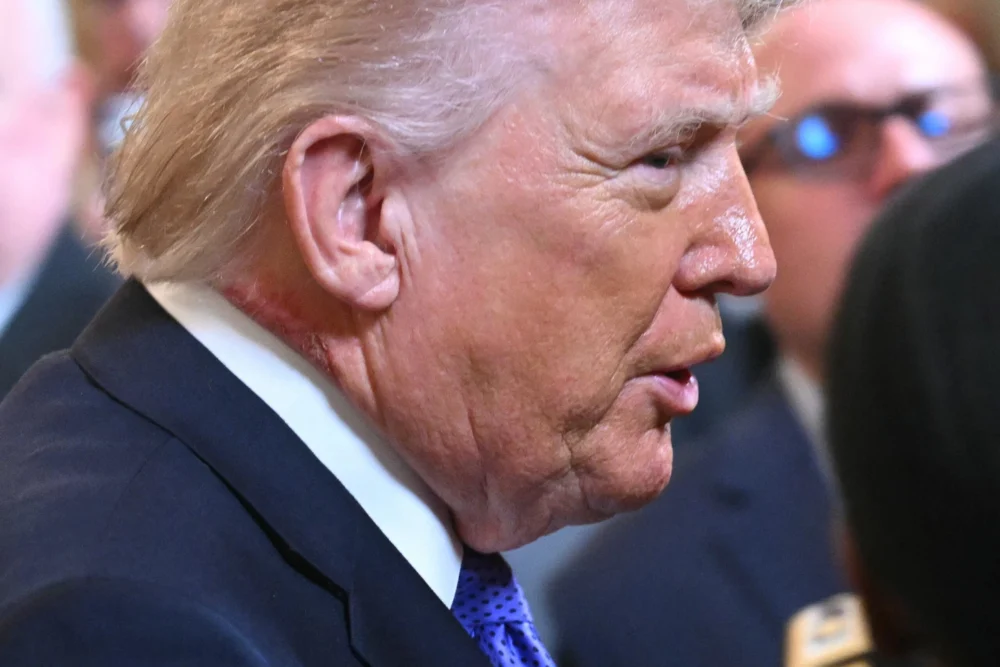
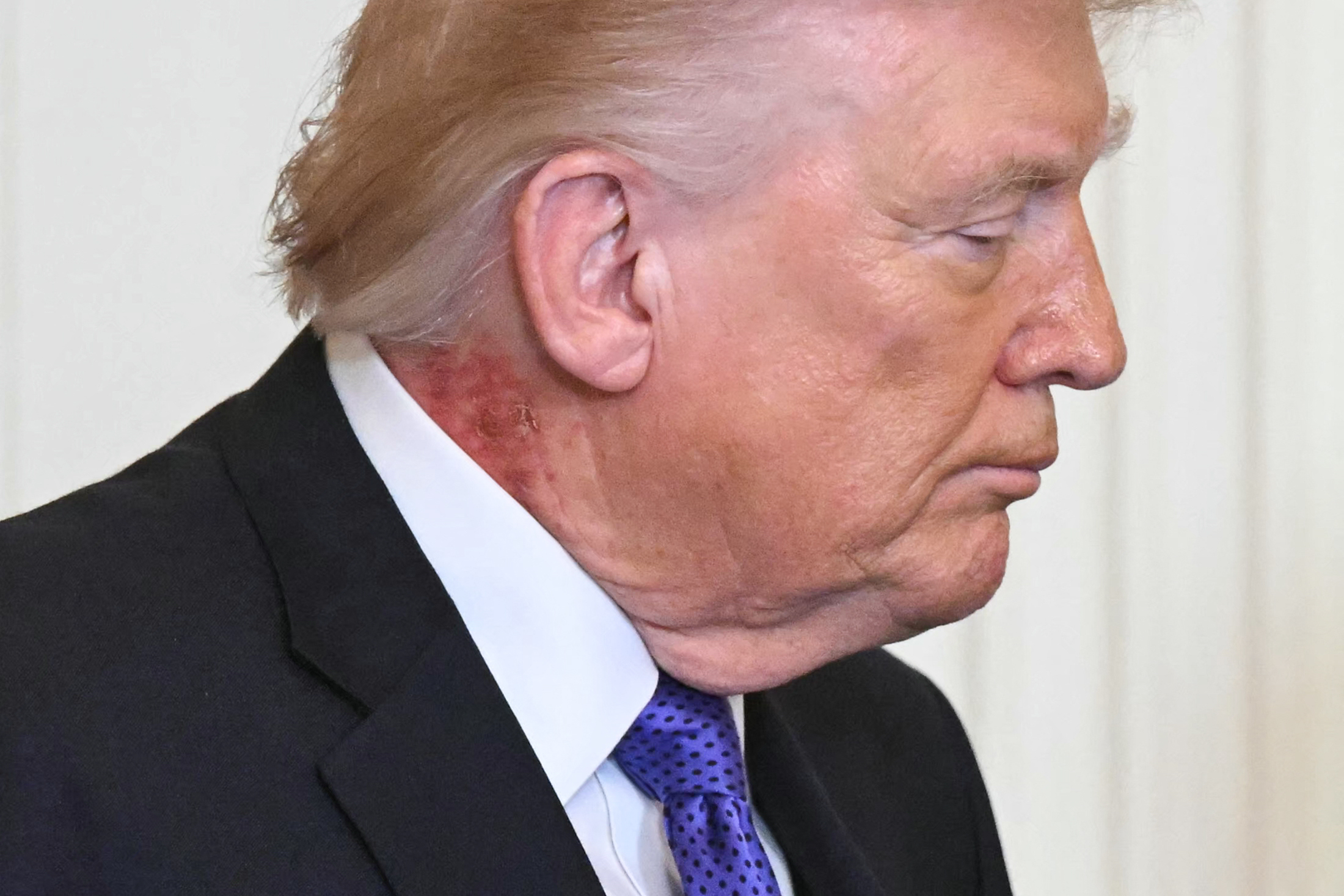
A conspicuous, "rash-like injury" observed on President Donald Trump’s neck during a Medal of Honor ceremony on Monday morning has ignited a fresh wave of public speculation regarding the octogenarian leader’s health, prompting a terse and somewhat ambiguous response from the White House amidst ongoing geopolitical tensions. The visible mark, a prominent reddish wound or scabbing located below his right ear, was captured in stark detail by press photographers, particularly Saul Loeb of Agence France-Presse, and quickly circulated across social media platforms, drawing intense scrutiny. This latest health query surfaces at a critical juncture, following the initiation of major strikes in Iran over the weekend and questions surrounding the President’s perceived disengagement from immediate Oval Office duties in the early days of a "burgeoning war."
The incident unfolded as President Trump finally addressed the press on Monday, March 2, 2026, to deliver remarks on the escalating conflict with Iran and to bestow the nation’s highest military honor, the Medal of Honor, upon retired United States Army Major Terry Richardson. This public appearance marked his return to the spotlight after a weekend characterized by a notable absence from direct, public engagement on the unfolding military offensive. On Saturday, instead of immediately returning to Washington D.C. to oversee the significant military actions in Iran, the President attended what the New York Times characterized as a "glitzy fund-raising dinner" at his private Mar-a-Lago club and residence in Florida. Sunday also saw a similar lack of direct public comments or briefings from the President, fueling criticism about his focus during a national security crisis. It was against this backdrop that the peculiar mark on his neck became a focal point of public discourse.
Photographs from the event clearly depicted the reddish, irritated patch of skin. One particularly clear image, taken from a profile view, highlighted the distinct nature of the mark, appearing as an angry red lesion or scab. Other shots, though partially obscured by the crisp white collar of the President’s shirt, confirmed the presence of the unusual spot. The immediacy of modern media and social networking ensured that these images rapidly became viral, triggering a torrent of discussion and concern across political and medical circles alike.
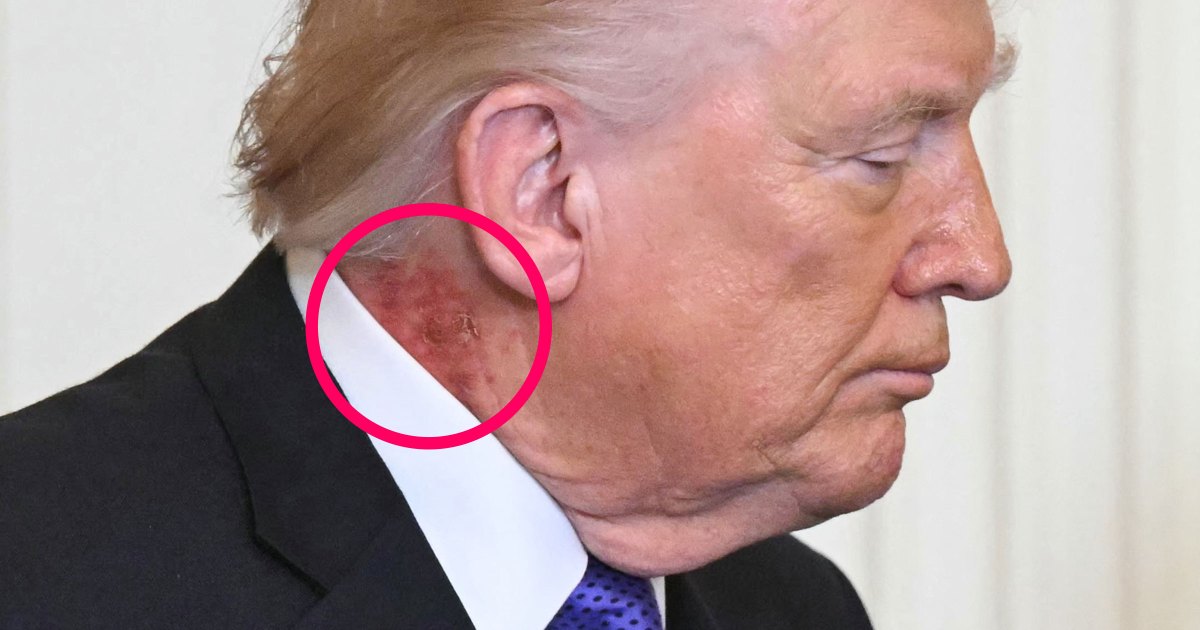
In response to the burgeoning inquiries, the White House issued a statement attributed to President Trump’s physician, Sean Barbabella. The statement read: "President Trump is using a very common cream on the right side of his neck, which is a preventative skin treatment, prescribed by the White House Doctor. The President is using this treatment for one week, and the redness is expected to last for a few weeks." This official explanation, while aiming to assuage concerns, was notably vague, declining to specify the exact nature of the "preventative skin treatment" or the underlying condition it was addressing. The lack of further detail only served to intensify the public’s appetite for speculation, leaving many questions unanswered about the President’s dermatological health and overall well-being.
The public and medical observers quickly turned to various theories to explain the visible mark, given the limited official information. Among the most frequently cited possibilities online was shingles, a viral infection caused by the varicella-zoster virus, the same virus responsible for chickenpox. Shingles typically manifests as a painful, blistering rash that often appears in a stripe on one side of the body or face, commonly affecting older adults whose immune systems may be less robust. While the White House statement referred to a "rash-like injury," suggesting an inflammatory process, the characteristic blistering of shingles was not explicitly visible in the photographs, though the appearance could be consistent with a healing or treated shingles outbreak, which can indeed leave behind discolored skin for weeks. The fact that Trump is an octogenarian lends some credence to this theory, as age is a significant risk factor for shingles. Treatment often involves antiviral medications and pain relief, and creams might be used to soothe the affected area, although the "preventative" aspect of the White House’s explanation doesn’t align perfectly with shingles treatment, which is typically reactive once an outbreak occurs.
Another prominent theory suggested the mark could be related to President Trump’s alleged use of blood thinners. These medications, prescribed to prevent blood clots, are known to increase the risk of bruising and skin fragility. Easy bruising, petechiae (small red or purple spots on the skin), or even more significant skin lesions can sometimes be side effects. The observation that the President’s right hand also "appeared significantly swollen" during the Monday event added fuel to this particular line of speculation. This hand swelling, which may or may not be connected to the neck mark, follows a pattern of recurrent, mysterious bruise-like marks that have appeared on his right hand since at least the previous year. The White House had previously attributed these hand marks to the mundane act of "shaking too many hands," an explanation that was widely met with skepticism, especially after a similar mark was spotted on his left hand earlier this year, undermining the initial justification. The combination of skin lesions and swelling, particularly in an individual on blood thinners, could suggest a propensity for capillary fragility or minor trauma leading to more noticeable marks.
Beyond these common public theories, medical experts might consider other dermatological conditions that could fit the White House’s description of a "preventative skin treatment" causing redness lasting "a few weeks." One strong possibility is the treatment of actinic keratosis (AK), which are rough, scaly patches on the skin caused by years of sun exposure. AKs are considered precancerous lesions and are very common in older individuals, especially those with fair skin and a history of sun exposure. Dermatologists often treat AKs with topical chemotherapy agents like 5-fluorouracil (5-FU) or immunomodulators like imiquimod. These creams work by causing an inflammatory reaction, essentially destroying the damaged skin cells. The treated area typically becomes red, inflamed, crusty, and can even scab over, with the redness and healing process often lasting for several weeks after the treatment course is completed. This would align perfectly with a "preventative skin treatment" (preventing progression to skin cancer) and the expectation of "redness… for a few weeks." Given Trump’s age and complexion, such a treatment would not be unusual.
The recurring nature of visible health anomalies on President Trump’s person, from the mysterious hand marks to this latest neck lesion, underscores the persistent scrutiny applied to the health of a sitting president, particularly an older one. Throughout history, the health of U.S. presidents has often been a closely guarded secret, sometimes with significant national implications. From Grover Cleveland’s secret cancer surgery to Woodrow Wilson’s debilitating stroke, the public has a long-standing interest, and arguably a right to know, about the physical and mental fitness of their commander-in-chief. In the modern era, with ubiquitous media coverage and the rapid dissemination of information via social platforms, any visible physical change on a president is immediately scrutinized and analyzed.
The White House’s past explanations for President Trump’s health-related issues have often been vague or met with public skepticism. The "shaking too many hands" explanation for his hand marks, for instance, was widely seen as an attempt to downplay or deflect from a potentially more serious underlying condition. This pattern of limited transparency has historically led to heightened public concern and speculation. During a period of "burgeoning war" with Iran, the physical well-being of the President takes on even greater significance, as global leaders and domestic populations look for signs of strength, stability, and unwavering leadership. Any perceived health issue, however minor, can fuel uncertainty and potentially impact national morale or international perceptions of American leadership.
The events of Monday, March 2, 2026, therefore, served as another stark reminder of the intense public and media focus on presidential health. The image of President Trump with the noticeable mark on his neck, delivering comments on a serious international conflict, encapsulated the dual pressures of leadership and public accountability. While the official explanation pointed to a routine dermatological treatment, the lack of specifics, coupled with past instances of vague health disclosures, ensured that the "significant rash-like injury" would remain a topic of intense discussion, contributing to the ongoing narrative surrounding the President’s health and the challenges of transparency in high office. As the world watched the developments in Iran, many eyes also remained fixed on the small, red mark on the President’s neck, an unexpected symbol of the complexities of modern presidential leadership.