Joko Widodo
In 2025, the landscape of artificial intelligence investment underwent a profound transformation, with six prominent venture capitalists and fund managers offering crucial insights into the evolving strategies and burgeoning opportunities across the entire AI stack. This year marked an unprecedented acceleration in AI funding, as startups and investors alike aggressively positioned themselves for market dominance in what has become the defining technological wave of the decade. By the third quarter, a staggering nearly half of all global startup funding flowed into AI companies, according to Crunchbase data, pushing global venture funding up 38% year over year in Q3, largely propelled by colossal deals for established AI giants. Overall, AI startups collectively raised an estimated $100 billion in the first half of 2025 alone, a figure that astonishingly matched 2024’s full-year total, signaling a dramatic shift in capital allocation and market focus. Against this backdrop of explosive growth and intense competition, these six active AI investors shared their invaluable perspectives, providing a ground-level view of how the AI playbook is rapidly evolving—from securing critical compute resources and building proprietary data moats to pioneering new models for co-founding companies and navigating the complex interplay between physical infrastructure and human psychology.
Accel’s Botteri: How Startups Can Compete Against Behemoths in the Compute Race

Philippe Botteri, a partner at Accel, articulated a central challenge and opportunity for startups: how to thrive amidst the immense spending power of the "Super Six"—Nvidia, Microsoft, Apple, Alphabet, Amazon, and Meta. These tech titans generate hundreds of billions in operating cash flow, much of which is being funneled directly into building out formidable AI infrastructure. Accel’s 2025 Globalscape report, co-authored by Botteri, meticulously mapped this new AI power dynamic, outlining strategic pathways for startups to not just survive, but compete. Accel, a perennial fixture on The Crunchbase Unicorn Board (which saw its value surge this year due largely to the AI boom), has actively backed a diverse array of AI-native startups, spanning both the foundational model and application layers.
This includes investments in prominent model developers like Anthropic and the small model specialist H Co., as well as infrastructure providers such as the publicly traded Nebius Group. On the application side, Accel has supported innovative companies like Anysphere (creator of Cursor), Perplexity, Synthesia, and cybersecurity startup Cyera. Botteri’s core thesis is that despite the incumbents capturing enormous market share, there remains ample room for agile, focused, and fast-growing AI-native companies to carve out new categories or radically reinvent existing ones. Speaking at Web Summit in Lisbon, Botteri passionately declared, “If you don’t think that GenAI is going to generate a 1%-2% increase in the global GDP, then I’m not sure why we’re doing all this.” This statement underscores Accel’s belief in AI’s transformative economic potential and the substantial value still available for innovative startups.
Foundation Capital’s Vassallo: Bridging Physical Tech and Human-AI Interaction

The massive acceleration of AI and its insatiable demand for computing power have raised an urgent, almost existential, question for the industry: Can the underlying physical infrastructure keep pace? As many investors observed this year, AI’s primary bottlenecks are increasingly physical—energy supply, specialized chips, and data center capacity—and these very constraints are giving rise to some of the most compelling startup opportunities. Botteri’s analysis, for instance, projected an alarming 117-gigawatt energy shortfall over the next five years to meet anticipated AI demand, an amount roughly equivalent to powering three large European economies combined.
Steve Vassallo, general partner at Foundation Capital, has approached this challenge from a uniquely prescient venture perspective. His firm notably incubated AI chipmaker Cerebras Systems back in 2016, long before the current fervor around AI infrastructure. Vassallo vividly recalled that betting on semiconductors in the mid-2010s was widely considered “a recipe for losing a lot of money,” yet Foundation Capital’s team believed that AI workloads were expanding so rapidly that traditional computing architectures would inevitably hit a wall. That thesis has proved remarkably accurate, with Cerebras signaling plans to go public and Nvidia’s market capitalization soaring past $4 trillion.
Beyond the physical, Vassallo emphasized that the most impactful companies in this cycle will be those that not only harness AI’s power but also remain acutely mindful of how humans can be “hacked.” This refers to developing products that respect human psychology as much as the physics of computation. He highlighted reinforcement learning with human feedback (RLHF) as a critical area, where human input helps refine AI behavior, simultaneously making people more adept at collaborating with the intelligent systems they are training. Foundation Capital’s AI investments reflect this dual focus, including seed rounds in Tennr, a company automating often convoluted and paper-based healthcare authorization workflows, and Jasper, an AI-powered writing assistant built atop OpenAI’s GPT-3. The firm also led the Series A for PlayerZero, a product designed to predict and debug software failures in AI-written code before deployment. Vassallo encapsulated their investment philosophy by stating, “We love working with founders who are living right at that edge,” referring to the frontier where cutting-edge AI meets real-world human and infrastructure challenges.

Dell Technologies Capital: Investing at the Silicon Level for Enterprise Disruption
At Dell Technologies Capital (DTC), managing director Daniel Docter and partner Elana Lian occupy a unique vantage point at the critical intersection of infrastructure and enterprise demand. Dell itself anticipates an impressive $20 billion in AI server shipments by fiscal 2026, and its venture arm has demonstrated remarkable success with six exits since June—one IPO and five acquisitions—at a time when exits across the broader venture landscape have been scarce. Dell’s position as a leading GPU server provider grants DTC an unparalleled perspective, giving its team a close-up view of nearly every serious enterprise AI buyer and builder.
Echoing observations from other investors, DTC noted the unprecedented pace of investment in hot AI startups. Docter shared, “We’ll meet with a company on a Tuesday for the first time and sometimes by Thursday, they have a term sheet that they’ve already signed.” This frantic speed underscores the intense competition and perceived urgency in the AI market. DTC’s infrastructure-level investments include AI chipmaker Rivos, which Meta plans to acquire for an undisclosed sum (pending regulatory approval). They have also backed SiMa.ai, a company developing chips for embedded edge use cases in sectors like automotive, drones, and robotics, and Runpod, an AI developer software layer offering on-demand access to GPUs. Docter explained their strategic rationale for investing at the silicon level: “you can be incredibly disruptive to the ecosystem.”

On the application front, DTC’s portfolio includes Maven AGI, which provides advanced customer support for complex and high-compliance enterprise scenarios, and Series Entertainment, a generative AI platform for game development designed to drastically shorten deployment timelines. These investments demonstrate DTC’s commitment to supporting innovations that empower enterprises across the AI spectrum, from foundational hardware to sophisticated applications.
Sierra Ventures’ Guleri: The Layer-Cake Approach and Data as the Ultimate Differentiator
If compute power is the bottleneck, then data is unequivocally the differentiator. Elana Lian at DTC succinctly articulated this, stating, “AI is almost a data problem.” For AI models to continue their relentless improvement, she argued, the industry needs not just more parameters, but high-quality, domain-specific data.

Tim Guleri, managing partner at Sierra Ventures, shares this laser focus on data. He detailed his firm’s “layered cake” framework for AI investing, which segments opportunities into five distinct levels: core infrastructure; applied infrastructure built atop foundational models; horizontal applications; vertical applications; and entirely novel innovations that would simply not exist without AI. Sierra Ventures strategically avoids competing in the most capital-intensive infrastructure layer, instead leaning heavily into applied infrastructure and applications where proprietary data and intelligent distribution strategies can create robust and durable competitive moats.
Guleri pointed to the vast economic landscape, noting that global GDP hovers around $110 trillion, with agriculture accounting for roughly $6 trillion. This leaves over $100 trillion in services and industries where he anticipates immense AI-driven efficiency gains. Sierra seeks out startups that tackle large, painful workflows, promise order-of-magnitude productivity improvements, and, crucially, sit atop rich, often untapped, datasets. He characterized AI as “the wave that’s lifting everything on top of it,” predicting, “There’s going to be a tremendous amount of value creation in the coming decades.” This perspective highlights Sierra’s belief in AI’s pervasive impact across virtually every sector of the economy.
AI Fund’s Ng: Corporate Partnerships and Vertical Specialization

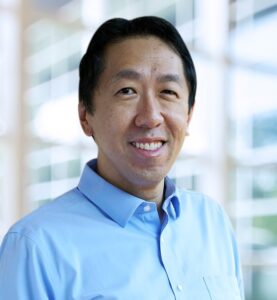
Andrew Ng, a co-founder of Google Brain and Coursera, has adopted a highly hands-on approach to cultivating unique data assets through corporate partnerships at AI Fund, his venture studio launched in 2018. Ng’s model involves corporate Limited Partners (LPs) such as AES, HP, Mitsui & Co., and Mitsubishi, who bring AI Fund into highly specialized sectors—renewable energy, large-scale industrial operations, insurance, and more. In these domains, internal data is both exceptionally difficult to access and absolutely critical for building defensible AI products.
Ng revealed that many of AI Fund’s startup ideas originate directly from these corporate partners, who identify significant gaps in vast but often under-digitized markets. “It turns out a meaningful fraction of our startup ideas come from corporate partners that have spotted a market need, often in some sector of the economy, which is very large, very important but completely foreign to the typical consumer, or completely foreign to the typical AI engineer,” Ng explained. He added, “I find that it’s been interesting how often we get to play in these spaces. We think it’s wildly exciting, while no one else cares.”
While venture firms like Sequoia Capital and New Enterprise Associates also invest in AI Fund, Ng emphasized that his fund’s strategy diverges significantly from the traditional venture capital approach. “Unlike a traditional VC, our primary business activity is not to compete for deal flow,” he stated. “Our primary business activity is to identify promising startup ideas, validate the market need and the customer need. Then we recruit a CEO to work alongside us to build a company.” Ng sees continued immense opportunities in specific verticals, particularly in visual and voice AI, underscoring his belief that “AI is not one thing; it is many different things that are creating new opportunities.”
GV on Being Willing to Invest at AI’s Premium Valuations
GV, formerly Google Ventures, has quietly solidified its position as one of the most active and flexible corporate investors in the AI space. With Alphabet as its sole LP but maintaining independent investment decision-making, GV operates with a unique freedom. This allows it to back startups that directly compete with Google’s own products—a dynamic previously seen with Slack and now evident with numerous AI companies going head-to-head with Alphabet’s internal initiatives.
Managing partners Dave Munichiello and Tom Hulme detailed GV’s expansive investment strategy, which involves writing checks across the entire AI stack—from foundational chips and compilers to diverse applications—and at both early and late stages of company development. Crucially, GV has demonstrated a willingness to accept premium AI valuations when they believe the opportunity truly warrants it.

Munichiello articulated the compelling economics driving these high valuations: “When we look at companies that are coming in to raise, the revenue run rate is insane. These companies are growing incredibly fast, faster than ever before.” He added, reflecting the current market sentiment, “And it’s very hard to spend a lot of time looking at AI applications companies, and then go back to looking at other companies.” This highlights the intoxicating growth trajectories and transformative potential that AI startups are exhibiting, making them irresistible even at elevated price points. GV’s flexible mandate and deep understanding of the AI ecosystem position it as a formidable player, capable of identifying and backing the next generation of AI leaders regardless of competitive dynamics with its parent company.
The insights gleaned from these six active AI investors in 2025 paint a vivid picture of a sector undergoing explosive growth and rapid strategic evolution. From Accel’s emphasis on startup agility against tech giants, to Foundation Capital’s foresight in physical infrastructure and human-AI collaboration, and Dell Technologies Capital’s strategic silicon-level bets, the investment landscape is diverse yet converges on key themes. Sierra Ventures underscores data as the ultimate differentiator, while AI Fund leverages corporate partnerships for unique vertical insights. Finally, GV’s willingness to embrace premium valuations for hyper-growth AI applications signals the profound conviction in the sector’s future. These learnings collectively underscore that 2025 was not just a year of unprecedented funding, but a pivotal moment where the AI playbook was rewritten, laying the groundwork for sustained innovation and value creation across the entire technological stack for decades to come.