isnaini azizah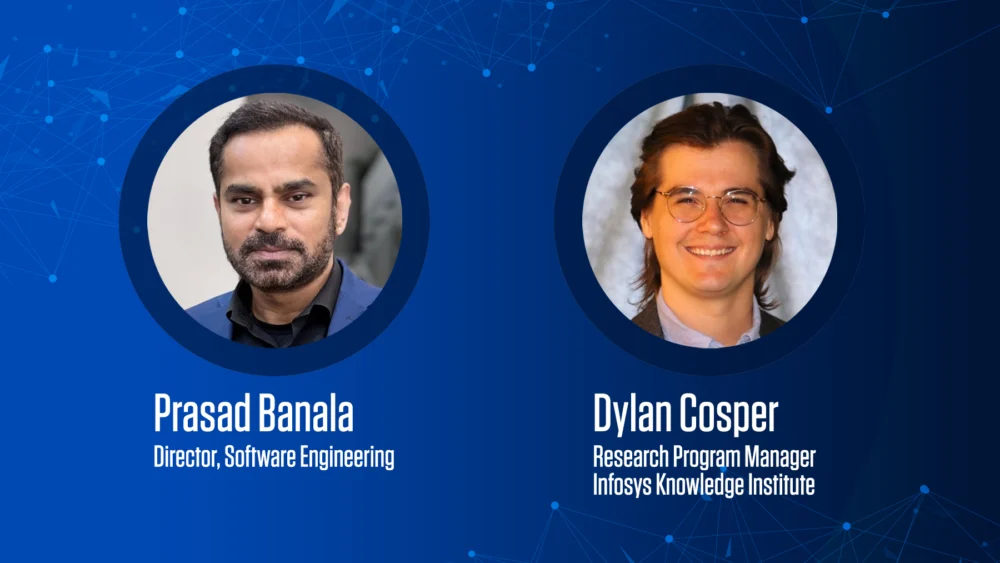
The journey towards truly intelligent, autonomous systems in retail, often referred to as "agentic AI," is a complex yet increasingly vital endeavor. These advanced AI systems, capable of independent decision-making and action within defined parameters, hold immense potential to revolutionize customer experiences, optimize operations, and drive unprecedented efficiency. However, realizing this potential requires more than just sophisticated algorithms; it demands a robust framework of strategic planning, meticulous implementation, and unwavering commitment to quality and governance. This is precisely the territory explored in a recent episode of the Infosys Knowledge Institute Podcast, where Dylan Cosper engaged in a insightful conversation with Prasad Banala, Director of Software Engineering at a prominent US-based retail organization. Their discussion illuminated the practical realities and essential components of operationalizing agentic AI, particularly within the intricate landscape of the software development lifecycle.
Banala’s team’s experience offers a compelling case study in how agentic AI can be effectively integrated to streamline critical development processes. He elaborated on how their application of AI extends to the foundational stages of software development, beginning with the rigorous validation of requirements. By leveraging AI, they can analyze vast amounts of textual and structured data to identify ambiguities, inconsistencies, and potential gaps in initial requirements, thereby preventing costly rework downstream. This proactive approach ensures that development efforts are aligned with genuine business needs from the outset.
The next significant area of AI application highlighted by Banala is the generation and analysis of test cases. Traditionally, this has been a labor-intensive and time-consuming process. Agentic AI, however, can automate the creation of a diverse range of test scenarios, encompassing both typical and edge cases, thereby enhancing test coverage and reducing the risk of undetected bugs. Furthermore, the AI’s analytical capabilities extend to evaluating the effectiveness of these test cases, identifying redundancies, and prioritizing those that offer the highest value in terms of defect detection. This intelligent approach to testing not only accelerates the release cycle but also significantly improves the overall quality of the software.
Perhaps one of the most impactful contributions of agentic AI, as described by Banala, is its role in accelerating issue resolution. When defects are identified, agentic AI can quickly analyze logs, error messages, and code repositories to pinpoint the root cause of the problem. This rapid diagnosis allows development teams to focus their efforts on finding and implementing solutions more efficiently, minimizing downtime and ensuring a smoother customer experience. The ability of AI to sift through complex technical data at speeds far exceeding human capacity is a game-changer in maintaining the agility and responsiveness required in today’s fast-paced retail environment.
Crucially, Banala emphasized that the successful deployment of agentic AI is not a matter of simply unleashing autonomous systems without oversight. He underscored the paramount importance of maintaining strict governance throughout the entire process. This includes establishing clear ethical guidelines, data privacy protocols, and accountability frameworks. The retail sector, with its direct engagement with consumers and sensitive data, necessitates an uncompromising stance on responsible AI deployment. Governance ensures that AI systems operate within legal and ethical boundaries, fostering trust and mitigating potential risks.

The concept of a "human-in-the-loop" (HITL) review was another cornerstone of Banala’s presentation. This approach acknowledges that while AI can automate many tasks and provide valuable insights, human judgment and expertise remain indispensable. In their implementation, critical decisions and outputs generated by the agentic AI undergo review by human experts. This could involve engineers validating AI-generated code, product managers assessing AI-proposed requirement changes, or quality assurance professionals verifying AI-identified bugs. This collaborative model ensures that AI acts as an intelligent assistant, augmenting human capabilities rather than replacing them entirely, thereby fostering a more robust and reliable development process.
Furthermore, Banala stressed the non-negotiable requirement of measurable quality outcomes. The effectiveness of agentic AI cannot be assumed; it must be empirically demonstrated. This involves defining clear key performance indicators (KPIs) related to defect density, test coverage, resolution times, and customer satisfaction. By continuously monitoring these metrics, teams can objectively assess the impact of agentic AI on software quality and identify areas for further optimization. This data-driven approach ensures that investments in AI are yielding tangible benefits and contributing to the overarching business objectives of the retail organization.
The implications of agentic AI in retail extend far beyond the software development lifecycle. Consider its potential in customer service, where AI-powered agents can handle a vast array of inquiries, personalize recommendations, and even proactively address potential issues before they impact the customer. In inventory management, agentic AI can predict demand with unprecedented accuracy, optimize stock levels, and automate replenishment processes, thereby minimizing stockouts and reducing waste. In marketing, it can analyze customer behavior to tailor campaigns, personalize offers, and optimize advertising spend. The ability of these agents to learn, adapt, and execute complex tasks autonomously opens up new frontiers for efficiency and customer engagement.
However, the path to this future is paved with challenges. One significant hurdle is the availability of high-quality, relevant data. Agentic AI systems learn from data, and if the data is biased, incomplete, or inaccurate, the AI’s performance will suffer. Retail organizations must therefore invest in robust data management strategies, ensuring data cleanliness, integrity, and accessibility. Another challenge lies in the integration of AI systems with existing legacy infrastructure. Many retail companies operate with a patchwork of older systems, and seamlessly integrating advanced AI solutions can be a complex and costly undertaking.
The need for a skilled workforce is also paramount. While AI can automate tasks, it also creates a demand for individuals who can develop, deploy, manage, and interpret AI systems. This necessitates investment in training and upskilling existing employees, as well as attracting new talent with specialized AI expertise. The cultural shift required to embrace AI-driven decision-making within an organization also cannot be underestimated. Resistance to change, skepticism about AI capabilities, and concerns about job displacement are all factors that need to be addressed through clear communication, education, and demonstrating the value proposition of AI.
The example provided by Prasad Banala and his team at the US-based retail organization serves as a powerful testament to the feasibility and benefits of operationalizing agentic AI. Their focus on rigorous requirement validation, intelligent test case generation and analysis, and accelerated issue resolution, all underpinned by a strong commitment to governance and human oversight, offers a blueprint for other organizations looking to harness the power of AI. As the retail landscape continues to evolve at an unprecedented pace, the ability to effectively implement and leverage agentic AI will not merely be an advantage, but a fundamental requirement for survival and success. The future of retail is undoubtedly intertwined with the intelligent, autonomous capabilities that agentic AI promises, and understanding what it truly takes to make it work is the first, crucial step in realizing that future. The Infosys Knowledge Institute Podcast episode provides an invaluable glimpse into this transformative journey, offering practical insights and a clear roadmap for navigating the complexities of agentic AI implementation in a demanding industry.