isnaini azizah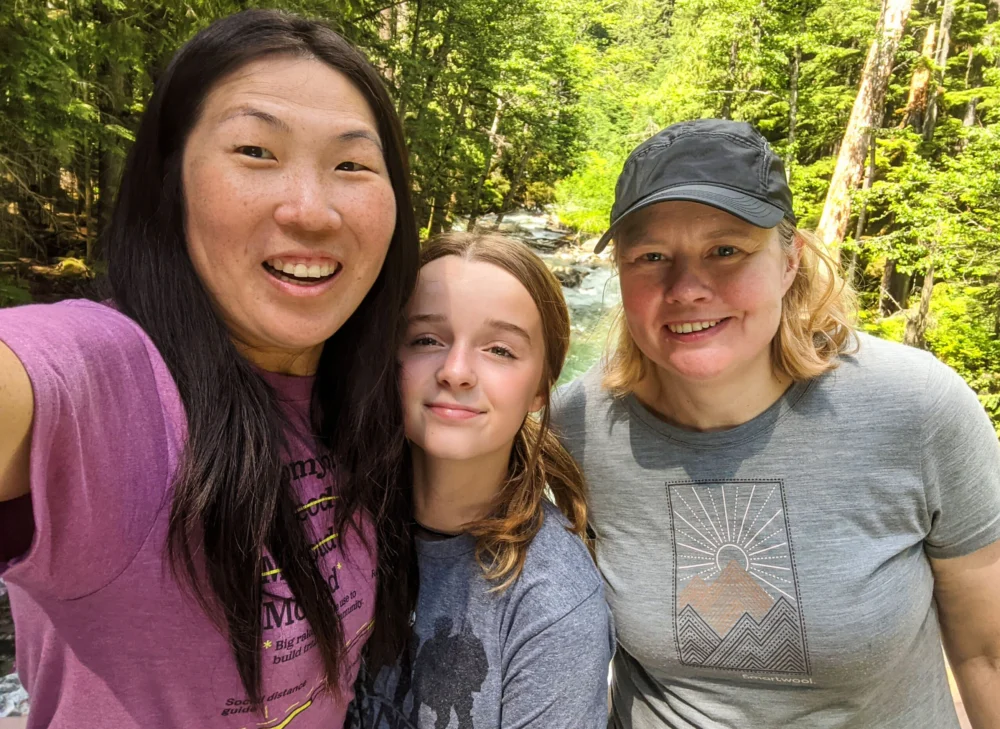
In a groundbreaking initiative that harnesses the power of collective love for pets and cutting-edge data science, Darwin’s Ark is revolutionizing our understanding of animal health, behavior, and even human disease. At the heart of this scientific endeavor is Petra, a photogenic Russian Blue cat with striking green eyes, who has become arguably the world’s most sequenced feline. Rescued from an animal shelter in Reno, Nevada, by Charlie Lieu, a formidable data whiz, serial entrepreneur, investor, and co-founder of Darwin’s Ark, Petra’s genetic code has been fully sequenced six times and her DNA extracted nearly 60 times, all in the pursuit of scientific discovery.
Petra is just one of over 67,000 cats and dogs whose owners have generously contributed their pets’ information to Darwin’s Ark databases. Researchers and collaborators are meticulously analyzing this vast repository to unravel the complexities of pet health and behavior. Since its inception in 2018, Darwin’s Ark has empowered scientists to delve into a wide spectrum of research, from understanding the genetic underpinnings of cancer to exploring the nuances of animal sociability and investigating whether trainability is an inherited trait. This data-driven approach has not only debunked long-held stereotypes about specific dog breeds but has also illuminated striking similarities between complex human and animal diseases.
While DNA testing for dogs has become commonplace, with numerous for-profit companies offering breed identification services, Lieu and her Darwin’s Ark co-founder, Elinor K. Karlsson, envisioned a more ambitious undertaking. Their goal extended beyond providing individual pet owners with personalized DNA reports. They aimed to create a community science platform that integrates genetic data with comprehensive behavioral information, collected through surveys about how pets play, socialize, and even exhibit quirky behaviors like the "zoomies" after using the litter box. This innovative approach synergistically combines genetic insights with the intimate knowledge that pet owners possess, effectively leveraging the profound human-animal bond to drive scientific advancement.
Crucially, Darwin’s Ark has successfully addressed a significant hurdle that often impedes progress in human medicine: the challenge of acquiring the immense volume of data necessary to truly understand and ultimately solve complex medical problems. This very challenge initially drew Lieu, who now serves as Darwin’s Ark’s chief of research operations, into the realm of pet genetics. Her early career was marked by a deep immersion in the Human Genome Project at the Broad Institute, where she first collaborated with Karlsson. She recounts late nights spent "babysitting" servers, a testament to her dedication. For many years, cancer research served as her guiding principle, fueled by the personal loss of her mother to the disease and her own early battle with multiple tumors.
The quote, "Researchers used data collected by Darwin’s Ark to show that just 9% of variations in dog behavior can be predicted by breed," underscores a significant finding that challenges common assumptions.

Throughout her nearly three decades of work with the Broad Institute and related initiatives, Lieu consistently observed the profound difficulties in studying intricate diseases like cancer. The meticulous collection of extensive human data while upholding stringent privacy regulations presented a formidable task, as did securing long-term participant compliance with rigorous protocols.
A decade ago, Lieu reconnected with Karlsson, who had transitioned from human genomics to animal genetics and was actively engaging with pet owners in her research. Karlsson’s frustrations with the scarcity of large-scale genomic data needed for scientific advancement resonated deeply with Lieu. An idea sparked: what if they could combine Lieu’s expertise in big data platforms and her experience in establishing nonprofits to collect genomic data from pets, using them as proxies for understanding complex diseases and behaviors? Lieu explains their shared vision: "We talked a lot about how we [might] enable a platform that could help us collect the right kinds of data at the level that’s necessary in order to do the kinds of science that the world needs." While this approach might be challenging with humans, Lieu astutely notes, "Everybody wants to talk about their dogs and cats, right?"
This powerful synergy led to the birth of Darwin’s Ark. Initially focusing on dogs, the organization’s data enabled Karlsson and a collaborative team from the Broad Institute and other institutions to demonstrate that breed accounts for only about 9% of variations in dog behavior – a figure significantly lower than often perceived. Lieu expressed hope that this finding would benefit breeds like pit bulls, which are frequently subjected to unfair stereotypes, lower adoption rates, and sometimes euthanasia based on unfounded assumptions about their temperament.
The impact of Darwin’s Ark’s work extends beyond the welfare of pets; it holds immense potential for improving human health as well, particularly in the burgeoning field of comparative oncology. Lieu shares insights from their involvement in early canine cancer research, where collaborations aimed to determine if a blood draw could detect cancer in animals. "Turns out you could," she states. "And in the last couple of years, an FDA-approved test has been available for humans to figure out whether or not you have lung cancer. All that work started in dogs, so you could start to see the power of doing something in animals that then impacts human health."
In 2024, Darwin’s Ark expanded its scope to include cats, and while it’s still early days for published results, even their research methodologies are proving innovative. Traditionally, DNA extraction from a living animal involves swabbing the inside of the cheek. While dogs generally tolerate this, cats are less amenable to such procedures. Similarly, plucking hairs with follicles, another potential DNA source, is not well-received by felines. To overcome this, Chad Nusbaum, a former Human Genome Project colleague recruited by Lieu, helped the Darwin’s Ark team develop an effective method for extracting DNA from naturally shed fur or hair. This breakthrough has significantly advanced the field. "That means, in practice, that cats’ DNA is collected by brushing their fur. Now the cats ‘not only don’t mind sample collection – some of them really enjoy it,’" Nusbaum adds with a chuckle.
This innovative approach not only benefits cat research but also holds profound implications for conservation efforts. Obtaining DNA samples from endangered or sensitive animals through blood or skin samples can be incredibly difficult and distressing for the animals. The ability to collect DNA from naturally shed hair could unlock new avenues for conservationists working with vulnerable species.

Recognizing that crucial scientific progress could originate from within or outside their organization, Lieu and Karlsson established Darwin’s Ark as a nonprofit, making its data freely accessible to researchers outside commercial entities. While the organization periodically shares its sequence data in public repositories, the management of these by different entities can complicate scientific utilization. Researchers often need to submit custom requests, detailing their project’s objectives. However, a recent grant will enable Darwin’s Ark to build a public portal, vastly simplifying data access, matching, and utilization for scientists worldwide. "Our hope is that we would be able to create a data set that scientists around the world would be able to leverage to elucidate whatever it is that they’re doing," Lieu states. "Whether you’re a cancer scientist or a neurological scientist or an immunology-focused scientist, any number of complex disease areas could be helped by having very massive data sets."
For Lieu, Darwin’s Ark represents the latest chapter in an illustrious career marked by diverse experiences, including impactful roles at Amazon and NASA. "The thread that ties it all together is big data," she asserts.
Following her intensive involvement with the Human Genome Project, Lieu tackled a different kind of big data challenge at Amazon, focusing on warehouse fulfillment. Leveraging her background in biological sciences, she developed an evolutionary algorithm for outbound logistics. This ingenious solution allowed for dynamic optimization of storage and a significant reduction in fulfillment costs, notably without requiring constant data analysis. As a founder or co-founder of at least a dozen ventures, Lieu built upon her Amazon experience with her most recent startup, AirTerra. This logistics company, founded in 2020, streamlines e-commerce deliveries by consolidating fragmented last-mile shipping providers. AirTerra achieved unicorn status and was acquired by American Eagle Outfitters in 2021. While Lieu attributes some of this success to fortunate timing—"You start a shipping and logistics organization in the pandemic—of course you’re going to get acquired"—her co-founder, Brent Beabout, emphasizes her exceptional skill and work ethic, which were the true drivers of her "luck." Beabout describes her as "highly collaborative," "super knowledgeable," and possessing an unparalleled passion and dedication, noting, "I’ve never seen a person that worked as many hours as Charlie did… I don’t think she ever slept."
The quote, "Lieu jokes that she’s in a ‘midlife crisis’ as she sorts out what to do next, because there’s so much she could do. So she’s looking for the ‘biggest thing’ she can do for the world," highlights her thoughtful introspection and ambition to maximize her impact.
Despite her entrepreneurial successes, Lieu’s upbringing "well below the poverty line" profoundly shaped her approach as an investor. She is particularly driven to help other entrepreneurs overcome systemic barriers. "I wanted to look back on all the obstacles that I had faced coming up," she explains, "Not just as a woman, not just as a person of color, but [also] the economic barriers of not having the network, not being able to access other people who have been successful, not even understanding the basics of financial markets." Consequently, much of her career has been dedicated to giving back through mentorship and direct investment in ventures founded by individuals from underrepresented backgrounds.
Lieu’s commitment to social causes extends beyond her professional life. She has actively volunteered with her local trails association and served on numerous boards in the Seattle area. In the mid-2010s, an outdoor-focused organization where she served on the board faced scrutiny for providing a platform to a rock climber credibly accused of sexual assault. As a climber herself, Lieu initially underestimated the prevalence of such issues in the community. However, her data-driven mindset prompted her to develop a plan to conduct a survey on the matter, ensuring respondent anonymity.

This survey evolved into SafeOutside, a grassroots movement dedicated to combating sexual assault within the outdoor community. After analyzing the data and recognizing the widespread nature of the problem, Lieu spent years interviewing survivors about their experiences. She ultimately partnered with Alpinist magazine to publicize and share the survey’s findings. Beyond fostering crucial conversations, this initiative played a pivotal role in the eventual prosecution and imprisonment of Charlie Barrett, a once-celebrated professional climber. Barrett is currently serving a life sentence after being convicted of repeated sexual assaults on a female climber in Yosemite National Park. Three additional women testified at his trial, detailing their own experiences of sexual assault by Barrett.
Katie Ives, the editor with whom Lieu collaborated on the project at Alpinist, recalls being deeply impressed by Lieu’s "sense of caring and compassion and her determination to amplify the voices of people who have been marginalized by history or by the climbing community." Ives describes Lieu as a person "whose life is very much driven by a sense of ethical purpose."
Initially, Lieu approached SafeOutside discreetly, fearing professional repercussions and requesting her name be omitted or mentioned only in passing in public reporting. She believed the subject matter made people uncomfortable. However, in early 2025, she began to address the issue more openly. "That’s actually part of the problem, right? People who have status refusing to talk about an issue that’s so prevalent," she states. Today, she is more vocal than ever, encouraging others with any form of social influence to speak out as well.
This reevaluation of her approach reflects a personal crossroads for Lieu. After years of launching new ventures, serving on numerous boards, and subsisting on minimal sleep, she is now consciously stepping back. She is declining board positions, pausing new venture ideas, and has assembled a team to delegate more of her Darwin’s Ark responsibilities. Lieu, who excels at guiding new companies through their startup and early growth phases, is actively recruiting a new leadership team to steer Darwin’s Ark through its next stage of expansion. Her aim is to transition from day-to-day operations this spring, while remaining a board member and active advisor. She playfully describes herself as being in a "midlife crisis" at 50, contemplating her next impactful contribution, given the vast array of possibilities.
In this new chapter, Lieu is focused on identifying the "biggest thing" she can contribute to the world at this moment. She is currently leaning towards focusing on economic inequality and reproductive health access, issues she sees as intrinsically linked to ecology and sustainability.
If her past endeavors—from championing the well-being of cats to pursuing cures for cancer—are any indication, any cause she dedicates herself to will undoubtedly benefit from her formidable drive and expertise. "She’s just somebody who gets things done," remarks Ives. And all the data on Lieu suggests this fundamental characteristic is unlikely to change.