anjir abdul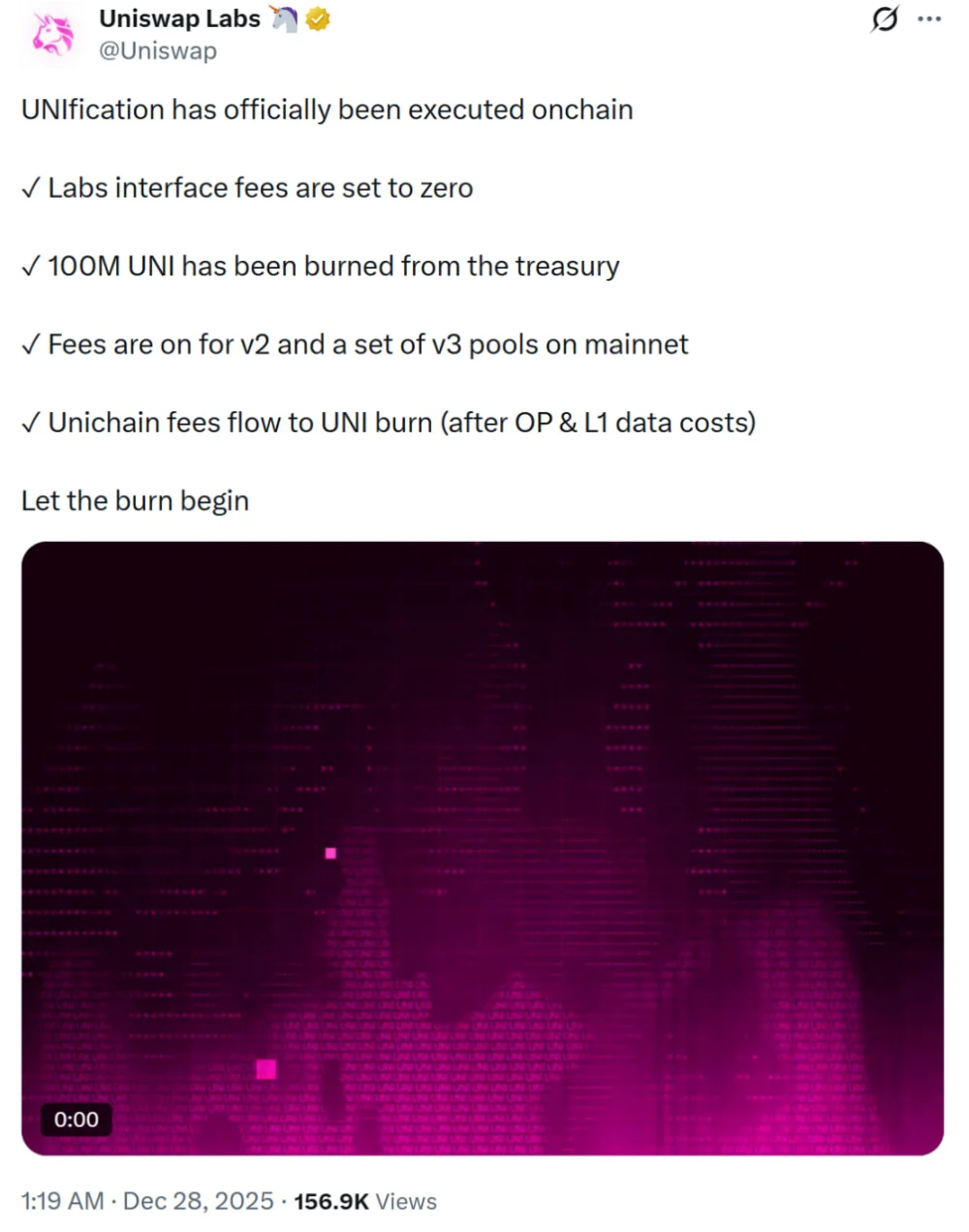
Onchain data confirms the burn transaction was completed around 4:30 am UTC on December 28, representing the first large-scale implementation of the governance decision passed earlier in the week. The irreversible reduction in Uniswap’s native token supply (UNI) solidifies its position as one of the most significant token burns ever conducted by a DeFi protocol, underscoring a growing trend towards value accrual for token holders within decentralized ecosystems.
The journey to this landmark event began with the highly anticipated Uniswap protocol fee switch, aptly dubbed "UNIfication." This proposal, which sought to activate a portion of the trading fees generated by the protocol for UNI holders, passed with an astonishing 99.9% support. The governance vote saw more than 125 million UNI tokens cast in favor of the proposal, compared to a mere 742 tokens voting against it. This near-unanimous consensus highlights the robust alignment among Uniswap token holders regarding the protocol’s future direction and its tokenomics strategy. The sheer volume of participation and the overwhelming support demonstrate the maturity and effectiveness of Uniswap’s decentralized governance model, setting a precedent for other protocols navigating similar strategic decisions.
Several influential figures and organizations within the crypto space, possessing significant voting power, actively backed the UNIfication proposal. Among these heavyweights were Jesse Waldren, the astute founder and managing partner at crypto-focused venture capital firm Variant, known for his deep insights into Web3 innovation. Also lending his considerable support was Kain Warwick, the visionary founder of prominent decentralized finance protocols Infinex and Synthetix, whose endorsement carries substantial weight in the DeFi community. Adding further credibility was Ian Lapham, a former engineer at Uniswap Labs, whose technical understanding of the protocol provided invaluable context and assurance to voters. The collective backing from such industry leaders underscored the strategic importance and long-term benefits envisioned for the Uniswap ecosystem through this fee switch. Their participation not only bolstered confidence but also showcased the collaborative spirit inherent in decentralized governance, where diverse stakeholders contribute to the protocol’s evolution.
Uniswap Labs, the primary development team behind the protocol, promptly confirmed the execution of the burn in a post on X (formerly Twitter), stating, "UNIfication has officially been executed onchain." This official confirmation served to reassure the community and the market that the governance decision had been seamlessly translated into an immutable onchain action. The post also featured a visual representation of the token burn, further solidifying the transparency and verifiability of the event.
As an integral part of this update, Uniswap Labs announced that interface fees charged directly by the Labs entity were set to zero. This move is designed to encourage direct interaction with the Uniswap protocol, fostering a more open and accessible environment for users. Concurrently, fees were activated on Uniswap v2 and a selection of v3 pools operating on the Ethereum mainnet. This activation means that a small percentage of trading fees generated by these highly active pools will now be directed towards the protocol’s treasury, eventually flowing into the burn mechanism. Furthermore, fees generated by the Uniswap protocol are earmarked to flow toward UNI burns after covering essential operational costs, including those associated with Optimism and Layer-1 data, ensuring the sustainability and efficiency of the protocol’s operations across various networks. This carefully structured fee distribution mechanism ensures that the protocol remains economically viable while also creating a deflationary pressure on the UNI token supply.
In the immediate aftermath of the burn, the market responded positively. UNI’s price surged by more than 5% over the past 24 hours, reflecting increased investor confidence and a bullish sentiment. This price appreciation was accompanied by a significant increase in both trading volume and market capitalization, according to data from CoinMarketCap. The positive market reaction underscores the perceived value of the fee switch and token burn, as investors interpret these actions as a strong commitment to value accrual for UNI holders. The token’s circulating supply now stands at approximately 730 million UNI, a substantial reduction from its initial total supply of 1 billion. This permanent reduction in supply is expected to create scarcity, potentially driving further long-term demand and value for the UNI token.
Beyond the immediate financial implications, the Uniswap Foundation, a separate entity dedicated to supporting the Uniswap ecosystem, has reiterated its commitment to fostering innovation and growth. When the UNIfication proposal was first introduced, the Foundation explicitly stated that it would continue funding builders and would not cease its grant programs, which are crucial for supporting protocol development. The Foundation emphasized that empowering developers and fostering a vibrant ecosystem remains a paramount priority for the long-term success of Uniswap.
To further support this overarching plan, the Uniswap Foundation intends to establish a dedicated "Growth Budget." This budget will allocate a significant 20 million UNI tokens, specifically earmarked to fund development and expansion initiatives across the entire Uniswap ecosystem. This strategic allocation demonstrates a forward-thinking approach, ensuring that while the protocol implements value accrual mechanisms, it simultaneously invests in its future, attracting new talent, fostering innovation, and expanding its reach. These funds will likely be distributed through grants, hackathons, and other programs designed to incentivize developers to build on top of or integrate with Uniswap, solidifying its position as a foundational layer of the decentralized web.
The successful execution of the UNI burn and the activation of the fee switch carry profound implications for the broader DeFi space. This event sets a powerful precedent for other decentralized protocols, showcasing the potential for community-led governance to enact significant changes that directly benefit token holders. It underscores the evolving landscape of DeFi tokenomics, where protocols are increasingly moving towards models that capture and distribute value to their native token holders, enhancing their long-term sustainability and attractiveness as investments. The ability of a decentralized community to rally behind such a critical proposal, execute it onchain, and witness immediate positive market reactions, validates the power and efficacy of true decentralized governance.
Furthermore, this move positions Uniswap even more strongly in the competitive decentralized exchange landscape. By directly linking the protocol’s success to the value of its token, Uniswap enhances its appeal to liquidity providers and traders, potentially driving more volume and deepening liquidity. In an environment where regulatory scrutiny over DeFi is growing – as evidenced by ongoing discussions and concerns from figures like US Senator Elizabeth Warren regarding DeFi oversight – Uniswap’s transparent, community-driven approach to major protocol changes offers a compelling narrative of responsible and decentralized innovation. While the article doesn’t delve deeply into regulatory issues, the robust governance framework demonstrated by the UNIfication vote and burn can be seen as a strength in navigating potential future regulatory landscapes.
Looking ahead, the successful implementation of the fee switch and the significant token burn are likely just the beginning. The Uniswap community may explore further activations of the fee switch on additional pools or across different layers, continually optimizing the protocol’s value accrual mechanisms. The "UNIfication" represents a pivotal milestone, transforming Uniswap from merely a liquidity protocol into a more sophisticated, value-generating ecosystem. It signals a maturing phase for the protocol, where governance decisions are not just about technical upgrades but also about strategic financial engineering that directly impacts the economic incentives of its participants. This strategic foresight, coupled with a highly engaged and decisive community, ensures Uniswap remains at the forefront of decentralized finance, continually adapting and innovating to meet the demands of a rapidly evolving digital economy. The future of Uniswap, now with a leaner token supply and a clearer path for value accrual, appears brighter than ever, promising continued growth and influence within the global financial landscape.