Faris Adani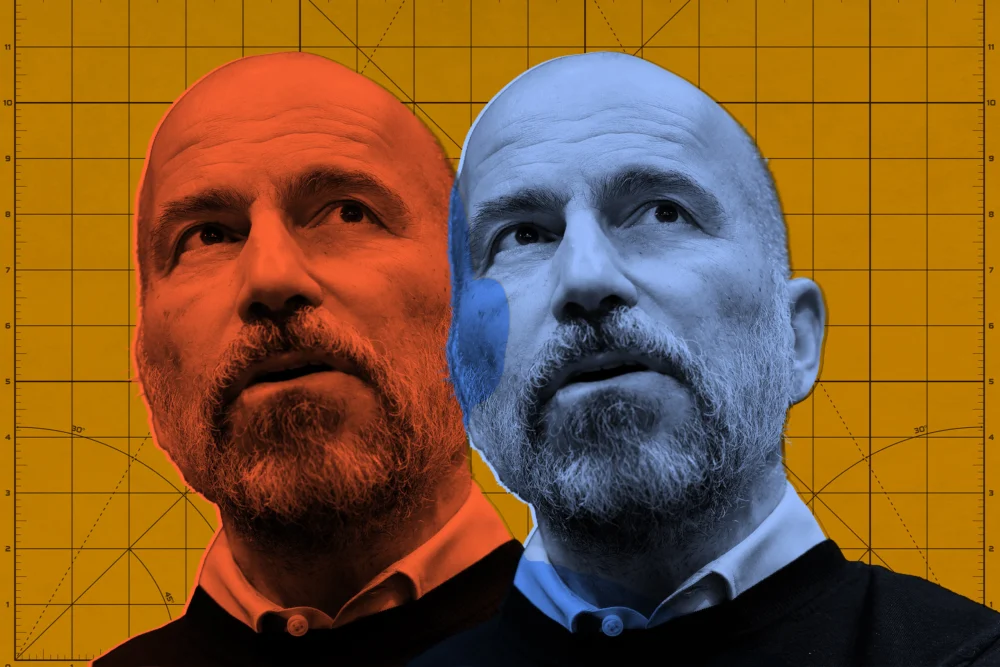
In a move that blurs the lines between corporate ambition and cutting-edge technology, employees at rideshare giant Uber have reportedly developed an artificial intelligence clone of their CEO, Dara Khosrowshahi. This "Dara AI" serves as a digital doppelgänger, allowing teams to rehearse presentations and refine proposals before facing the real chief executive. The revelation, shared by Khosrowshahi himself on a recent episode of the Diary of a CEO podcast, has sparked widespread discussion about the evolving dynamics of workplace culture, the psychological underpinnings of corporate life, and the accelerating integration of AI into every facet of business operations.
Khosrowshahi recounted the anecdote with a mix of amusement and pride, explaining, "One of my team members told me that some teams have built a ‘Dara AI.’ They basically make the presentation to the Dara AI as a prep for making a presentation to me." He noted with satisfaction that by the time ideas reach his desk, they are "beautifully honed," a testament to the meticulous preparation facilitated by his digital twin. This innovative use of AI, born from the innate human desire to anticipate and meet the expectations of superiors, offers a fascinating glimpse into how technology is being leveraged to navigate the complex hierarchies of modern corporations.
The creation of a "boss AI" is more than just a quirky office hack; it speaks to deeper currents within corporate environments. Employees, driven by career aspirations, the need for approval, and perhaps a healthy dose of fear, are constantly seeking ways to gain an edge. In high-stakes meetings with a CEO, every word, every slide, and every data point can significantly impact a project’s future or an individual’s career trajectory. The "Dara AI" acts as a sophisticated rehearsal tool, likely programmed with Khosrowshahi’s known preferences, communication style, strategic priorities, and even potential objections. This allows teams to fine-tune their messaging, anticipate questions, and ensure their arguments are as persuasive and watertight as possible, maximizing their chances of success and minimizing potential friction.
This phenomenon is a perfect, albeit slightly unsettling, illustration of AI’s capabilities in imitation and predictive modeling. By feeding an AI model extensive data—transcripts of Khosrowshahi’s past speeches, interviews, internal communications, and perhaps even anonymized feedback from previous meetings—employees could train it to simulate his responses. The AI could then offer real-time feedback on presentation clarity, logical flow, alignment with company goals, and even potential areas of skepticism. This process, while seemingly sycophantic, is fundamentally about optimizing communication and decision-making pathways within a large organization, ensuring that critical information is presented in the most effective manner possible.
Khosrowshahi’s reaction to his AI clone is particularly telling. Far from being unnerved by the digital mimicry, he expressed clear approval, viewing it as a testament to his employees’ dedication and ingenuity. This positive reception underscores his broader, almost evangelical, enthusiasm for artificial intelligence. He proudly declared that 90 percent of Uber’s coders are now actively using AI in their daily work, with a significant third of them identified as "power users." According to Khosrowshahi, AI is "changing their productivity in a way that I’ve never, ever seen before," and he boldly predicted that it would eventually boost Uber’s software engineers’ efficiency by a remarkable 25 percent.
These pronouncements align with a growing chorus of tech leaders who view AI as the ultimate accelerant for productivity and innovation. Nvidia CEO Jensen Huang, for instance, has famously urged his employees to use AI for "every possible task," stating it would be "insane" not to. This widespread corporate embrace is fueled by the promise of increased output, reduced costs, and the ability to tackle complex problems with unprecedented speed. For companies like Uber, where technological advancement is central to their competitive edge, integrating AI into the engineering workflow can mean faster product development, more robust systems, and a quicker response to market demands. AI tools can assist coders with everything from automated code generation and debugging to testing, documentation, and even identifying security vulnerabilities, freeing up human engineers for more creative and strategic tasks.
However, beneath the surface of CEO optimism lies a complex and often contradictory narrative about AI’s impact on the workforce. While Khosrowshahi initially suggested that increased efficiency might lead him to "hire more engineers" to "go faster," he quickly pivoted to a more ambiguous, and for many, concerning, alternative. He mused, "I may not decide to add engineering headcount. At that point, instead of adding an engineer, I should add agents and buy some more GPUs from Nvidia." This statement encapsulates the central tension surrounding AI: its potential to augment human capabilities versus its capacity to replace human labor.
This sentiment echoes that of many other executives who openly boast about leveraging AI to "slash their companies’ burdensome headcounts," transforming AI from a tool for empowerment into a mechanism for downsizing. This perspective starkly contrasts with the experiences of many rank-and-file workers, who often report finding AI tools to be "mostly useless" or, at best, marginally helpful for specific tasks. The disconnect highlights a perception gap: leaders often see AI through the lens of strategic advantage and cost efficiency, while frontline employees grapple with the practicalities, limitations, and potential job insecurity that come with its implementation.
The "Dara AI" phenomenon also raises interesting ethical and cultural questions. What does it mean for corporate authenticity when employees are rehearsing with an AI replica of their boss? Does it foster genuine communication or encourage a performative culture tailored to an algorithm? If the AI is trained on past interactions, it might reinforce existing biases or a preferred communication style, potentially stifling dissenting opinions or novel approaches that don’t fit the established mold. The risk is creating an echo chamber where ideas are not truly challenged but merely optimized for a predefined set of expectations, potentially hindering genuine innovation and critical thinking.
Furthermore, the concept of an AI boss clone, even if benign in its current application, touches upon broader concerns about data privacy and the pervasive nature of digital surveillance. What kind of data is fed into such an AI? How is it secured? While employees might voluntarily contribute information to make the AI more effective, the precedent of a digital persona being used for internal corporate interactions could have wider implications down the line.
Looking ahead, the integration of AI into corporate structures is undeniable. The "Dara AI" might be an early indicator of a future where AI assistants, trained on individual executives’ styles and preferences, become commonplace tools for internal communication and strategy alignment. This could streamline operations, reduce miscommunication, and potentially lead to faster decision-making. However, it also necessitates a careful consideration of the human element. Companies will need to balance the efficiency gains of AI with the need to foster genuine human connection, creativity, and a culture where employees feel valued and empowered, not just optimized for an algorithm.
The implications extend beyond white-collar jobs. If AI indeed causes a significant "office job wipeout," as some predict, the ripple effects on blue-collar work could be profound. A surplus of displaced white-collar workers could drive competition for other types of jobs, further exacerbating economic inequalities and societal tensions. The story of "Dara AI" is thus more than just an amusing anecdote from Uber; it is a microcosm of the larger, complex narrative unfolding as humanity grapples with the transformative power of artificial intelligence in the workplace and beyond. The future of work, leadership, and human-AI collaboration is being written right now, one AI clone at a time.