anjir abdul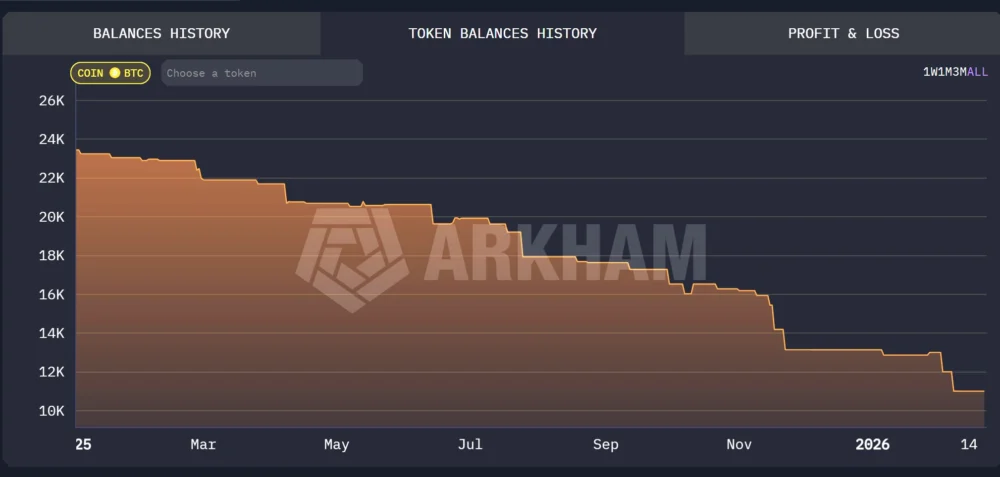
Despite widespread market turmoil and a drastic operational overhaul at his cryptocurrency exchange, Gemini co-founder Tyler Winklevoss has declared himself "optimistic," a sentiment that sharply contrasts with the company’s recent actions and his investment firm’s steady divestment of Bitcoin. This paradoxical stance unfolds as Gemini navigates a challenging economic landscape marked by significant job cuts, an executive exodus, and a strategic retreat from key international markets, while Winklevoss Capital, the twins’ venture arm, has quietly offloaded more than half of its Bitcoin holdings over the past year.
The "optimism" articulated by Winklevoss on social media comes amidst what he acknowledges as an exceptionally grim period for crypto sentiment. However, the operational realities at Gemini tell a story of severe pressure and a necessity for a "sharp reset." The financial figures laid bare in Gemini’s latest filing with the US Securities and Exchange Commission (SEC) on Tuesday paint a stark picture. For 2025, Gemini projects net revenue of between $165 million and $175 million, a modest increase from $141 million in 2024. While the exchange reported approximately 600,000 monthly transacting users, representing a 17% year-on-year increase, this user growth is significantly overshadowed by soaring operational costs. Projected operating expenses for 2025 are estimated to be between $520 million and $530 million, a dramatic surge from $308 million just a year prior. This widening chasm between revenue and expenses signals deep financial distress and underscores the urgency of Gemini’s restructuring efforts.

This financial squeeze has necessitated aggressive cost-cutting and a strategic re-evaluation of Gemini’s global footprint. On February 5, the company announced a significant workforce reduction, cutting up to a quarter of its staff. Simultaneously, Gemini revealed plans to exit the United Kingdom, European Union, and Australia, opting instead to concentrate its resources and efforts on the more established US market and the burgeoning hub of Singapore. Less than two weeks later, the leadership team saw a substantial shakeup, with the chief operating officer, chief financial officer, and chief legal officer all departing. In a move to consolidate power and streamline decision-making, Cameron Winklevoss, Tyler’s twin brother and co-founder, is set to absorb many of the outgoing COO’s responsibilities, with interim executives stepping into the CFO and general counsel roles. This swift and profound organizational restructuring indicates a pivot towards a leaner, more focused enterprise capable of weathering the current crypto winter.
Adding to Gemini’s woes is its rapidly diminishing market share in the fiercely competitive spot crypto trading arena. A recent report by Bloomberg highlighted that Gemini’s global spot market share dwindled to approximately 0.1% in January, a steep decline from 0.6% in June 2025. Furthermore, the company’s market valuation has plummeted from nearly $4 billion to under $700 million since its public listing last year. The Bloomberg report, citing sources familiar with the matter, also indicated that Gemini had implemented additional layoffs among its US staff, signaling an even deeper commitment to cost rationalization. Crucially, the report detailed a strategic pivot towards a new Commodity Futures Trading Commission (CFTC)-regulated prediction markets platform, alongside an intensified focus on custody and credit card services. This shift suggests a move away from the high-volume, low-margin spot trading market towards areas with potentially higher regulatory clarity and more stable, recurring revenue streams, such as institutional custody solutions and financial products integrated with traditional finance rails. The 8-K filing subsequently confirmed the senior leadership changes and Cameron Winklevoss’s expanded role, solidifying the narrative of a company in profound transition. Cointelegraph’s attempts to confirm the additional layoffs, strategic pivot, and BTC sales with Gemini were met with no response at the time of publication, leaving much to be inferred from public filings and on-chain data.
Perhaps the most intriguing aspect of this unfolding narrative is the activity within Winklevoss Capital’s Bitcoin wallet. Despite Tyler Winklevoss’s public declaration of optimism, on-chain trackers, including Arkham, reveal a consistent reduction in Winklevoss Capital’s Bitcoin exposure over the past year. The wallet, which held approximately 23,000 BTC in February 2025, now contains fewer than 11,000 BTC as of February 2026. This significant divestment—more than half of their holdings—raises questions about the underlying strategy. Is it a calculated move to diversify assets, a need to generate liquidity to support Gemini’s operational costs, or a more cautious risk management approach in a volatile market? Given the twins’ historical advocacy for Bitcoin as "digital gold" and their status as early adopters, this sustained selling could be interpreted in several ways: a strategic rebalancing of their extensive portfolio, a response to a perceived overvaluation, or perhaps even a pragmatic funding mechanism for Gemini’s costly transformation and new ventures. This action by a major crypto proponent adds another layer of complexity to the already challenging market sentiment.

Gemini’s dramatic restructuring unfolds against a backdrop of what can only be described as unusually bleak sentiment across the broader crypto market. The pervasive fear and uncertainty are palpable. Bitcoin miners, typically long-term holders, have been forced to liquidate their BTC treasuries, with entities like Bitdeer selling off their entire holdings to cover operational expenses. US-based spot Bitcoin ETFs, initially hailed as a catalyst for institutional adoption, have experienced five consecutive weeks of net outflows, indicating a retreat by even the most traditional investors. Popular sentiment gauges, such as the Crypto Fear & Greed Index, have plunged to "extreme fear" levels, a stark indicator of widespread investor apprehension. Coinciding with this, Google searches for "Bitcoin going to zero" have spiked to their highest levels since the depths of the 2022 crypto winter, reflecting a palpable sense of capitulation among retail investors. This confluence of negative indicators creates a challenging environment for any crypto entity, let alone one undergoing such a significant internal overhaul.
Yet, amidst this gloom, a handful of high-profile investors maintain a resolutely long-term bullish stance on Bitcoin, embodying the very contrarian spirit that Tyler Winklevoss professes. Japan’s Metaplanet, for instance, has repeatedly doubled down on its BTC accumulation strategy, actively buying more Bitcoin despite prevailing market conditions. Similarly, MicroStrategy, the US Bitcoin treasury pioneer and the largest publicly listed owner of BTC with 717,131 coins, recently hinted at its 100th Bitcoin purchase, reaffirming its unwavering conviction. Arthur Hayes, the outspoken high-frequency trader and BitMEX co-founder, also publicly shared his portfolio, revealing a heavy weighting towards BTC, alongside gold, oil, and other assets, signaling his continued belief in hard assets. Even macro analysts like Lyn Alden, while acknowledging the long-term potential, anticipate a "grinding market" rather than an immediate sharp rally, suggesting that patience will be a virtue for those who remain invested. These diverse yet steadfast positions underscore the enduring belief in Bitcoin’s fundamental value proposition, even as the market endures a prolonged period of consolidation and uncertainty.
Tyler Winklevoss’s "optimism" in the face of such adversity could be interpreted as a classic contrarian investment philosophy: buying when there’s "blood in the streets." His public statements might reflect a deep-seated conviction in the long-term trajectory of cryptocurrency, viewing the current downturn as a necessary cleansing and an opportunity for resilient projects to emerge stronger. The strategic pivot at Gemini, shedding less profitable ventures and focusing on regulated, potentially higher-margin services, could be seen as a necessary adaptation for future growth. The challenge for Gemini, and for the Winklevoss twins, will be to successfully execute this ambitious transformation while maintaining investor confidence and user engagement in a market fraught with skepticism. The coming months will be crucial in determining whether Tyler Winklevoss’s optimism is a visionary foresight or a hopeful facade amidst profound systemic challenges. The narrative of Gemini’s journey through this crypto winter will undoubtedly offer significant insights into the evolving landscape of digital assets and the resilience required to navigate its inherent volatility.