anjir abdul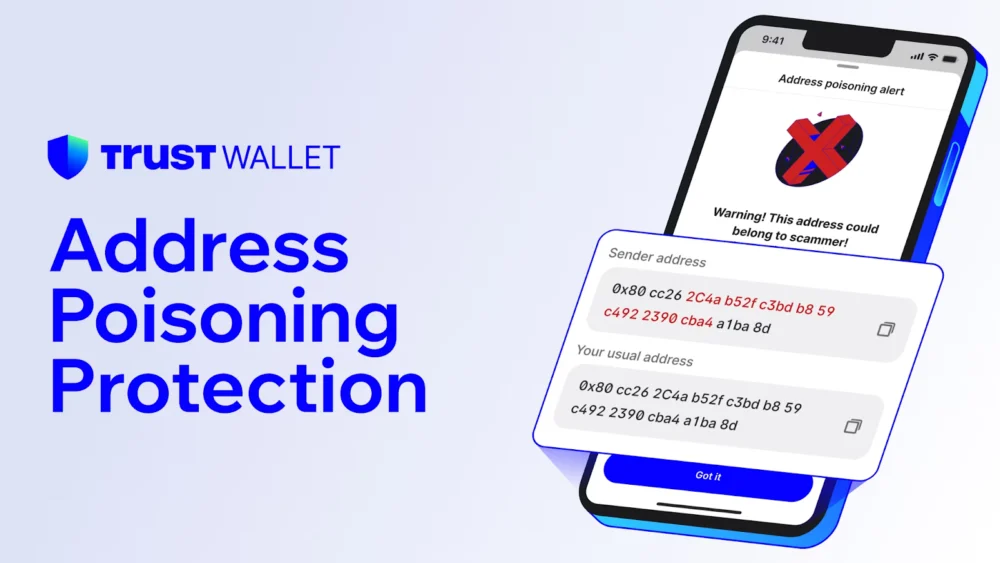
Trust Wallet has significantly bolstered its security infrastructure by introducing a groundbreaking address-poisoning protection feature across 32 Ethereum Virtual Machine (EVM) compatible blockchains, a critical enhancement designed to safeguard users against one of the fastest-growing and most insidious threats in the cryptocurrency landscape. This new screening mechanism represents a pivotal step in the ongoing battle against sophisticated scammers, automatically scrutinizing destination addresses against an expansive, dynamic database of known malicious and lookalike wallets, thereby preventing unsuspecting users from inadvertently sending their valuable digital assets to fraudulent entities. The immediate rollout encompasses a broad spectrum of prominent EVM chains, including but not limited to Ethereum, BNB Smart Chain, Polygon, Optimism, Arbitrum, Avalanche, and Base, covering a substantial portion of the decentralized finance (DeFi) ecosystem and a vast user base.
The noncustodial wallet provider officially announced this crucial security upgrade on Tuesday, underscoring its commitment to user safety and the integrity of cryptocurrency transactions. Address poisoning attacks, a deceptively simple yet highly effective form of phishing, exploit human error and the trust users place in their transaction histories. Scammers initiate these attacks by sending minute, often negligible, amounts of cryptocurrency to a victim’s wallet. The attacker’s wallet address is meticulously crafted to mimic a legitimate address the victim frequently interacts with, typically by sharing identical leading and trailing characters. The insidious nature of this scam lies in the hope that when a user intends to send funds to their legitimate recipient, they might, in a moment of haste or oversight, copy the scammer’s address from their transaction history instead of the correct one. Given the irreversible nature of blockchain transactions, once funds are dispatched to a "poisoned" address, they are almost certainly lost forever, highlighting the severe financial repercussions for victims.
Trust Wallet has starkly characterized address poisoning as "one of the fastest-growing threats in crypto," providing alarming statistics to underscore the scale of the problem. The company claims that there have been over 225 million such attacks detected to date, resulting in a staggering $500 million in confirmed losses. These figures, while difficult to verify exhaustively across the fragmented and pseudonymous crypto landscape, paint a grim picture of the pervasive and costly nature of these scams. The sheer volume of attacks indicates that this method has become a preferred tactic for bad actors due to its low technical barrier to entry and high potential for returns, preying on the vigilance fatigue and routine habits of even experienced crypto investors. The introduction of an automated screening feature is therefore not merely an incremental improvement but a fundamental shift in proactively defending users at the point of transaction initiation.

The urgency for such protective measures has been dramatically amplified by recent high-profile incidents of address poisoning, where significant sums of cryptocurrency were siphoned from victims. Just recently, two separate investors collectively lost an astonishing $62 million in cryptocurrency to these attacks. A particularly notable incident occurred in December 2025, where one victim alone lost $50 million in USDt (USDT), a stablecoin widely used for large transactions. This specific event sent shockwaves through the industry, prompting prominent figures to publicly call for immediate and robust security enhancements from wallet providers. Former Binance CEO Changpeng Zhao (CZ), a widely respected voice in the crypto community, was among those who vehemently advocated for stronger security protocols. In a Binance Square blog post dated December 24, 2025, Zhao explicitly stated, "All wallets should simply check if a receiving address is a poison address, and block the user. This is a blockchain query." He further emphasized that wallets should, as a primary preventive measure, refrain from displaying similar spam transactions in users’ transaction histories, arguing that proactively filtering out these deceptive entries is a crucial first line of defense. CZ’s call to action highlighted the shared responsibility of wallet providers in shielding their users from such sophisticated social engineering tactics, moving beyond merely informing users to actively intervening to prevent losses.
The human element remains a critical vulnerability in the fight against address poisoning. Security experts consistently advise users to adopt more stringent verification practices. The Extractor team at security firm Hacken recently reiterated this sentiment to Cointelegraph, stressing the imperative for cryptocurrency investors to "stop copying wallet addresses from their transaction history." While convenient, this practice inherently carries the risk of inadvertently selecting a poisoned address. Instead, users are encouraged to always verify the full address string, character by character, against a trusted source. Employing address books for frequently used contacts, utilizing QR codes for recipient addresses, and performing small test transactions with minimal amounts before sending larger sums are all recommended best practices that can significantly mitigate risk. However, the reality is that such meticulous verification is often bypassed in the interest of speed and convenience, making automated wallet-level protection indispensable.
Trust Wallet’s move places it among a growing cohort of forward-thinking wallet providers that are actively developing and deploying preemptive transaction filtering tools against malicious activities. Other notable wallets that have introduced similar security features include Rabby Wallet, Zengo Wallet, and Phantom Wallet. These platforms recognize that user education, while vital, must be augmented by robust technological safeguards. The ongoing "arms race" between scammers and security developers necessitates continuous innovation and adaptive strategies. As scamming techniques evolve, so too must the defensive mechanisms. This collective industry effort to identify and catalog known scam addresses contributes to a more secure ecosystem, leveraging shared intelligence to protect individual users. The challenge, however, remains in maintaining comprehensive and up-to-the-minute databases of malicious addresses, a task that requires continuous monitoring, community reporting, and sophisticated analytical tools.
This latest security upgrade by Trust Wallet also comes in the wake of its own recent security challenges, which further underscore the company’s renewed focus on user protection. On December 24, 2025, Trust Wallet’s Chrome browser extension was compromised, leading to approximately $7 million in user losses. In response to this incident, Trust Wallet promptly released a new version of its wallet, which removed the malicious code, and crucially, committed to covering all user losses resulting from the exploit. This decisive action to compensate affected users demonstrates a strong commitment to accountability and rebuilding user trust. The introduction of address poisoning protection can be seen as a direct continuation of this commitment, showcasing a proactive approach to addressing prevalent security vulnerabilities and enhancing the overall safety framework for its user base.

Beyond technological solutions, the broader implications for cryptocurrency security emphasize a multi-layered approach. While wallet providers enhance their safeguards, user vigilance and adherence to best practices remain paramount. The ongoing battle against crypto scams highlights the need for continuous user education regarding the latest threats, alongside the adoption of advanced security measures such as hardware wallets, multi-factor authentication, and understanding smart contract interactions. As the crypto space matures, the integration of advanced artificial intelligence and machine learning algorithms could further refine scam detection capabilities, identifying suspicious patterns and anomalies that might escape traditional database checks. The future of secure crypto transactions will likely involve a symbiotic relationship between cutting-edge technology, informed user behavior, and a collaborative industry effort to combat evolving threats.
In conclusion, Trust Wallet’s integration of address poisoning protection across 32 EVM chains is a significant and timely development that offers a much-needed shield against a pervasive and costly scam. By automatically screening destination addresses against a database of known malicious entities, Trust Wallet is taking a proactive stance in safeguarding its users’ assets. This enhancement not only addresses a critical vulnerability but also reflects a broader industry trend towards implementing more sophisticated, automated security measures. While such technological advancements are indispensable, the enduring fight against crypto scams necessitates a holistic approach that combines robust wallet security with unwavering user vigilance and continuous education. Trust Wallet’s commitment to protecting its users, especially in light of recent industry-wide losses and its own past security incidents, positions this new feature as a vital component in fostering a safer and more trustworthy environment for engaging with digital assets. As the cryptocurrency ecosystem continues its rapid expansion, the ongoing innovation in security protocols will be paramount in building confidence and ensuring the long-term sustainability and integrity of decentralized finance.