Faris Adani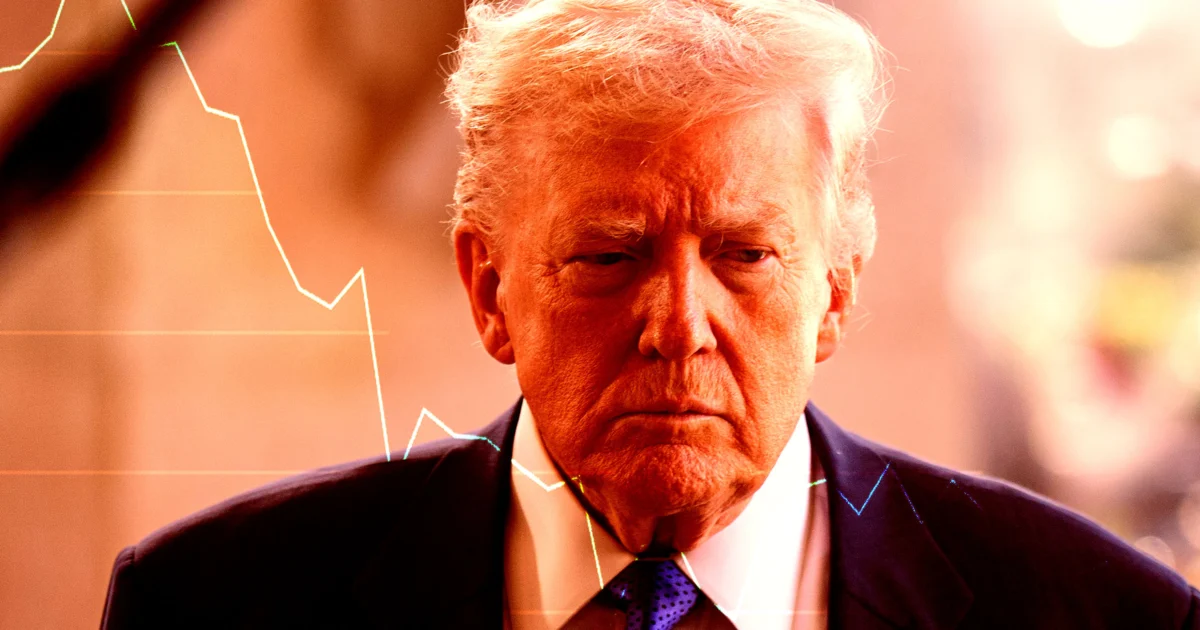
Earlier this month, TMTG released a financial report that sent shockwaves through the market, revealing a staggering net loss of $712.1 million in the past year, while generating a paltry $3.7 million in revenue. These figures are not just disappointing; they are alarming, indicating a burn rate that is unsustainable for any enterprise, let alone one seeking to establish itself in the fiercely competitive social media landscape. The vast disparity between losses and earnings highlights a severe challenge in monetizing its platform or attracting a broad enough user base to achieve profitability. For context, even nascent tech startups, during their aggressive growth phases, typically demonstrate a clearer path to revenue generation or a more compelling user acquisition strategy to justify such expenditures. Truth Social, however, appears to be trapped in a cycle of substantial cash depletion without a corresponding surge in market penetration or innovation.
A significant portion of TMTG, precisely 52 percent, remains under Donald Trump’s ownership. The company’s stock, trading under the ticker symbol DJT, has become an almost direct barometer of the former president’s public standing and political fortunes. This inextricable link has transformed the stock from a conventional investment vehicle into a speculative asset, heavily influenced by political news cycles rather than traditional business metrics like user engagement, advertising revenue, or technological advancements. The current political climate, particularly with Trump’s ongoing "war on Iran" – a scenario unfolding in 2026 that has reportedly seen his approval ratings dip, as noted by USA Today – appears to be directly correlated with the company’s declining market performance. This phenomenon suggests that investors are reacting less to Truth Social’s intrinsic value as a media platform and more to the broader perception of its principal owner.
The trajectory of TMTG’s stock price has been nothing short of a roller coaster, albeit one predominantly on a downward slope. Following its merger with a special purpose acquisition company (SPAC) in March 2024, a maneuver that allowed it to go public without the traditional initial public offering process, the shares briefly soared to an astonishing nearly $80. This initial euphoria, often characteristic of meme stocks or politically charged assets, was fueled by speculation and the fervent support of Trump’s base. However, this peak proved unsustainable. By Friday, the stock had plunged to an all-time low of $9.73, representing an enormous depreciation from its post-merger high. This precipitous fall signals a profound erosion of investor confidence, reflecting the market’s growing skepticism about the company’s long-term viability and its capacity to pivot towards profitability. The "long slide" has been marked by a consistent shedding of value, indicating that the initial hype has dissipated, leaving behind a stark financial reality.
Compounding the financial distress and market devaluation, reports have surfaced indicating that numerous executives within TMTG have taken advantage of opportune moments to sell off their shares. This pattern of insider selling, particularly as the stock price has plummeted, raises questions about the leadership’s confidence in the company’s future and the ethical implications for the average, often politically motivated, retail investor. While legal, such actions can create an appearance that executives are "enriching themselves" at the expense of "the president’s most fervent supporters holding the bag," who might have invested based on loyalty rather than financial acumen. This dynamic further complicates the narrative surrounding Truth Social, shifting focus from a mission-driven platform to one where personal financial gains might supersede collective shareholder value.
In what appears to be a desperate scramble for survival and a bid to diversify its perceived value, TMTG has embarked on a series of unconventional and increasingly perplexing reinventions. One such foray involved a questionable attempt to "distribute digital tokens" to investors late last year. While the specifics of these tokens – whether they were NFTs, utility tokens, or a form of cryptocurrency – remain somewhat opaque, the initiative seemingly did little to reignite investor enthusiasm or stabilize the company’s valuation. The digital token market itself is highly volatile and speculative, and attempting to leverage it without a clear, robust integration strategy rarely yields sustained positive results for a struggling company. Furthermore, TMTG’s audacious move to purchase $2 billion in Bitcoin, a significant sum for a company with such limited revenue, marked another speculative bet. While Bitcoin has shown periods of substantial gains, holding such a large, volatile asset as a treasury strategy for a social media company is highly unusual and exposes the company to immense market fluctuations, further divorcing its financial health from its core business operations.
Perhaps the most astonishing and bewildering pivot came in December with a merger announcement: TMTG was joining forces with fusion power company TAE, formerly known as Tri Alpha Energy. This move, which saw Truth Social’s stock briefly "explode" on the news, represents an almost unimaginable leap from social media to deep-tech energy. Fusion power, the process that powers the sun, involves harnessing the energy released when atomic nuclei combine. It promises a clean, virtually limitless energy source, but it remains largely in the experimental stage. Scientists are only just beginning to "crack" the monumental challenge of building reactors that can generate more energy than they consume, a critical milestone known as net energy gain. Commercial viability is still decades away, if ever.
TMTG CEO Devin Nunes’ statement at the time, proclaiming that "fusion power will be the most dramatic energy breakthrough since the onset of commercial nuclear energy in the 1950s," while technically true about fusion’s potential, starkly contrasts with the immediate operational realities of a social media company. The merger raises profound questions: How does a struggling social media platform integrate with, or meaningfully contribute to, a highly specialized, capital-intensive, long-term scientific endeavor like fusion energy? The synergies are non-existent, and the rationale appears to be a speculative gamble on a future technology, hoping to attach itself to a narrative of groundbreaking innovation to prop up its stock price. This "extremely long-term bet" is fraught with risk, requiring immense capital, scientific expertise, and a patience that a publicly traded, cash-burning social media company typically cannot afford.
The latest development in this saga of reinvention and distress, as reported by the Financial Times late last month, points to "ongoing discussions regarding a potential spin-off" of TMTG’s various businesses, including its flagship Truth Social platform, into a new listed company. This strategic maneuver would reportedly be facilitated by Texas Ventures III, a special purpose acquisition company (SPAC) with a documented history of assisting the Trump family in times of financial need. A spin-off typically involves separating a division or subsidiary from a parent company to create a new, independent entity. For TMTG, this could be an attempt to isolate the struggling social media platform, perhaps to make the remaining (fusion-focused?) entity more attractive to investors, or to recapitalize Truth Social under a different corporate structure. The involvement of Texas Ventures III suggests a familiar pattern of leveraging established connections to navigate complex financial challenges. However, the success of such a spin-off hinges on finding investors willing to back a platform that has consistently hemorrhaged money and struggled with user growth and content moderation challenges.
In conclusion, Truth Social’s journey has been a cautionary tale of a company whose fortunes are disproportionately tied to its founder’s political sway rather than its own commercial merit. From massive financial losses and plummeting stock prices to a series of bewildering and desperate business pivots – embracing volatile cryptocurrencies, attempting to distribute obscure digital tokens, and embarking on an improbable merger with a fusion energy company – TMTG has demonstrated a frantic search for a viable path forward. The prospect of a spin-off, facilitated by a long-standing ally, signals the latest attempt to reconfigure its assets and salvage some value. Yet, as its stock hits rock bottom and its financial reports paint a grim picture, the future of Donald Trump’s digital venture remains "unclear at best," burdened by its past failures and facing an uncertain, highly speculative path ahead.