Faris Adani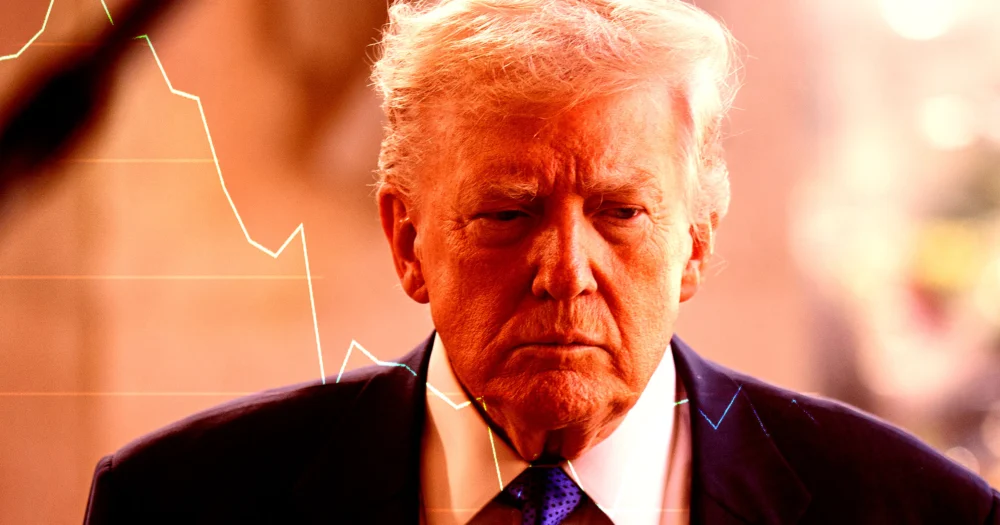
The precarious financial standing of Trump Media & Technology Group (TMTG), the parent company behind former President Donald Trump’s Truth Social platform, has reached a critical juncture, with its stock plummeting to an all-time low, starkly illustrating the volatile intersection of political branding and market realities. Earlier this month, the company released a jarring financial report for the previous year, revealing an astonishing net loss of $712.1 million against a meager revenue of just $3.7 million. These figures paint a grim picture for a publicly traded entity, indicating not merely underperformance but a profound burn rate that questions the fundamental viability of its business model. For a company aspiring to be a significant player in the social media landscape, such a vast disparity between expenditures and earnings is a flashing red light for investors and analysts alike. It signifies a significant drain on capital, with expenses far outstripping any generated income, suggesting that operations are unsustainable without continuous external funding or a radical shift in strategy.
This disastrous financial disclosure further solidifies TMTG’s reputation not as a robust tech enterprise, but rather as a direct barometer of its founder’s political fortunes. With Trump holding a controlling 52 percent stake, and the company trading under his initials, DJT, its market performance has become inextricably linked to public sentiment towards the former president. The stock, therefore, often acts less like a traditional growth equity and more like a political sentiment index, fluctuating wildly with news cycles pertaining to Trump’s public image, legal battles, and political campaigns. The recent downturn in Trump’s approval ratings, reportedly due to an ongoing "war on Iran" (a hypothetical future conflict within the original article’s implied 2026 timeline), appears to have directly correlated with a similar slide in TMTG’s market valuation. This symbiosis underscores a critical vulnerability: the company’s fate is tethered to the often unpredictable and polarizing world of politics, rather than the steady metrics of user engagement, advertising revenue, or technological innovation that typically drive social media valuations.
The precipitous decline in share price reached its nadir on Friday, with shares trading at a dismal $9.73. This represents a catastrophic fall from its peak valuation, which saw the stock soar to nearly $80 shortly after its public debut in March 2024. The initial surge followed a merger with Digital World Acquisition Corp. (DWAC), a Special Purpose Acquisition Company (SPAC), which facilitated TMTG’s entry into the public market without the traditional Initial Public Offering (IPO) process. SPACs, often referred to as "blank check companies," raise capital from investors with the sole purpose of acquiring an existing private company, offering a faster route to public trading. While this method can provide quick access to capital, it often bypasses some of the rigorous scrutiny of a conventional IPO, sometimes leading to inflated initial valuations based more on speculative fervor than underlying financial strength. In TMTG’s case, the early enthusiasm was largely driven by retail investors, many of whom were ardent supporters of Trump, viewing the stock as a way to invest in his political movement.
However, the post-merger euphoria proved short-lived. Since its record high, the company has endured a relentless downward trajectory. This prolonged slide can be attributed to a confluence of factors. Fundamentally, Truth Social has struggled to demonstrate a clear path to profitability or sustainable growth. Its user base, while dedicated, remains significantly smaller than mainstream platforms, limiting its appeal to advertisers. The platform’s content moderation policies, often criticized for being lax compared to competitors, have also deterred broader adoption and advertiser interest. Furthermore, the company has faced internal turmoil, with reports indicating that several executives have "enriched themselves" by offloading shares, leaving many of the most loyal, often less sophisticated, retail investors "holding the bag" as the stock continued its descent. This pattern of executive sell-offs amidst a declining stock price further eroded investor confidence, painting a picture of leadership capitalizing on initial hype while the company’s long-term prospects dimmed.
In what appears to be a desperate attempt to diversify and inject life into its struggling operations, TMTG has embarked on a series of unconventional and often perplexing strategic pivots. One notable endeavor involved a questionable bid to "distribute digital tokens" to investors late last year. While the specifics of these tokens were not fully detailed, such moves often involve non-fungible tokens (NFTs) or cryptocurrency-based loyalty programs. However, in an increasingly saturated and volatile crypto market, this initiative seemingly failed to generate sustained excitement or provide any meaningful boost to the company’s valuation. This attempt was followed by a foray into "cryptocurrency-based prediction markets," a highly speculative and niche area that allows users to bet on future events using digital currencies. While potentially lucrative for some, integrating such a venture into a struggling social media platform added another layer of complexity and risk without addressing the core business model deficiencies.
Perhaps the most astonishing of these diversification attempts was TMTG’s reported acquisition of "$2 billion in Bitcoin" and its subsequent December merger with TAE Technologies, a company formerly known as Tri Alpha Energy, which operates in the highly specialized and futuristic field of fusion power. The decision to invest heavily in Bitcoin, a notoriously volatile asset, raises serious questions about TMTG’s treasury management strategy. While Bitcoin can offer significant upside, its price swings can also lead to substantial losses, making it a risky asset for a company already bleeding cash. The merger with a fusion energy company, however, represents an even more radical and seemingly incongruous strategic shift. TAE Technologies is a prominent player in the pursuit of controlled nuclear fusion, a scientific endeavor aimed at harnessing the same energy process that powers the sun. This field is characterized by immense scientific challenges, requiring colossal investments and offering only extremely long-term, highly uncertain returns. Scientists are only just beginning to achieve net energy gain in experimental fusion reactors, meaning the commercialization of fusion power is decades away, at best.
Trump Media CEO Devin Nunes, in a statement justifying the TAE merger, proclaimed that "fusion power will be the most dramatic energy breakthrough since the onset of commercial nuclear energy in the 1950s." While the long-term potential of fusion energy is indeed revolutionary, the integration of a social media platform with a deep-tech, capital-intensive energy research company appears to be a Hail Mary pass rather than a coherent business strategy. The immediate synergies are non-existent, and the merger introduces a level of operational complexity and financial risk that few companies, let alone a struggling social media startup, could effectively manage. It suggests a desperate search for a narrative that could attract new investors or distract from the core business’s failures, betting on an extremely distant future while the present crumbles.
The efficacy of this audacious fusion bet remains highly questionable. As reported by the Financial Times late last month, TMTG is now engaged in "ongoing discussions regarding a potential spin-off" of its various businesses, including its flagship Truth Social platform, into a new listed company. This potential restructuring would reportedly be facilitated by Texas Ventures III, a special purpose acquisition company with a history of assisting the Trump family in challenging times. A spin-off, in corporate finance, typically involves separating a division or subsidiary from its parent company to create a new independent entity. This move could be interpreted in several ways: an attempt to unlock value from individual assets, to streamline operations, or, more cynically, to distance the social media platform from the more speculative ventures like fusion energy. It could also be a strategic maneuver to inject new capital or reorganize liabilities, perhaps providing another lifeline to the embattled social media platform by severing its ties to the broader, financially challenged TMTG structure. Regardless of the motivation, such a drastic restructuring signals a profound acknowledgment of the current business model’s shortcomings and the urgent need for a new direction.
The journey of Trump Media & Technology Group, from its inception as a politically charged alternative social media platform to its current state of financial disarray and strategic upheaval, offers a compelling case study in the perils of mixing political branding with traditional business ventures. Its stock performance has mirrored the volatile public image of its founder, failing to establish itself on fundamental business merits. The succession of desperate diversification attempts, culminating in an improbable merger with a fusion energy company, underscores the extreme challenges TMTG faces. As discussions of a potential spin-off emerge, the future of Truth Social and its parent company remains highly uncertain, leaving its most ardent supporters, who invested in the dream, in a precarious position as the company continues its search for a viable path forward amidst a sea of red ink and dwindling market confidence.