anjir abdul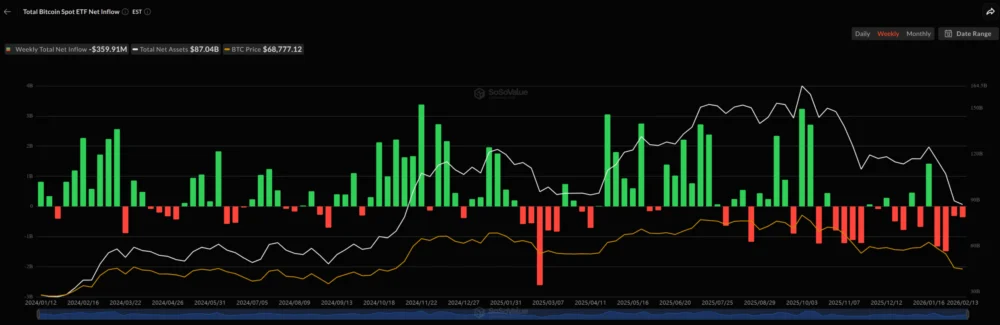
US President Donald Trump’s media conglomerate, Trump Media & Technology Group (TMTG), has taken a significant stride into the burgeoning digital asset landscape, formally submitting paperwork to the United States Securities and Exchange Commission (SEC) for two innovative exchange-traded funds (ETFs) poised to track major cryptocurrencies, including Bitcoin, Ether, and Cronos. This strategic move, announced Friday by its Truth Social Funds arm via a detailed press release, signals an ambitious expansion beyond its core social networking platform, Truth Social, into the rapidly evolving world of crypto investments. The proposed financial instruments, namely the Truth Social Bitcoin (BTC) and Ether (ETH) ETF, alongside the Truth Social Cronos (CRO) Yield Maximizer ETF, represent a bold foray designed to offer investors diversified exposure and income opportunities within the digital asset class.
The filing, while a major public declaration of intent, has not yet been declared effective and remains under the rigorous scrutiny and review of the SEC. This regulatory hurdle is a critical stage for any new financial product, particularly those involving cryptocurrencies, which have historically faced heightened regulatory skepticism in the U.S. Should these products gain approval, they would mark a notable expansion of institutional-grade crypto investment vehicles, adding a unique flavor with their integration of staking rewards for Ether and Cronos.
Steve Neamtz, president of Yorkville America Equities, the designated investment adviser for both prospective funds, articulated the company’s vision, stating, "We plan to provide an investment platform for investors covering multiple aspects of digital and crypto investing with both capital appreciation and income opportunities." This statement underscores a dual objective: not only to capitalize on the potential price appreciation of leading cryptocurrencies but also to tap into the passive income generated through staking mechanisms, a feature that distinguishes these proposed ETFs from many existing or proposed crypto investment products.
The development and eventual operation of these funds are envisioned through a strategic partnership with Crypto.com, a prominent global cryptocurrency exchange. Under this proposed collaboration, Crypto.com would leverage its robust infrastructure to provide essential services, including custody of the underlying digital assets, ensuring liquidity for the ETFs, and facilitating the staking activities necessary to generate yield. Furthermore, investors would gain access to these ETFs through Foris Capital US LLC, Crypto.com’s broker-dealer arm, simplifying the investment process for a broader audience. Each product is slated to charge a 0.95% management fee, a competitive rate within the landscape of actively managed or specialized crypto funds.
The proposed Truth Social Bitcoin and Ether fund is designed to offer a blended exposure to the two largest cryptocurrencies by market capitalization. Its objective is to track the combined performance of BTC and ETH, while crucially also capturing the staking rewards generated specifically by Ether. This inclusion of staking income for ETH is particularly noteworthy, as it offers a potential yield component that has been a significant point of discussion and desire among investors in spot Ether ETF applications. Meanwhile, the Truth Social Cronos Yield Maximizer ETF focuses on CRO, the native token of Crypto.com’s high-performance Cronos blockchain. This ETF aims to follow CRO’s price performance and, similarly, incorporate staking income derived from the token, directly tying into the broader Crypto.com ecosystem.
Trump Media & Technology Group, primarily recognized for operating the Truth Social network, has been progressively exploring and embracing cryptocurrency initiatives over the past year. This latest filing is not an isolated event but rather a continuation of a strategic pivot towards integrating digital assets into its business model. As early as April of last year, TMTG announced a significant partnership with Crypto.com and Yorkville America Digital. This initial collaboration aimed to launch a suite of "Made in America" ETFs, which were intended to combine exposure to digital assets with traditional securities, including key sectors such as energy. This earlier initiative signaled TMTG’s intent to bridge the gap between traditional finance and the nascent digital economy, aligning with a broader patriotic theme often associated with the former President.
Further solidifying its commitment to the crypto space, in September, Trump Media formalized another deal with Crypto.com. This agreement focused on establishing a joint treasury entity with the explicit purpose of accumulating the CRO token. The initial phase of this venture involved a substantial purchase of approximately 684.4 million CRO tokens, valued at roughly $105 million, financed through a mix of stock and cash. These prior engagements clearly laid the groundwork for the current ETF filings, demonstrating a methodical and expanding strategy to integrate Crypto.com’s ecosystem and its native token into TMTG’s financial offerings.
The timing of Trump Media’s ETF filing is particularly salient given the current climate in the broader cryptocurrency market and the evolving regulatory landscape for digital asset products in the United States. While spot Bitcoin ETFs gained historic approval from the SEC in January, leading to significant initial inflows, the market has recently witnessed a reversal in sentiment. Spot Bitcoin ETFs have experienced four consecutive weeks of net outflows, with the latest weekly figure tallying a substantial $360 million in withdrawals, according to data compiled by SoSoValue. This trend reflects a period of profit-taking after Bitcoin’s rally to new all-time highs and potentially a recalibration of institutional interest.

The SoSoValue data paints a detailed picture of this volatile period, showing predominantly net-negative flows throughout late January and early February. Notable large withdrawals included $817.87 million on January 29, $509.70 million on January 30, and $544.94 million on February 4. While there were intermittent positive sessions, such as inflows of $561.89 million on February 2, $371.15 million on February 6, $166.56 million on February 10, and $145.00 million on February 9, these were often overshadowed by the larger outflows. The most recent Friday saw only a modest $15.20 million entering the spot Bitcoin ETF market, highlighting a persistent challenge in sustaining positive momentum.
The market context for Ether ETFs is also complex. While several asset managers have filed for spot Ether ETFs, the SEC has been notably slower in its decision-making compared to Bitcoin. Regulatory clarity around Ether, particularly regarding its classification as a security or a commodity, remains a critical factor. The inclusion of staking rewards in Trump Media’s proposed Ether ETF adds another layer of complexity for the SEC, which has expressed concerns about the security implications and potential conflicts of interest associated with staking. This has led some analysts to suggest that "ETH ETF holders might be in a ‘worse position’ than BTC ETF peers," largely due to the ongoing regulatory uncertainty, the absence of a clear spot ETH ETF approval, and potentially different market dynamics once such products are launched. The yield-generating aspect, while attractive to investors, presents a fresh challenge for regulators accustomed to more traditional, passive investment vehicles.
The implications of Trump Media’s entry into the crypto ETF space are multifaceted. For TMTG itself, it represents a significant diversification strategy, potentially opening new revenue streams and attracting an investor base interested in both conservative political messaging and cutting-edge digital assets. Given Donald Trump’s past skepticism towards cryptocurrencies, this move also signifies a notable shift in the broader political landscape’s engagement with digital finance, potentially normalizing crypto investments among a segment of the population.
For Crypto.com, the partnership and potential ETF approvals would offer enhanced visibility, solidify its position as a key institutional partner in the crypto ecosystem, and potentially drive increased user adoption for its exchange and Cronos blockchain. The validation of CRO through an SEC-registered ETF would be a substantial boost for the token and its underlying network, demonstrating a level of institutional acceptance previously reserved for Bitcoin and Ether.
For the wider crypto market, these filings contribute to the ongoing trend of institutionalization and mainstream adoption. The availability of ETFs that offer exposure to altcoins like Cronos, especially with a yield component, could pave the way for a broader array of crypto-backed financial products. This would further legitimize digital assets as a viable investment class, making them more accessible to traditional investors who prefer regulated, exchange-traded instruments over direct crypto ownership. However, it also highlights the increasing importance of regulatory approval as a gatekeeper for such products.
The road ahead for Trump Media’s proposed ETFs will be dictated by the SEC’s thorough review process. Key considerations for the regulatory body will likely include the adequacy of custody solutions, the robustness of valuation methodologies for the underlying cryptocurrencies, the mechanisms for generating and distributing staking rewards, and broader market manipulation concerns. The political affiliations of the company might also add an extra layer of scrutiny, making the approval process potentially even more intricate.
In conclusion, Trump Media & Technology Group’s filing for Bitcoin, Ether, and Cronos Crypto ETFs marks a pivotal moment, showcasing the accelerating convergence of traditional corporate entities with the digital asset frontier. While the filings are a testament to the growing institutional interest in cryptocurrencies, their ultimate fate rests in the hands of the SEC, whose decisions will continue to shape the contours of crypto investment accessibility and regulation for years to come. The ability to offer both capital appreciation and staking income within a regulated ETF structure, particularly for a broader range of cryptocurrencies, could significantly alter the landscape for digital asset investors, providing new avenues for engagement in this dynamic market.