anjir abdul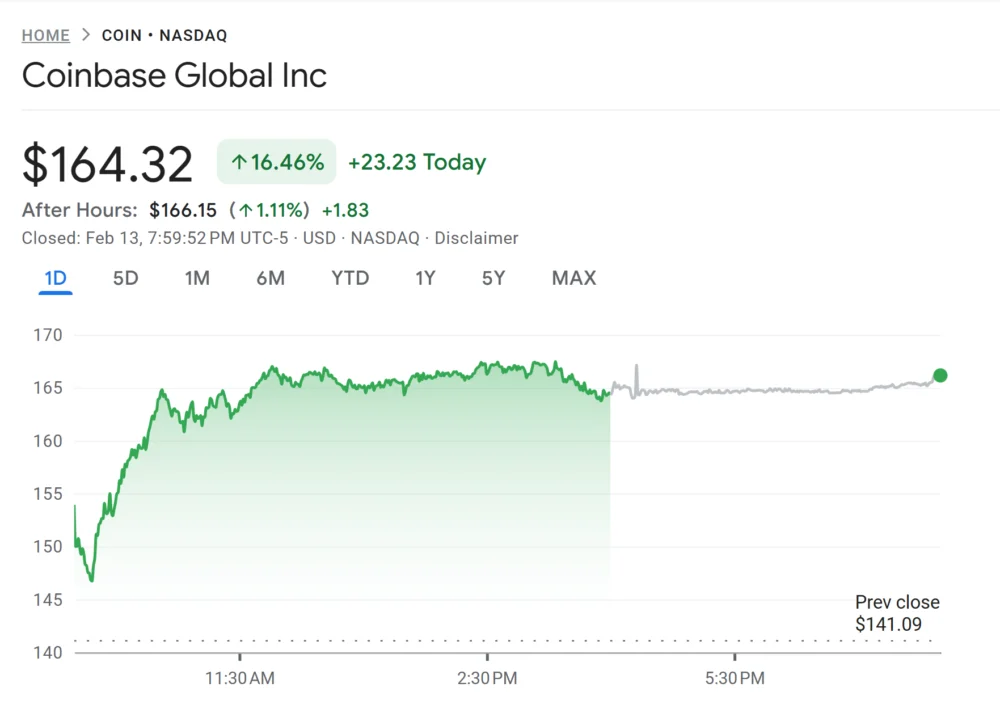
Today’s cryptocurrency landscape presented a confluence of significant market movements and expert opinions, with Cathie Wood’s ARK Invest making a notable return to buying Coinbase stock, a prominent investor highlighting a critical challenge for Bitcoin holders, and a financial expert advocating for regulatory clarity to boost investor sentiment. ARK Invest, known for its focus on disruptive innovation, injected nearly $15.2 million into Coinbase shares, signaling a renewed bullish stance after a period of selling. Simultaneously, Anthony Pompliano, a well-known Bitcoin entrepreneur, underscored the psychological test facing Bitcoin holders as inflation metrics ease. Meanwhile, prominent investor and financial expert Scott Bessent posited that the timely enactment of the CLARITY Act could be a pivotal catalyst for improving cryptocurrency investor sentiment and market stability.
ARK Invest Re-Enters Coinbase with a $15M Purchase, Signaling Renewed Confidence
Cathie Wood’s ARK Invest has made a significant move back into Coinbase Global (COIN) shares, acquiring approximately $15 million worth of stock across several of its actively managed exchange-traded funds (ETFs) on Friday. This re-engagement with Coinbase follows a period where ARK had been strategically trimming its position in the crypto exchange, making this latest purchase a particularly noteworthy shift in investment strategy.
The specific allocations reveal a targeted approach by ARK’s fund managers. The ARK Innovation ETF (ARKK), their flagship fund, led the charge by purchasing 66,545 Coinbase shares. Complementing this, the ARK Next Generation Internet ETF (ARKW) added 16,832 shares, and the ARK Fintech Innovation ETF (ARKF) bought 9,477 shares. These disclosures, part of the firm’s daily trade reports, provide transparency into ARK’s evolving portfolio management.
This substantial buying activity coincided with a robust performance from Coinbase stock. Shares of COIN experienced a sharp surge, closing the trading session at $164.32, marking an impressive gain of approximately 16.4% on the day. The momentum continued into after-hours trading, pushing the stock even higher. This upward trajectory of Coinbase’s valuation at the time of purchase places ARK’s total investment at roughly $15.2 million, underscoring their confidence in the company’s future prospects amidst a recovering crypto market.
ARK Invest’s investment philosophy under Cathie Wood often involves identifying and backing companies at the forefront of disruptive technologies. Their previous sales of Coinbase shares might have been part of a broader rebalancing strategy, profit-taking, or a temporary reallocation of capital. The decision to re-enter with such a significant sum now suggests a renewed conviction in Coinbase’s long-term potential, possibly driven by factors such as anticipated regulatory clarity in the U.S., increasing institutional adoption of cryptocurrencies, or the potential approval of spot Bitcoin ETFs, which could significantly boost trading volumes and revenue for exchanges like Coinbase.
Beyond Coinbase, ARK Invest also expanded its holdings in Roblox Corporation, a popular online gaming platform, acquiring shares across ARKK, ARKW, and ARKF. Roblox closed near $63.17 on the New York Stock Exchange on Friday. This parallel investment highlights ARK’s continued commitment to the broader innovation economy, encompassing sectors like digital entertainment and fintech, alongside the burgeoning cryptocurrency space. For many investors, ARK’s moves are closely watched as an indicator of sentiment within the high-growth technology and innovation sectors. A significant purchase like this from a prominent institutional investor can often be interpreted as a bullish signal, potentially influencing other market participants to re-evaluate their positions in Coinbase and the wider crypto market.

Bitcoin Holders Face a New Test as Inflation Eases, Says Anthony Pompliano
While ARK Invest signals renewed optimism for crypto equities, the broader Bitcoin market is grappling with a more fundamental challenge, as highlighted by Bitcoin entrepreneur Anthony Pompliano. According to Pompliano, Bitcoin investors are being compelled to critically "rethink why they hold" the asset, particularly as recent inflation data shows a cooling trend.
Pompliano articulated this challenge during an interview with Fox Business, questioning, "Can you hold an asset when there is not high inflation in your face on a day-to-day basis?" He elaborated on Bitcoin’s core value proposition, stating, "Can you still believe in what Bitcoin’s value proposition is, which is that it’s a finite-supply asset. If they print money, Bitcoin is going higher." This statement underscores Bitcoin’s historical narrative as a hedge against inflation and a store of value in an environment of expansive monetary policy.
The economic context for Pompliano’s remarks is the recent deceleration in the Consumer Price Index (CPI). Data from the Bureau of Labor Statistics indicated a drop in CPI to 2.4% in January from 2.7% in December. This easing of inflationary pressures, while positive for the broader economy, potentially removes one of the most immediate and compelling arguments for holding a scarce asset like Bitcoin. For years, Bitcoin gained significant traction as a "digital gold," a safe haven asset during times of economic uncertainty and currency debasement. When inflation is rampant, the appeal of a decentralized, fixed-supply asset becomes more pronounced. However, as inflation recedes, investors might question the urgency of holding such an asset, potentially diverting capital to traditional investments that might offer more predictable returns in a stable economic environment.
Despite the cooling inflation, not all economic experts share an entirely rosy outlook. Mark Zandi, Moody’s chief economist, recently commented to CNBC that inflation "looks better on paper than in reality," suggesting underlying complexities that might not be fully captured by headline numbers. Such nuanced views indicate that while the immediate inflationary threat might be receding, the long-term economic outlook still contains elements of uncertainty, which could ultimately reinforce Bitcoin’s long-term value proposition.
Pompliano himself maintains a long-term bullish stance, reiterating, "Bitcoin and gold are great long-term things." His point, therefore, is not a dismissal of Bitcoin’s value but rather a psychological test for its holders: can they maintain conviction in Bitcoin’s fundamental properties – its scarcity, decentralization, and resistance to censorship – even when the most obvious and immediate economic catalyst (high inflation) is less pressing?
Adding to the sentiment challenge, the broader cryptocurrency market sentiment has plunged to multi-year lows, not seen since June 2022. The Crypto Fear & Greed Index, a widely used metric that gauges overall crypto market sentiment, registered an "Extreme Fear" score of 9 in its recent Saturday update. Such a low score indicates widespread bearishness, panic, and uncertainty among investors. This extreme fear, combined with easing inflation, creates a difficult environment for Bitcoin holders who bought into the asset primarily as an inflation hedge. It forces them to look beyond immediate economic indicators and re-evaluate Bitcoin’s role as a long-term asset, a technological innovation, or a hedge against broader systemic risks that extend beyond simple CPI numbers. The current climate tests the conviction of the "HODL" philosophy, pushing investors to delve deeper into Bitcoin’s multifaceted value proposition.
Prominent Financial Expert Scott Bessent Believes CLARITY Act Could Revive Investor Sentiment

Amidst the dynamic shifts in market sentiment and investment strategies, the imperative for regulatory certainty continues to be a central theme in the cryptocurrency space. Prominent investor and financial expert Scott Bessent has voiced his strong belief that the timely passage of the CLARITY Act could be a crucial factor in stabilizing markets and significantly improving investor sentiment amidst ongoing volatility.
In an interview with CNBC, Bessent argued persuasively that a clear and comprehensive regulatory framework is essential to alleviate the current market downturn and foster a more confident investment environment. "In a time when we are having one of these historically volatile sell-offs, I think some clarity on the CLARITY bill would give great comfort to the market, and we could move forward from there," Bessent stated, emphasizing the immediate need for legislative action.
He further underscored the political intricacies involved, noting, "I think if the Democrats were to take the House, which is far from my best case, then the prospects of getting a deal done will just fall apart." This comment highlights the bipartisan challenges in passing significant legislation, especially concerning a nascent and often contentious sector like cryptocurrency, and points to the potential for political shifts to derail progress on regulatory reform.
The CLARITY Act is a proposed piece of legislation specifically designed to establish a more definitive and transparent regulatory framework for digital assets within the United States. At its core, the act seeks to resolve long-standing ambiguities by clearly defining which crypto assets fall under the purview of securities law, typically overseen by the Securities and Exchange Commission (SEC), versus those classified as commodities, which would fall under the Commodity Futures Trading Commission (CFTC). This distinction is critically important, as it determines the regulatory obligations, compliance standards, and legal liabilities for issuers, exchanges, and investors.
Beyond this fundamental classification, the CLARITY Act aims to clarify the specific oversight responsibilities between various federal regulators, minimizing jurisdictional disputes and providing a unified approach. Crucially, it also endeavors to establish more predictable compliance standards for all market participants, from individual investors to large institutional players and crypto businesses. The current lack of clarity has created an environment of uncertainty, stifling innovation, pushing some businesses offshore, and making it difficult for legitimate crypto enterprises to operate confidently within the U.S.
Bessent added that the timing of the act’s passage is paramount. He is advocating for its enactment by June, cautioning that any delays, particularly as the 2026 midterm elections approach, could severely complicate negotiations and potentially stall the legislation indefinitely. Regulatory certainty is widely seen as a prerequisite for mainstream institutional adoption and sustained growth in the crypto market. Without clear rules, many large financial institutions remain hesitant to fully engage with digital assets due to perceived legal and compliance risks. The passage of an act like CLARITY could unlock significant capital flows, attract more sophisticated investors, and ultimately lead to a more mature and stable cryptocurrency ecosystem in the United States, allowing the country to compete more effectively with other jurisdictions that have already established clearer regulatory guidelines.
Conclusion
The day’s events underscore the complex, multi-faceted nature of the cryptocurrency market. ARK Invest’s renewed bullishness on Coinbase suggests a belief in the long-term potential of crypto infrastructure, possibly anticipating a more favorable regulatory environment and increased adoption. However, Anthony Pompliano’s observations serve as a crucial reminder that Bitcoin’s narrative is constantly evolving, and investors must maintain conviction beyond immediate economic catalysts like inflation. Finally, Scott Bessent’s advocacy for the CLARITY Act highlights the critical role of clear regulation in fostering a stable and attractive market. These interconnected developments – institutional investment, investor psychology, and regulatory progress – collectively paint a picture of a maturing industry navigating significant challenges and opportunities on its path toward broader acceptance and integration into the global financial system.