Imroatul Nasiyah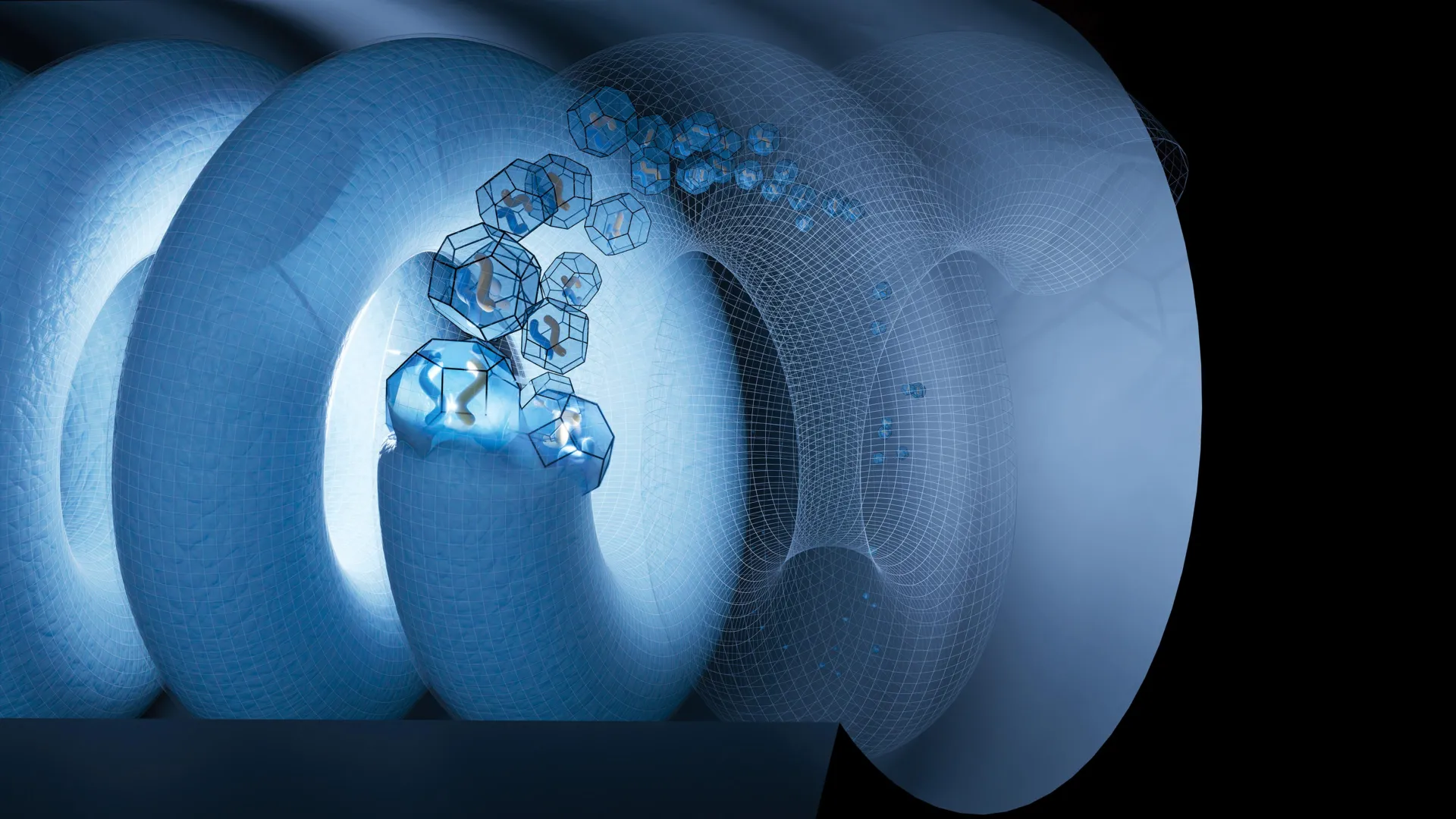
"These nanohelices achieve spin polarization exceeding ~80% — just by their geometry and magnetism," stated Professor Young Keun Kim of Korea University, a co-corresponding author of the study, underscoring the profound impact of their discovery. He further emphasized the significance of their findings: "This is a rare combination of structural chirality and intrinsic ferromagnetism, enabling spin filtering at room temperature without complex magnetic circuitry or cryogenics, and provides a new way to engineer electron behavior using structural design." This remarkable achievement bypasses the need for the elaborate and energy-intensive cryogenic cooling systems or intricate magnetic field generators often required for spin control in existing spintronic research. The inherent properties of the nanohelices themselves, dictated by their unique geometric and magnetic characteristics, are sufficient to achieve this crucial spin manipulation.
The research team’s innovative fabrication process involves the electrochemical control of metal crystallization, a sophisticated technique that allowed them to precisely construct left- and right-handed chiral magnetic nanohelices. The true breakthrough, however, lay in the incorporation of minute quantities of chiral organic molecules, such as cinchonine or cinchonidine. These molecules acted as molecular guides, dictating the helical direction during the inorganic crystallization process – a feat that has historically proven exceedingly difficult to achieve in inorganic material synthesis. The precise control over handedness, the mirror-image asymmetry inherent in chiral structures, is fundamental to their ability to interact differently with left- and right-handed spins. The researchers experimentally validated this by demonstrating that when these nanohelices exhibit a right-handedness, they exhibit a preferential passage for electrons with one spin direction, while significantly impeding or blocking electrons with the opposite spin. This marks a pivotal discovery: the creation of a three-dimensional inorganic helical nanostructure capable of reliably controlling the flow of electron spin.
"Chirality is well-understood in organic molecules, where the handedness of a structure often determines its biological or chemical function," noted Professor Ki Tae Nam of Seoul National University, also a co-corresponding author, drawing a parallel to well-established principles in organic chemistry. He elaborated on the challenges in inorganic materials: "But in metals and inorganic materials, controlling chirality during synthesis is extremely difficult, especially at the nanoscale. The fact that we could program the direction of inorganic helices simply by adding chiral molecules is a breakthrough in materials chemistry." This highlights the elegance and ingenuity of their approach, leveraging the well-understood principles of organic chirality to impart a crucial property onto inorganic nanostructures.
To rigorously confirm the chirality of their nanohelices, the researchers devised a novel electromotive force (emf)-based chirality evaluation method. This innovative technique allowed them to quantitatively measure the emf generated by the helices when subjected to rotating magnetic fields. The distinct left- and right-handed helices produced opposite emf signals, providing a clear and measurable confirmation of their handedness, even in materials that might not exhibit strong optical activity, which is a common method for assessing chirality in other contexts. This emf-based method offers a robust and versatile tool for characterizing chiral nanostructures.
Further investigation revealed a remarkable property of the magnetic material itself: its inherent magnetization, or the alignment of electron spins within the material, facilitates long-distance spin transport at room temperature. This effect, driven by strong exchange energy, remains consistent irrespective of the angle between the chiral axis of the helix and the direction from which spin-polarized electrons are injected. Crucially, this phenomenon was absent in non-magnetic nanohelices of comparable size, confirming the indispensable role of magnetism in enabling this long-range spin coherence. This represents the first recorded measurement of asymmetric spin transport in a relatively macro-scaled chiral body, suggesting that the spin-filtering effect is not confined to the immediate vicinity of the nanohelix but can extend over a significant distance. The team’s demonstration of a solid-state device exhibiting chirality-dependent conduction signals further solidifies the practical potential of this technology, paving a clear path towards its integration into real-world spintronic applications.
Professor Kim expressed his optimism regarding the future implications of their work: "We believe this system could become a platform for chiral spintronics and architecture of chiral magnetic nanostructures." This research represents a powerful synergy between geometry, magnetism, and spin transport, all realized through the use of scalable and readily available inorganic materials. The versatility of their electrochemical fabrication method allows for fine-tuning not only the handedness of the helices but also the complexity of their structure, including the creation of double or multiple-stranded helices. This level of control over the nanoscale architecture is expected to be a significant driving force for innovation across a wide spectrum of new application areas, from advanced memory devices and high-speed processors to novel sensors and quantum computing components. The ability to engineer spin behavior through precise structural design at the nanoscale opens up unprecedented possibilities for the future of electronics.