Imroatul Nasiyah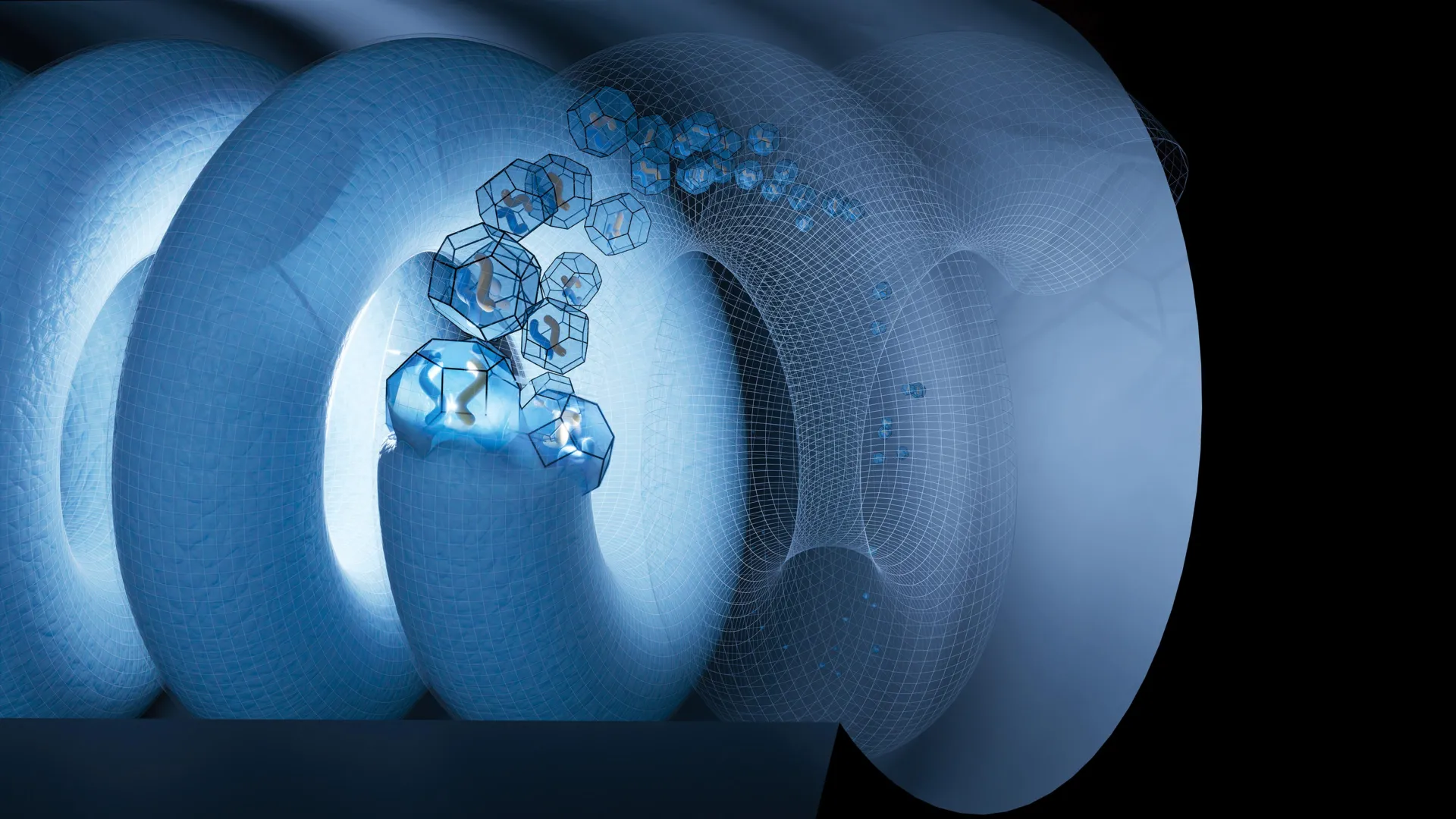
Spintronics, a portmanteau of spin-electronics, represents a paradigm shift in information processing. Unlike conventional electronics, which harness the flow of electric charge, spintronics leverages the intrinsic angular momentum of electrons, known as spin. This quantum mechanical property can be visualized as a tiny internal magnet that can point either "up" or "down," analogous to the binary 0s and 1s of digital information. By manipulating these spin states, spintronic devices hold the promise of unprecedented performance, offering the potential for data storage that is both denser and less power-hungry, as well as logic circuits that operate at speeds previously unimaginable. However, a persistent hurdle in the full realization of spintronics has been the challenge of developing materials that can reliably and efficiently control the direction of electron spin.
Now, a collaborative effort led by Professor Young Keun Kim of Korea University and Professor Ki Tae Nam of Seoul National University has achieved a remarkable feat: the creation of magnetic nanohelices that can precisely control electron spin at room temperature. This groundbreaking technology, detailed in a recent publication in the prestigious journal Science, utilizes the unique properties of chiral magnetic materials to regulate spin polarization.
"These nanohelices achieve spin polarization exceeding ~80% — just by their geometry and magnetism," stated Professor Young Keun Kim, a co-corresponding author of the study, highlighting the extraordinary efficiency of the new structures. He further elaborated on the significance of this achievement: "This is a rare combination of structural chirality and intrinsic ferromagnetism, enabling spin filtering at room temperature without complex magnetic circuitry or cryogenics, and provides a new way to engineer electron behavior using structural design." The implication here is profound: the ability to control spin without the need for extreme conditions like cryogenic cooling, which has been a limiting factor for many advanced spintronic concepts, opens up a vast array of practical applications. Furthermore, the emphasis on "structural design" underscores a novel approach to materials science, where the physical shape of a nanostructure dictates its electronic properties.
The research team successfully fabricated both left- and right-handed chiral magnetic nanohelices through a sophisticated electrochemical process that meticulously controlled the metal crystallization. A pivotal innovation in their approach was the introduction of minute quantities of chiral organic molecules, such as cinchonine or cinchonidine. These molecules acted as templates, guiding the formation of helices with a precisely defined "handedness" – a feature that has proven exceptionally difficult to achieve in inorganic materials. The researchers then experimentally demonstrated a crucial property: when these nanohelices exhibited a right-handedness, they preferentially allowed electrons with one specific spin direction to pass through, while simultaneously impeding electrons with the opposite spin. This discovery marks the first instance of a three-dimensional inorganic helical nanostructure capable of controlling electron spin.
Professor Ki Tae Nam, another co-corresponding author, drew a parallel to the familiar world of organic chemistry: "Chirality is well-understood in organic molecules, where the handedness of a structure often determines its biological or chemical function." He continued, explaining the difficulty encountered in inorganic systems: "But in metals and inorganic materials, controlling chirality during synthesis is extremely difficult, especially at the nanoscale. The fact that we could program the direction of inorganic helices simply by adding chiral molecules is a breakthrough in materials chemistry." This statement underscores the innovative application of principles from organic chemistry to the realm of inorganic nanomaterials, a testament to interdisciplinary research. The ability to "program" the helical direction with simple additives is a significant simplification of complex material synthesis.
To rigorously confirm the chirality of the nanohelices, the research team devised a novel electromotive force (emf)-based chirality evaluation method. By subjecting the helices to rotating magnetic fields, they measured the generated emf. Crucially, the left- and right-handed helices produced distinct and opposite emf signals. This innovative technique allows for quantitative verification of chirality, even in materials that do not exhibit strong interactions with light, a common method for chirality detection. This development is significant as it provides a robust and accessible tool for characterizing chiral nanomaterials.
Beyond their ability to filter spin, the research team made another significant discovery: the magnetic material itself, through its inherent magnetization and aligned electron spins, facilitates long-distance spin transport at room temperature. This remarkable effect, sustained by strong exchange energy – a fundamental interaction governing electron spin alignment – remains consistent irrespective of the angle between the chiral axis and the direction of spin injection. This phenomenon was notably absent in non-magnetic nanohelices of comparable size, further emphasizing the crucial role of magnetism and chirality in tandem. This finding represents the first measurement of asymmetric spin transport in a relatively macroscopic chiral body, suggesting that spin manipulation can occur over meaningful distances within these structures. Moreover, the team successfully demonstrated a solid-state device that exhibited chirality-dependent conduction signals, a critical step towards translating these fundamental discoveries into practical spintronic applications.
Professor Kim articulated the far-reaching potential of their work: "We believe this system could become a platform for chiral spintronics and architecture of chiral magnetic nanostructures." He envisions a future where these nanohelices serve as foundational building blocks for a new generation of spintronic devices. This research represents a powerful synergy of geometry, magnetism, and spin transport, all constructed from scalable, inorganic materials. The versatility of their electrochemical method, which allows for precise control over not only the handedness (left/right) but also the complexity of the helix (e.g., double or multiple strands), is expected to accelerate advancements across a wide spectrum of novel application areas. The ability to tailor the helical structure offers a level of control previously unattainable, opening doors to highly specialized functionalities within spintronic systems.