Imroatul Nasiyah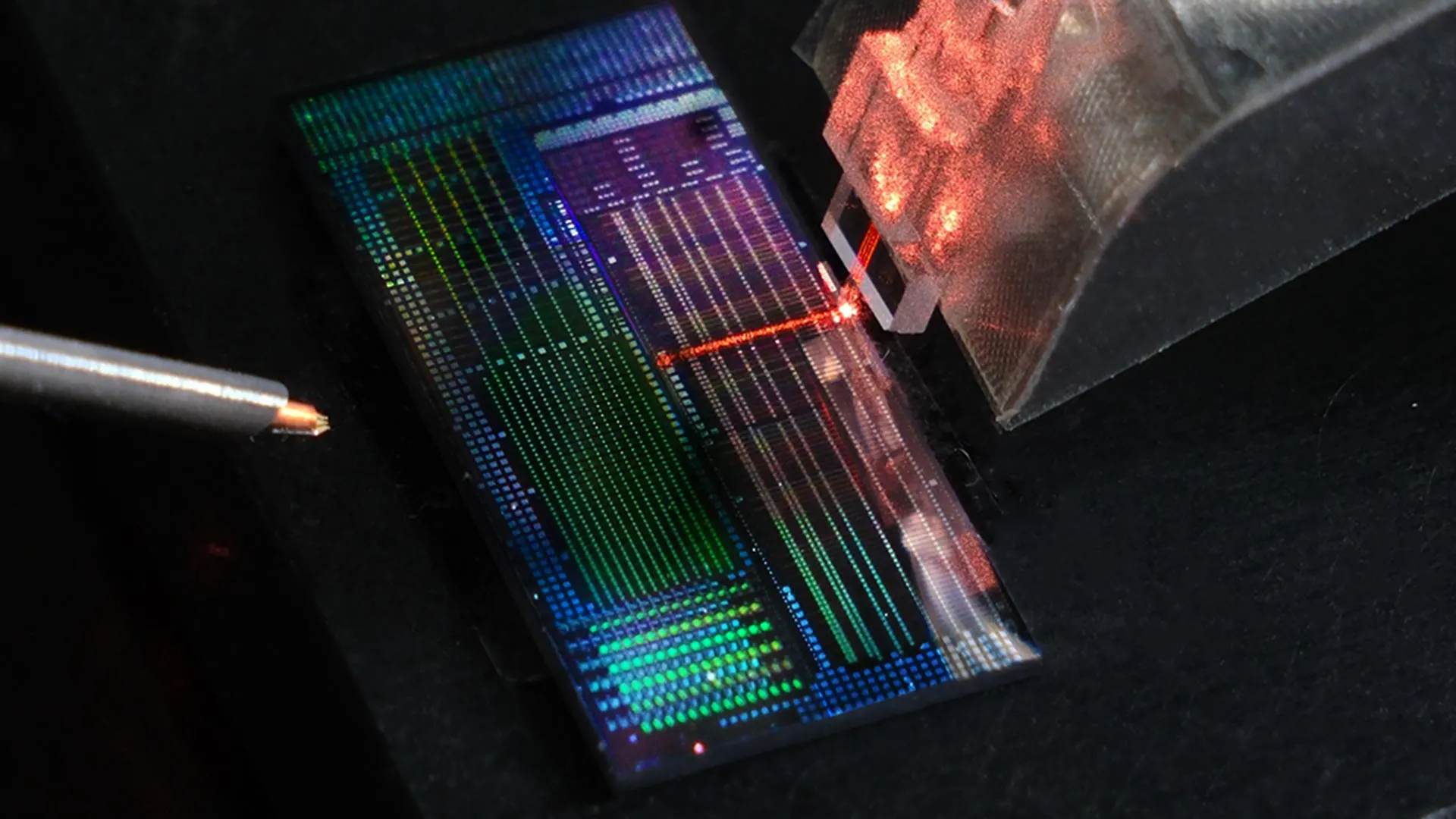
What elevates this development beyond its remarkable diminutive size is the ingenious methodology employed in its fabrication. Eschewing the intricate and often prohibitively expensive custom-built laboratory equipment that has historically characterized quantum technology research, the scientists have embraced scalable manufacturing methods. These techniques are strikingly similar to those employed in the mass production of the processors that power our ubiquitous computers, smartphones, vehicles, and an array of household appliances – in essence, any technology that relies on electrical power, from the most complex supercomputers to the humble toaster. This pragmatic, industry-standard approach dramatically enhances the practicality and feasibility of producing these critical components in the vast quantities that quantum computing will necessitate.
A Tiny Device Built for Real-World Scale: The Genesis of a Quantum Revolution
The pioneering research was spearheaded by Jake Freedman, an incoming PhD student within the Department of Electrical, Computer and Energy Engineering, working in close collaboration with Professor Matt Eichenfield, who holds the esteemed Karl Gustafson Endowed Chair in Quantum Engineering. Their ambitious undertaking also saw the invaluable contributions of scientists from Sandia National Laboratories, including co-senior author Nils Otterstrom. Together, this formidable team has engineered a device that masterfully synthesizes diminutive size, exceptional performance, and cost-effectiveness, thereby establishing a clear pathway for its mass production and integration into future quantum systems.
At the very core of this transformative technology lies the sophisticated manipulation of microwave-frequency vibrations, which oscillate at an astonishing rate of billions of times per second. These rapid oscillations imbue the chip with the extraordinary ability to control laser light with an unparalleled degree of precision. By directly influencing the phase of a laser beam, the device is capable of generating new laser frequencies. Crucially, these newly generated frequencies are not only stable but also remarkably efficient, a combination that is paramount for the intricate operations of quantum computing. This level of meticulous control transcends the immediate needs of quantum computing, extending its utility to rapidly evolving fields such as quantum sensing, where minute environmental changes can be detected with unprecedented accuracy, and quantum networking, which aims to create secure and robust communication channels by leveraging quantum principles.
Why Quantum Computers Need Ultra-Precise Lasers: The Delicate Dance of Qubits
A significant portion of the most promising quantum computing architectures currently under development rely on the principle of trapping individual ions or neutral atoms to serve as qubits. In these sophisticated systems, each atom or ion is meticulously isolated and manipulated to store quantum information. The interaction with these qubits, the very essence of performing quantum computations, is achieved by directing carefully tuned laser beams towards them. These laser pulses act as precise instructions, guiding the qubits through complex calculations. The efficacy of this process hinges on an almost unimaginable level of precision in adjusting each laser beam. Researchers must often fine-tune these lasers to within billionths of a percent of their target frequency, a testament to the delicate nature of quantum interactions.
As Jake Freedman aptly describes, "Creating new copies of a laser with very exact differences in frequency is one of the most important tools for working with atom- and ion-based quantum computers. But to do that at scale, you need technology that can efficiently generate those new frequencies." The current methods for achieving these precise frequency shifts are often cumbersome, involving large, table-top devices that demand substantial microwave power. While these systems may suffice for small-scale experimental setups, their sheer size, power consumption, and complexity render them entirely impractical for the vast array of optical channels required to control the thousands or millions of qubits envisioned for future quantum computers.
Professor Eichenfield highlights this critical limitation: "You’re not going to build a quantum computer with 100,000 bulk electro-optic modulators sitting in a warehouse full of optical tables. You need some much more scalable ways to manufacture them that don’t have to be hand-assembled and with long optical paths. While you’re at it, if you can make them all fit on a few small microchips and produce 100 times less heat, you’re much more likely to make it work." This statement encapsulates the core challenge: bridging the gap between laboratory-scale demonstrations and the robust, scalable infrastructure required for a functional quantum computer.
Lower Power Use, Less Heat, More Qubits: The Efficiency Advantage
The newly developed device addresses this challenge head-on by generating laser frequency shifts through highly efficient phase modulation. A significant byproduct of this efficiency is a drastic reduction in power consumption. The device utilizes approximately 80 times less microwave power compared to many existing commercial modulators. This substantial decrease in power usage translates directly into less heat generation. The implications of reduced heat are profound: it allows for a far greater density of these optical channels to be packed closely together, even onto a single microchip. This increased density is crucial for accommodating the multitude of control signals needed for a large number of qubits.
Collectively, these advantages – miniaturization, high precision, low power consumption, and reduced heat output – transform the chip from a mere component into a truly scalable system. This scalability is essential for coordinating the precise and intricate interactions between atoms that are fundamental to performing complex quantum calculations. The ability to manage these delicate interactions on a massive scale is the key to unlocking the full potential of quantum computing.
Built With the Same Technology as Modern Microchips: The Power of CMOS Fabrication
Perhaps one of the most significant triumphs of this project is the fact that the device was manufactured entirely within a fabrication facility, or "fab." This is the identical type of environment used to produce the advanced microelectronics that underpin our modern digital world. Professor Eichenfield emphasizes the significance of this choice: "CMOS fabrication is the most scalable technology humans have ever invented."
The ubiquity and efficiency of CMOS (Complementary Metal-Oxide-Semiconductor) fabrication are undeniable. Every microelectronic chip found in virtually every cell phone or computer contains billions of remarkably identical transistors. By leveraging this established and highly refined manufacturing process, the researchers are paving the way for the future production of not just thousands, but potentially millions, of identical photonic devices. This mass-producible nature is precisely what the burgeoning field of quantum computing desperately requires.
Nils Otterstrom further elaborates on the transformative nature of their work: "We’re helping to push optics into its own ‘transistor revolution,’ moving away from the optical equivalent of vacuum tubes and towards scalable integrated photonic technologies." This analogy powerfully illustrates the shift from bulky, inefficient, and manually assembled optical components to compact, highly integrated, and mass-producible photonic circuits. The team has taken modulator technologies that were once characterized by their bulkiness, exorbitant cost, and high power demands, and meticulously redesigned them to be smaller, significantly more efficient, and far easier to integrate into complex systems.
Toward Fully Integrated Quantum Photonic Chips: The Final Frontier
The researchers are not resting on their laurels. Their current efforts are focused on developing fully integrated photonic circuits. This ambitious goal involves combining multiple functionalities – including frequency generation, filtering, and pulse shaping – onto a single, unified chip. This endeavor represents a significant stride towards realizing a complete and operational quantum photonic platform, a crucial prerequisite for building practical quantum computers.
Looking ahead, the team is actively seeking partnerships with leading quantum computing companies. These collaborations will be instrumental in testing these cutting-edge chips within advanced trapped-ion and trapped-neutral-atom quantum computers. Such real-world testing will provide invaluable feedback and accelerate the development cycle.
Jake Freedman articulates the team’s vision with optimism: "This device is one of the final pieces of the puzzle. We’re getting close to a truly scalable photonic platform capable of controlling very large numbers of qubits." This sentiment underscores the critical role their innovation plays in overcoming long-standing bottlenecks in quantum technology.
The groundbreaking research and development efforts were generously supported by the U.S. Department of Energy through the Quantum Systems Accelerator program, a distinguished National Quantum Initiative Science Research Center, highlighting the national importance and recognition of this pioneering work. This tiny chip, born from ingenuity and enabled by scalable manufacturing, stands as a beacon of progress, promising to illuminate the path towards a future where the immense power of quantum computing is a tangible reality.