Faris Adani
The once-hyped social media venture tied to former President Donald Trump, Trump Media & Technology Group (TMTG), the parent company behind Truth Social, finds itself in an increasingly precarious financial and market position, with its stock plummeting to unprecedented lows following a series of alarming financial disclosures and seemingly desperate strategic pivots. What began as a defiant answer to mainstream social media platforms has devolved into a cautionary tale of a company burning through capital at an unsustainable rate, struggling to generate meaningful revenue, and grasping at an array of disparate, high-risk ventures to stay afloat.
Earlier this month, TMTG’s financial report sent shockwaves through the market, revealing a staggering operational loss. The company disclosed it had incinerated an astonishing $712.1 million over the past year, while its revenue barely registered a blip, bringing in a meager $3.7 million. This stark disparity underscores a fundamental problem: a business model that is not only unprofitable but appears to be actively destroying value at an alarming pace. For context, successful social media companies, even in their early stages, typically demonstrate a clear path to monetization or at least a significant user base growth that justifies high burn rates. Truth Social, by contrast, has struggled on both fronts, failing to attract a broad enough audience or convert its existing users into substantial advertising or subscription revenue. This level of cash burn with such minimal income raises serious questions about the company’s long-term viability and its ability to sustain operations without continuous, substantial capital injections.
The market’s reaction to these grim financials was swift and unforgiving. Investor enthusiasm, which had already been waning for months, evaporated further, sending shares into a precipitous decline. Last week marked a critical juncture as the stock hit an all-time low. However, the situation has only worsened since, with shares continuing their freefall, dipping significantly below the $9 mark. At the time of this report, TMTG’s shares are teetering precariously around $8.59, representing a breathtaking loss of over 50 percent in just the last six months and a further drop of more than six percent in a single trading day. This current state is a stark and painful contrast to the venture’s zenith, which saw shares soar to just under $80 shortly after its public debut in March 2024.
The initial surge in TMTG’s stock was largely fueled by its merger with a special purpose acquisition company (SPAC), Digital World Acquisition Corp. (DWAC), which allowed it to bypass the traditional IPO process and list under Donald Trump’s initials, DJT. SPACs are often seen as a quicker, less scrutinized route to public markets, and in TMTG’s case, the move generated immense speculative interest, particularly among retail investors loyal to the former president. The stock became a "meme stock," driven by sentiment and political affiliation rather than underlying financial fundamentals. This initial euphoria, however, proved unsustainable. Without a robust business model, consistent revenue generation, or a growing user base to justify its inflated valuation, the stock was always vulnerable to a correction. As the reality of its financial performance became undeniable, the speculative bubble burst, leading to the prolonged and brutal sell-off observed today.
In a desperate bid to reverse its fortunes, TMTG has embarked on a series of bewildering strategic pivots over the past year, each more unexpected than the last, suggesting a company scrambling for a viable identity beyond its struggling social media platform. One such foray saw the company "dipping its toes" into the murky waters of prediction markets. These platforms allow users to bet on the outcome of future events, ranging from political elections to economic indicators. The move is particularly notable given that TMTG director and Donald Trump’s son, Donald Trump Jr., has publicly shown deep involvement with prominent prediction market platforms like Polymarket and Kalshi. While prediction markets can attract a niche audience, they are fraught with regulatory complexities, ethical concerns regarding gambling, and questions about their alignment with a social media platform’s core mission. It signaled a departure from the company’s stated purpose and an attempt to capitalize on speculative betting, a highly volatile and often controversial sector.
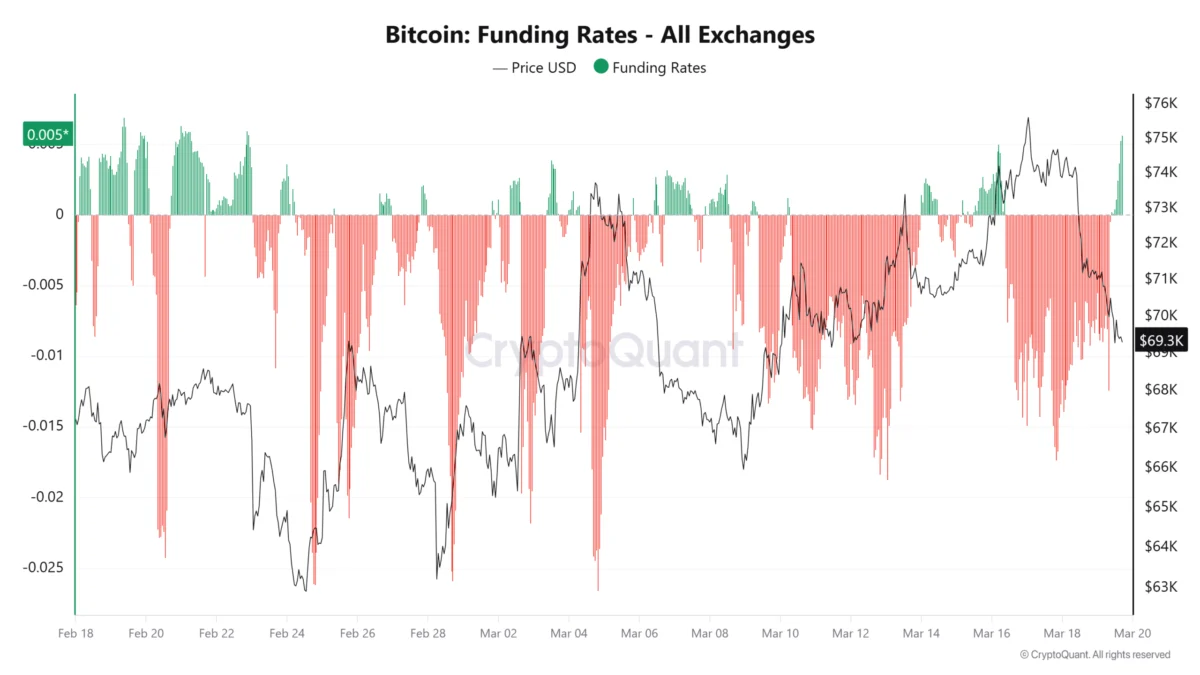
Adding to the strategic confusion, TMTG also announced intentions to engage in massive purchases of Bitcoin, hinting at a strategy to incorporate crypto and blockchain technology into its treasury and platform. While the original article stated "billions of dollars worth of Bitcoin," given the company’s severe cash burn and minimal revenue, this should be understood as an announced strategic intent or exploration of a large-scale Bitcoin treasury, rather than actual executed purchases of billions. The allure of Bitcoin for some companies lies in its potential as a hedge against inflation or a speculative asset that could appreciate rapidly. For TMTG, it could also be an attempt to appeal to a tech-savvy, libertarian-leaning segment of its audience or to diversify its assets away from traditional financial instruments. However, the extreme volatility of cryptocurrency markets introduces another layer of risk to a company already on the brink, and the actual implementation of such a strategy would require significant capital that TMTG currently lacks.
Perhaps the most astonishing of TMTG’s reinvention attempts came in December with its unexpected foray into the nuclear fusion industry. The company announced a merger with TAE Technologies (formerly Tri Alpha Energy), a firm dedicated to developing fusion power. Nuclear fusion is often described as the "holy grail" of energy – a clean, virtually limitless power source that replicates the process powering the sun. However, it is also a "moonshot" technology, requiring immense scientific breakthroughs, decades of research and development, and billions upon billions of dollars in investment before it can become commercially viable. The incongruity of a struggling social media platform suddenly aligning itself with a deep-tech energy venture is baffling. It suggests a desperate search for a high-growth, high-profile sector that could potentially justify a lofty valuation, however distant that future may be. The move underscores the speculative nature of TMTG’s current business model, effectively transforming it into a holding company for disparate, high-risk assets rather than a focused technology firm.
Further signaling a lack of confidence in its core product, the company has also hinted at the possibility of spinning off Truth Social itself. Such a move would allow TMTG to shed its "communication services company" label and potentially rebrand itself entirely. While this could be an attempt to offload a financially draining asset or to attract different types of investors for its other ventures, it would also be an implicit admission that Truth Social, the very platform Donald Trump created, is not capable of sustaining the company. This move would fundamentally alter the identity of Trump Media & Technology Group, divorcing it from its namesake social network and leaving its future direction even more ambiguous.
The persistent theory among market analysts and observers is that TMTG’s tumultuous stock performance is less a reflection of its business fundamentals – which are undeniably weak – and more a direct barometer of Donald Trump’s fluctuating political fortunes and waning popularity. The plummeting stock price echoes a significant decline in Trump’s approval ratings, which have reportedly taken a severe beating, especially in the wake of major geopolitical events. In the context of the article’s implied future timeline (March 2026), the mention of the "US-Israel war on Iran" as a factor in Trump’s declining approval ratings highlights how deeply intertwined the company’s market perception is with the political landscape. For investors, particularly those who initially bought into TMTG out of political allegiance, a dip in Trump’s popularity translates directly into diminished confidence in a company so inextricably linked to his brand. Unlike traditional companies whose value is determined by profits, growth, and market share, TMTG’s valuation appears to be a highly politicized "meme stock," vulnerable to every shift in public sentiment and political event.
In conclusion, the situation for Trump Media & Technology Group is dire. The company’s catastrophic financial performance, marked by massive losses and negligible revenue, has driven its stock to historic lows. Its frantic, scattershot attempts at reinvention – from speculative prediction markets and ambitious crypto strategies to an inexplicable foray into nuclear fusion – underscore a fundamental absence of a coherent and profitable business model. As its shares continue to spiral, the narrative that TMTG’s market value is merely a proxy for Donald Trump’s political standing gains ever more traction, suggesting that without a dramatic shift in either its business strategy or the political landscape, the company’s future remains incredibly uncertain, if not bleak.