Faris Adani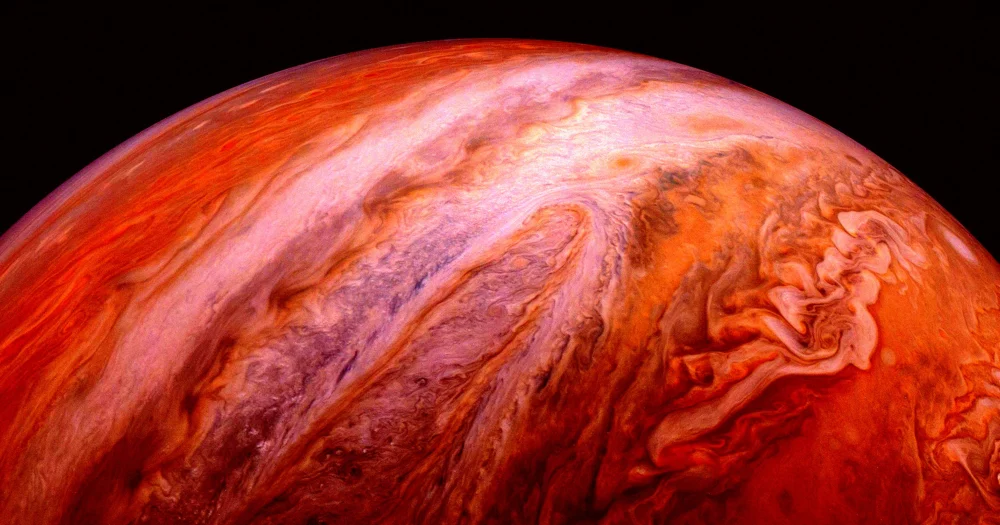
Jupiter, the colossal monarch of our solar system, has long captivated humanity with its swirling tapestry of clouds and enigmatic nature. A gas giant of staggering proportions, it presents an impenetrable veil to direct observation, its atmosphere a maelstrom of unimaginable pressures, scorching temperatures, and violent winds. Any spacecraft daring to venture into its depths faces vaporization, melting, or crushing, as starkly demonstrated by NASA’s Galileo mission, which, in a controlled but ultimately self-destructive dive in 2003, went silent almost immediately upon plunging into Jupiter’s tumultuous embrace. This dramatic end underscored the immense challenge of understanding what truly lies beneath those iconic, multicolored bands.
Unlike terrestrial planets, Jupiter is not believed to possess a solid surface in the conventional sense, but rather a gradual transition from gas to liquid, culminating in a dense, metallic hydrogen core. Unraveling the secrets of its layered structure and chemical composition is paramount to understanding not only Jupiter itself but also the formation and evolution of gas giants throughout the cosmos. For years, scientists have strived to peer through the atmospheric shroud, relying on remote sensing and indirect measurements. Now, a groundbreaking computational model, drawing upon a wealth of data from NASA’s pioneering Juno and Galileo missions, has offered an unprecedented glimpse into Jupiter’s hidden depths, revealing a startling secret: a surprisingly high abundance of oxygen.
A collaborative effort between scientists at NASA’s Jet Propulsion Laboratory (JPL) and the University of Chicago has culminated in a highly detailed computational model of Jupiter’s atmosphere. This sophisticated simulation integrates complex chemical reactions occurring across vast temperature gradients—from the searing inferno of its deep interior to the frigid upper reaches of its atmosphere—with the intricate movements of gases, clouds, and droplets. The challenge of modeling Jupiter is immense; its dynamic atmosphere is a complex interplay of physics and chemistry, where familiar substances behave in alien ways under extreme conditions.
The results, published last month in The Planetary Science Journal, presented a significant revision to our understanding of Jupiter’s composition. The model indicated that Jupiter contains approximately one-and-a-half times as much oxygen as the Sun. This finding dramatically contradicts previous estimates, which suggested Jupiter harbored only about a third of the Sun’s oxygen content. Such a stark difference is not merely a quantitative adjustment; it has profound implications for the prevailing theories regarding the formation of the largest planet in our solar system.
This increased oxygen abundance strongly supports the "core accretion" theory of planetary formation. According to this model, rocky and icy planetesimals gradually coalesced to form a solid core, which then accumulated a massive envelope of gas from the surrounding protoplanetary disk. The presence of abundant oxygen, largely locked away in water ice, suggests that Jupiter’s nascent core accreted a substantial amount of icy material billions of years ago. This process likely occurred near or even beyond the "frost line" (also known as the "snow line")—a crucial boundary in the early solar nebula.
The frost line is the specific distance from the Sun where temperatures drop sufficiently low for volatile compounds like water, methane, and ammonia to condense into solid ice grains. Beyond this line, the availability of solid material for planet formation drastically increases, as both rock and ice contribute to the building blocks. If Jupiter formed by accreting vast quantities of ice, it would naturally incorporate a significant amount of oxygen. This new evidence strengthens the argument that Jupiter’s formation began with a substantial icy core, providing the gravitational anchor necessary to rapidly draw in the immense quantities of hydrogen and helium that constitute its bulk.
However, the precise location of Jupiter’s formation remains a subject of intense scientific debate. While the frost line theory provides a framework for understanding its composition, whether the planet formed in its current orbit or much further out in the solar system before migrating inwards over billions of years is still being actively researched. Hypotheses like the Grand Tack model propose that Jupiter might have migrated inward towards the Sun before reversing course and settling into its present position, potentially scattering or absorbing material in its wake. The enhanced oxygen content might offer new constraints for these migration models, influencing how scientists reconstruct the early dynamics of our solar system.
Much of this newly identified oxygen is tied up in water molecules. The behavior of water on Jupiter is far from ordinary, drastically changing depending on the immense temperatures and pressures it experiences within the planet’s layers. Deep within Jupiter, under extreme conditions, water can exist in exotic states, potentially transitioning into a supercritical fluid where the distinction between liquid and gas blurs, or even an ionic form. These complex phase transitions and chemical interactions further complicate scientists’ efforts to accurately map out Jupiter’s internal structure and distinct atmospheric layers. Understanding how water behaves under such alien conditions is critical for deciphering the planet’s overall chemistry and dynamics.
The computational model developed by the research team meticulously accounts for both the intricate chemical reactions and the large-scale movement of gases, clouds, and droplets. Lead author Jeehyun Yang, a postdoctoral researcher at UChicago, emphasized the necessity of integrating these two domains. "You need both," Yang stated. "Chemistry is important but doesn’t include water droplets or cloud behavior. Hydrodynamics alone simplifies the chemistry too much. So, it’s important to bring them together." This holistic approach allowed the team to create a more realistic and comprehensive simulation of Jupiter’s dynamic environment.
One of the most surprising revelations from the model concerned the rate at which gases move through Jupiter’s atmosphere. The simulations suggest that atmospheric diffusion—the process by which molecules spread from areas of higher concentration to lower concentration—is far slower than previously assumed. "Our model suggests the diffusion would have to be 35 to 40 times slower compared to what the standard assumption has been," Yang explained. "Instead of moving through an atmospheric layer in hours, a single molecule might take several weeks." This dramatically slower diffusion rate has significant implications for understanding Jupiter’s atmospheric dynamics, including how chemical species are transported, how storms persist, and how heat is distributed throughout the planet’s vast gaseous envelope. It implies a much less turbulent mixing of gases than previously envisioned, potentially influencing the longevity and structure of features like the Great Red Spot.
The success of this new model hinges on the invaluable data collected by NASA’s Galileo and Juno missions. Galileo, which orbited Jupiter from 1995 to 2003, provided crucial initial insights into the planet’s atmosphere with its atmospheric probe, offering a direct, albeit brief, measurement of composition and conditions at a specific entry point. Juno, launched in 2011 and orbiting Jupiter since 2016, employs a suite of advanced instruments, including a microwave radiometer that can peer hundreds of kilometers beneath the cloud tops, measuring atmospheric temperature and composition at various depths. Its unique polar orbit allows for unprecedented mapping of Jupiter’s gravitational and magnetic fields, providing indirect clues about its internal structure and the distribution of heavier elements. By combining the direct, albeit limited, measurements of Galileo with Juno’s comprehensive remote sensing data, scientists have been able to calibrate and refine their computational models, bringing them closer to Jupiter’s true nature.
Despite these significant strides, Jupiter remains a planet shrouded in mystery, a testament to the complexity of our own solar system. Its dynamic atmosphere, powerful magnetic field, and more-than-intriguing collection of moons—like Europa, with its subsurface ocean and potential for life, or Io, the most volcanically active body in the solar system—continue to baffle even top scientists. The newly discovered oxygen abundance is but one piece of a much larger cosmic puzzle, yet it fundamentally reshapes our understanding of how gas giants form and evolve.
As Yang aptly summarized, "It really shows how much we still have to learn about planets, even in our own solar system." Each new discovery about Jupiter not only illuminates the mechanics of planetary formation here at home but also provides crucial context for interpreting observations of exoplanets—the thousands of worlds orbiting distant stars, many of which are gas giants themselves. The ongoing quest to unravel Jupiter’s secrets is a journey into the fundamental processes that shaped our cosmic neighborhood and, by extension, countless other planetary systems across the galaxy. The "something hiding under Jupiter’s clouds" is not just oxygen; it’s a deeper understanding of the universe itself.