Faris Adani
There’s Reportedly a Car Secretly Following Every Tesla Robotaxi, and the Reason Why Is So Absurd You Aren’t Going to Believe It.
When Tesla formally introduced its much-hyped Robotaxi service last summer, the rollout was immediately accompanied by a somewhat embarrassing concession: despite years of promises from CEO Elon Musk about fully autonomous, driverless vehicles, each Robotaxi was staffed by a human “safety monitor.” These silent employees, conspicuously seated in the front passenger seat, undermined the very premise of a truly driverless service, drawing criticism for contradicting Musk’s repeated assurances that the technology would hit the road without any human supervision. The presence of these individuals, acting as a failsafe, starkly highlighted the chasm between ambitious pronouncements and the complex reality of achieving full self-driving capabilities.
Now, more than half a year into the limited deployment of this service, Musk has once again taken to his social media platform, X, to declare a new milestone. He announced on a recent Thursday that Robotaxis would begin operating in Austin, Texas, “with no safety monitor in the car.” This statement, seemingly a triumph for Tesla’s autonomous driving ambitions, followed reports from observant fans a month prior who had spotted several of these autonomous cabs navigating public roads without any visible occupants, prompting Musk to confirm that genuine driverless testing was indeed underway. The implication was clear: Tesla was finally delivering on the promise of truly unsupervised self-driving, a significant step forward in the race for urban autonomy.
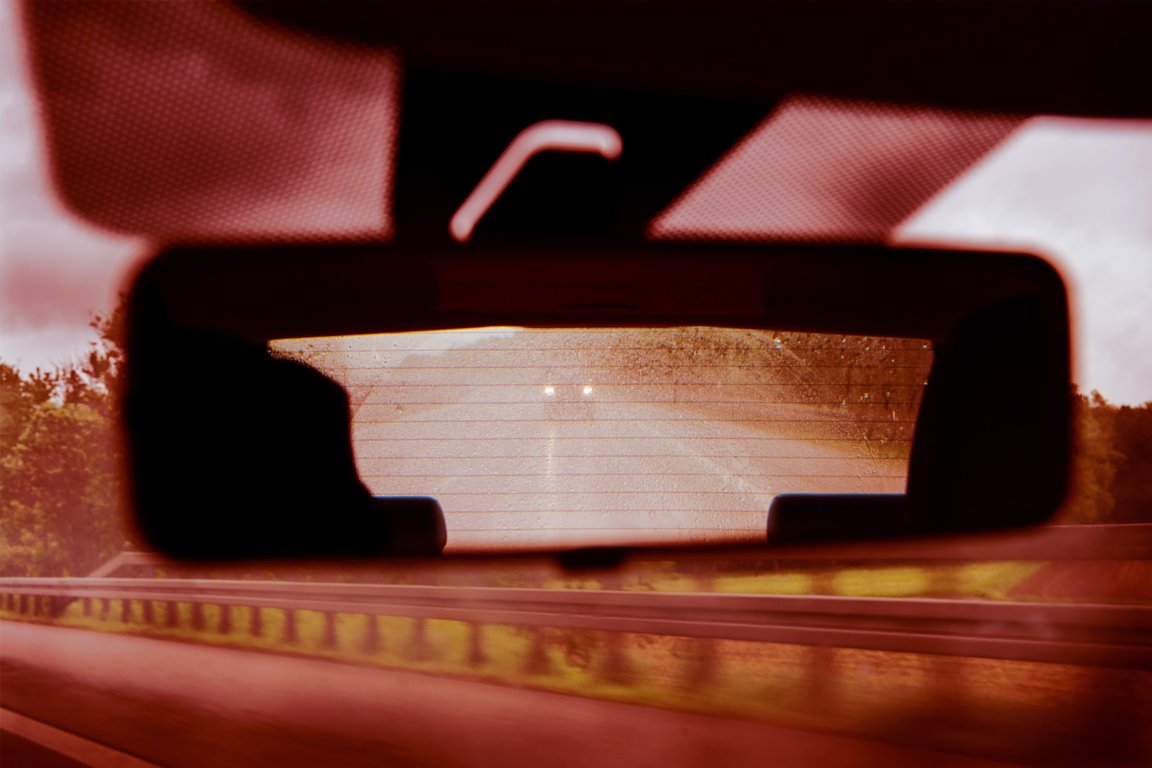
However, the enthusiasm surrounding this announcement appears to be, once again, premature and potentially misleading. A subsequent investigation by the EV news outlet *Electrek* uncovered a development that transforms this supposed leap forward into what many are calling an absurd workaround. Rather than truly eliminating human oversight, it now appears that Tesla has simply relocated its safety monitors. Instead of occupying the passenger seat, these supervisors are reportedly observing the Robotaxis from a separate vehicle that meticulously tails the autonomous cars throughout their entire journeys. This convoluted, almost Rube Goldberg-esque operating procedure, as described by *Electrek*, vividly illustrates the lengths to which Tesla seems willing to go to maintain an illusion of progress, even if it means deploying a highly inefficient and unscalable system.
The evidence supporting this new operational method comes partly from a vlog shared by prominent Tesla enthusiast Joe Tegtmeyer. In his video, posted on the same Thursday as Musk’s announcement, Tegtmeyer captures footage of two black Tesla vehicles conspicuously following a red Robotaxi. During the video, Tegtmeyer himself notes the presence of these trailing cars, referring to them as a “chase car” and speculating that their purpose is for “validation.” This observation, corroborated by *Electrek*’s reporting, paints a clear picture: while the Robotaxis may appear driverless to the casual observer, they are, in fact, still under direct human surveillance, albeit from a discreet distance. The shift in supervision location doesn’t eliminate the need for human intervention; it merely makes it less visible to the public and passengers.
Tesla’s journey to refine its self-driving technology, particularly its Full Self-Driving (FSD) beta software and Robotaxi system, has been fraught with challenges. The driverless-but-not-quite-superviserless cabs have already accumulated a concerning record of incidents. Reports detail numerous accidents, instances of the vehicles disregarding speed limits and other fundamental traffic laws, and moments of dangerously erratic or unpredictable driving behavior. These aren’t isolated glitches; they point to deep-seated difficulties in creating an AI capable of navigating the unpredictable complexities of real-world urban environments. From sudden braking to misinterpreting road signs, the system has demonstrated a persistent struggle with “edge cases” – situations that fall outside its pre-programmed parameters or trained data sets.
The severity of these issues has often necessitated direct intervention from the human monitors. There have been documented cases where safety drivers were compelled to take immediate control of the vehicles to avert potential collisions or dangerous situations. In some instances, monitors have had to assume complete command of the vehicles for extended periods, effectively turning the “autonomous” ride into a human-driven one. Such interventions underscore the fact that Tesla’s technology, despite its advanced capabilities, remains in a developmental stage where human oversight is not merely a precautionary measure but an essential safeguard against potentially catastrophic failures. The complexity of teaching a machine to anticipate human behavior, interpret ambiguous signals, and react instantaneously to dynamic traffic conditions continues to be a formidable hurdle.
Elon Musk himself has previously stated that Tesla was being “paranoid” about Robotaxi safety, a sentiment that now feels ironic given the company’s apparent strategy of covert supervision. This “tug of war” within Tesla seems to pit the imperative of ensuring safety against the immense pressure to meet Musk’s often aggressive and highly publicized timelines. For years, Musk has set ambitious goals for Tesla’s autonomous future, many of which have yet to materialize. He famously claimed that the Robotaxi service would boast a fleet of over 1,000 cars “within a few months” of its launch; currently, the operational fleet is estimated to be around 30 vehicles. Furthermore, he once boldly predicted that over a million self-driving Teslas would be deployed across the United States by the end of 2026. These unmet promises create significant pressure to demonstrate progress, even if that progress is more performative than substantive.
The deployment of chase cars, while potentially ensuring a degree of safety for the public during these testing phases, is a fundamentally unscalable solution. The very concept of a widespread Robotaxi service, designed to revolutionize urban transportation and provide on-demand mobility at a lower cost, hinges on the elimination of human drivers. If every autonomous vehicle requires a human-driven “shadow” car, the entire economic and logistical model collapses. The operational costs, the logistical complexity of coordinating two vehicles for every single ride, and the sheer number of human employees required would negate any purported benefits of autonomy. It transforms a vision of efficiency into an elaborate, resource-intensive charade. This method reveals that Tesla’s self-driving technology is still far from the “Level 4” or “Level 5” autonomy that would truly enable a widespread, unsupervised Robotaxi fleet.
Musk’s recent announcement on X meticulously highlighted that there was “no safety monitor in the car” but conspicuously omitted any mention of the trailing vehicles. While one cannot reasonably fault Tesla for prioritizing safety, especially given the current state of its FSD technology and its past incidents, the manner in which this development has been communicated raises significant questions about transparency and integrity. Deliberately omitting crucial details about continued human supervision, even if indirect, gives the impression of a company more concerned with public perception and investor confidence than with clear, honest reporting on its technological capabilities. Such selective disclosure risks misleading both its loyal fanbase and its investors into believing that the company is further along the pathway to full autonomy than it truly is. The deployment of thousands of Robotaxis roaming cities across the country, as Musk has envisioned, simply cannot be achieved if each one requires a dedicated chase car for supervision.
Ultimately, this latest development in Tesla’s Robotaxi saga serves as a stark reminder of the immense challenges inherent in achieving truly autonomous driving. It underscores the persistent gap between visionary pronouncements and the grinding, iterative process of engineering reliable, safe, and scalable self-driving technology. While the dream of a fully autonomous future remains compelling, Tesla’s current approach, with its reliance on increasingly elaborate and less transparent workarounds, suggests that the journey to that future is still long, complex, and fraught with the potential for further disillusionment.
More on Tesla: Tesla Cybercab Spotted Dripping Liquid