Faris Adani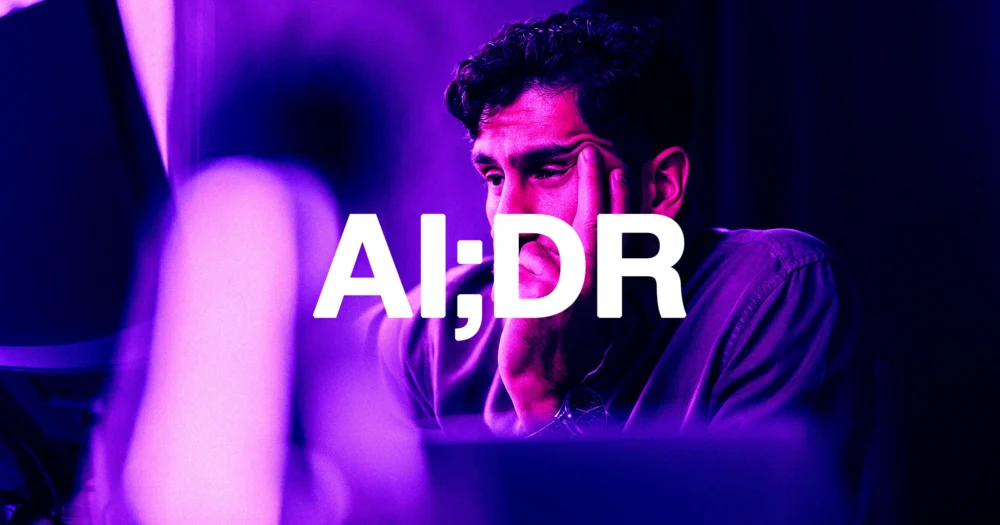
The digital landscape, once a vibrant tapestry woven by diverse human voices, is increasingly becoming an unnavigable swamp, teeming with the indistinguishable, often low-quality output of generative artificial intelligence – a phenomenon colloquially dubbed "AI slop." In this increasingly murky environment, where discerning genuine human thought from algorithmic mimicry becomes a daily challenge, a new piece of internet slang is emerging, serving as both a shield and a pointed critique: "AI;DR," or "ai;dr," shorthand for "AI, didn’t read." This pithy acronym is quickly gaining traction among netizens weary of the AI deluge, acting as a crucial signpost for others to avoid wasting their precious time, or, more pointedly, as a direct jab at those who peddle such synthetic content.
The concept of "AI;DR" is, of course, a direct descendant of the venerable internet classic "TL;DR" ("too long; didn’t read"). For decades, "TL;DR" has served a dual purpose online: either as a benevolent preface to a concise summary of an otherwise lengthy block of text, offering a quick digest for busy readers, or as a blunt declaration of disinterest, signaling that the content’s sheer volume rendered it unworthy of engagement. "AI;DR" cleverly repurposes the latter, weaponizing it against the perceived lack of value inherent in AI-generated material. It’s not just that the content might be "too long," but that its artificial origin inherently disqualifies it from human consideration, much like dismissing a meticulously crafted but ultimately bland dish as "food, didn’t eat."
The proliferation of AI-generated content has been swift and relentless. From thinly veiled AI-written articles flooding news feeds and blogs, to formulaic social media posts, generic marketing copy, and even AI-generated imagery and audio, the internet is undergoing a rapid transformation. This "slop" often lacks originality, depth, and the nuanced understanding that comes from human experience. It frequently recycles existing information without adding new insights, can perpetuate biases present in its training data, and is notorious for "hallucinating" facts, presenting outright falsehoods with an air of authoritative conviction. The sheer volume and low barrier to entry for AI-generated content means that the signal-to-noise ratio online is plummeting, making it harder than ever for users to find authentic, valuable information.
This context is vital to understanding the genesis and appeal of "AI;DR." As one user on Threads recently highlighted the term, it quickly resonated across various platforms. "We all need to adopt that right quick," one user passionately declared on Bluesky in a semi-viral post, underscoring a collective yearning for a tool to navigate this new digital reality. While the term itself might have seen sporadic, earlier usage, it never truly caught fire until now. The current moment, characterized by an unprecedented surge in accessible generative AI tools and a corresponding explosion of AI-generated content, has created the perfect storm for "AI;DR" to finally take root.
The rising tide of anti-AI sentiment provides fertile ground for such expressions. Indeed, Merriam-Webster’s choice for 2025’s actual "Word of the Year" — "slop" — is a telling testament to the widespread public disillusionment and backlash against AI-generated content. This isn’t merely a niche concern among tech enthusiasts; it’s a growing discomfort felt across the general populace, even as major corporations and seemingly the entire global economy continue to pour vast sums into developing and deploying AI technologies. The disconnect between industry-driven AI adoption and public perception is widening, and "AI;DR" is a clear articulation of that divide.
A programmer who goes by Sid eloquently captured the philosophical underpinning of "AI;DR" in a recent blog post. "For me, writing is the most direct window into how someone thinks, perceives, and groks the world," Sid wrote. "Once you outsource that to an LLM, I’m not sure what we’re even doing here. Why should I bother to read something someone else couldn’t be bothered to write?" This sentiment cuts to the heart of the matter. Human communication, particularly through written expression, is fundamentally about sharing a unique perspective, conveying personal experience, and demonstrating intellectual effort. When content is offloaded to an algorithm, it loses this essential human connection. The act of reading becomes less an engagement with another mind and more a consumption of algorithmically assembled data, devoid of genuine intent or consciousness. The perceived laziness or lack of respect from the creator who employs AI without disclosing it, or who simply uses it to churn out vapid content, fuels the "didn’t read" response. It’s a reciprocal disengagement: if you didn’t bother to genuinely write it, why should I bother to genuinely read it?
The "didn’t read" aspect of "AI;DR" extends beyond mere frustration with poor quality. It encapsulates a growing rejection of content that lacks authenticity, originality, and the very human touch that gives meaning to communication. Users are not just avoiding poorly written text; they are actively boycotting content that they perceive as ethically dubious or creatively bankrupt. This includes concerns over AI’s potential to plagiarize, displace human labor in creative industries, or simply flood the internet with an endless stream of generic, uninspired works. The visual component of the original article, depicting a thoughtful or concerned man illuminated by purple and pink lighting with the "AI;DR" overlay, subtly reinforces this introspection and concern. It suggests a moment of reflection on the changing nature of online interaction and the potential loss of genuine connection.
Taking a "glass half full" perspective on this grim new expression, one could argue that it signals a growing digital literacy and a collective pushback against the degradation of online discourse. While it’s undeniably grim that such a measure has become necessary in the first place—a testament to how pervasive and problematic AI slop has become—it also represents a proactive stance. Users are not just passively ignoring the slop; they are actively calling it out, shaming its purveyors, and warning their peers. This collective action could, in theory, create pressure on content creators and platforms to be more transparent about AI usage, to prioritize human-authored content, or at least to ensure that AI-assisted content meets a higher standard of quality and ethical sourcing.
The emergence of "AI;DR" is more than just a fleeting internet meme; it’s a cultural indicator. It reflects a growing apprehension about the future of information, creativity, and human connection in an increasingly automated world. It highlights a critical juncture where the promise of AI efficiency clashes with the enduring human need for authenticity and meaning. As AI technologies continue to advance and become even more integrated into our daily lives, expressions like "AI;DR" will likely become more prevalent, serving as vital tools for digital citizens to navigate, critique, and ultimately shape the evolving online landscape. The battle for genuine content in the age of algorithms is just beginning, and "AI;DR" is one of its first, sharpest rallying cries.
TL;DR: "AI;DR" is a new internet slang, short for "AI, didn’t read," used to call out and reject AI-generated content (or "AI slop") due to its lack of authenticity, quality, and human effort, signaling a growing collective anti-AI sentiment and encouraging others to avoid such material.