isnaini azizah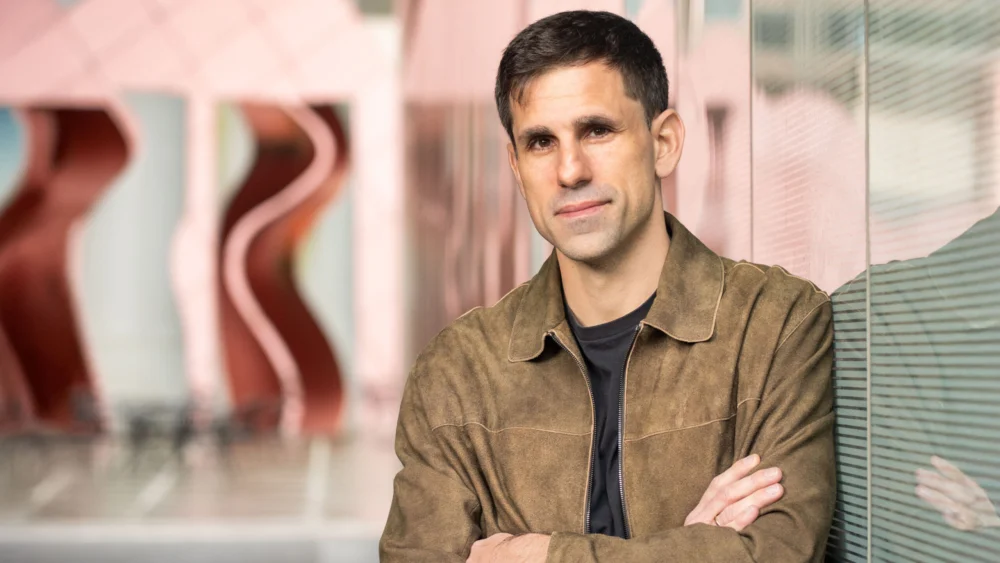
When César de la Fuente was a teenager, grappling with life’s monumental decisions, he meticulously compiled a list of the world’s most pressing problems. His ranking system was unconventional: inversely proportional to the financial investment governments were making to solve them. At the very apex of this somber hierarchy sat antimicrobial resistance. Two decades later, this existential threat has not only persisted but has metastasized, casting a longer and more ominous shadow over global health. Infections now spawned by bacteria, fungi, and viruses that have artfully evolved to evade conventional treatments are tragically linked to over 4 million deaths annually. A stark recent analysis, published in the prestigious journal The Lancet, grimly forecasts this grim toll could escalate beyond 8 million lives lost per year by 2050. In a compelling July 2025 essay featured in Physical Review Letters, de la Fuente, now a distinguished bioengineer and computational biologist, alongside synthetic biologist James Collins, sounded a dire alarm: humanity teeters on the precipice of a "post-antibiotic era." This chilling prospect envisions a future where common bacterial infections, caused by formidable strains of Escherichia coli or Staphylococcus aureus – bacteria that our current medical arsenal can typically subdue – could become lethally untreatable. "The antibiotic discovery pipeline remains perilously thin," they articulated, "impeded by high development costs, lengthy timelines, and low returns on investment."
However, de la Fuente is not succumbing to this bleak outlook. Instead, he is actively leveraging the transformative power of artificial intelligence to forge a more hopeful future. At the University of Pennsylvania, his dedicated team is diligently training sophisticated AI tools to embark on an unprecedented expedition through the vast and intricate landscapes of genomes, seeking out peptides with inherent antibiotic properties. His audacious vision entails the ingenious assembly of these peptides – molecules composed of up to 50 amino acids intricately linked together – into novel configurations, including structures that have never before been observed in the natural world. The ultimate hope is that these bio-engineered molecules will serve as a formidable defense against microbial adversaries that have outmaneuvered traditional therapeutic strategies.
This ambitious quest has already yielded a treasure trove of promising candidates unearthed from the most unexpected of locales. In August 2025, de la Fuente’s formidable team, comprising 16 dedicated scientists within Penn’s Machine Biology Group, unveiled their discovery of peptides artfully concealed within the genetic code of ancient, single-celled organisms known as archaea. Prior to this breakthrough, their meticulous excavations had unearthed a compelling list of potential candidates from the venom of an array of formidable creatures, including snakes, wasps, and spiders. In an ongoing, captivating project de la Fuente has christened "molecular de-extinction," he and his collaborators have been systematically scanning published genetic sequences of extinct species, searching for molecules that might possess latent functional properties. This ambitious undertaking spans the genetic blueprints of hominids such as Neanderthals and Denisovans, iconic megafauna like woolly mammoths, and even ancient zebras and penguins. De la Fuente’s compelling reasoning is that somewhere within the vast tapestry of life’s history on Earth, an organism may have evolved an antimicrobial defense mechanism that could prove invaluable in the contemporary struggle against infectious diseases. These long-vanished genetic codes have already given rise to resurrected compounds with evocative names like mammuthusin-2 (derived from woolly mammoth DNA), mylodonin-2 (sourced from the extinct giant sloth), and hydrodamin-1 (isolated from the ancient sea cow). Over the past few years, this molecular exploration has empowered de la Fuente to curate an expansive library of over a million genetic blueprints, each holding the potential for a life-saving discovery.
At the age of 40, de la Fuente’s contributions have not gone unnoticed, as evidenced by an impressive collection of accolades adorning his trophy case, bestowed by esteemed organizations such as the American Society for Microbiology and the American Chemical Society. In 2019, this very magazine recognized his pioneering work, naming him among its "35 Innovators Under 35" for his transformative application of computational approaches to the critical challenge of antibiotic discovery. He is widely acknowledged as a vanguard in the movement to harness the power of AI for addressing real-world problems. "He’s really helped pioneer that space," attests Collins, a luminary in the field at MIT. While their laboratory collaborations have not materialized, Collins has long been at the forefront of employing AI for drug discovery, including the relentless pursuit of novel antibiotics. In 2020, Collins’ team achieved a significant milestone by utilizing an AI model to predict halicin, a broad-spectrum antibiotic that is currently undergoing promising preclinical development.
The imperative for creativity and innovation within the realm of antibiotic development is immense, and researchers like de la Fuente are crucial in meeting this demand. Collins further emphasizes the impact of de la Fuente’s work on peptides, stating, "César is marvelously talented, very innovative."
A Messy, Noisy Endeavor
De la Fuente candidly describes antimicrobial resistance as an "almost impossible" problem, yet he perceives a vast expanse of unexplored territory within the word "almost." "I like challenges," he states with conviction, "and I think this is the ultimate challenge." He identifies the relentless use, overuse, and outright misuse of antibiotics as the primary drivers of antimicrobial resistance. This crisis is escalating at an alarming rate, he explains, due to the prohibitive costs and frequent dead ends associated with conventional methods of discovering, manufacturing, and testing these vital drugs. "A lot of the companies that have attempted to do antibiotic development in the past have ended up folding because there’s no good return on investment at the end of the day," he observes.
Historically, antibiotic discovery has been characterized as a messy, unpredictable endeavor, heavily reliant on serendipity and fraught with inherent uncertainty and misdirection. For decades, researchers have predominantly resorted to brute-force, labor-intensive methods. "Scientists dig into soil, they dig into water," de la Fuente recounts. "And then from that complex organic matter they try to extract antimicrobial molecules."
However, the sheer complexity of molecules presents a formidable hurdle. Researchers have estimated the number of possible organic combinations that could theoretically be synthesized to be in the vicinity of 1060. For context, the entire Earth is estimated to contain approximately 1018 grains of sand. "Drug discovery in any domain is a statistics game," explains Jonathan Stokes, a chemical biologist at McMaster University in Canada, who is also employing generative AI to design potential new antibiotics that can be synthesized in a laboratory and who collaborated with Collins on the halicin project. "You need enough shots on goal to happen to get one."
These "shots," however, must be exceptionally precise. And it is precisely in improving this aim that AI appears exceptionally well-suited. De la Fuente elucidates that biology itself serves as an immense source of information, describing it as akin to "a bunch of code." The genetic code of DNA is composed of four fundamental letters; proteins and peptides, on the other hand, utilize 20, where each "letter" represents a specific amino acid. De la Fuente’s work, therefore, centers on training AI models to accurately recognize sequences of these letters that encode for antimicrobial peptides, or AMPs. "If you think about it that way," he elaborates, "you can devise algorithms to mine the code and identify functional molecules, which can be antimicrobials. Or antimalarials. Or anticancer agents."
Practically speaking, the journey from discovery to therapeutic application is still ongoing. These identified peptides have yet to be transformed into readily usable drugs that can benefit human patients, and numerous critical details – including optimal dosage, effective delivery mechanisms, and precise therapeutic targets – remain to be meticulously addressed, as de la Fuente points out. Nevertheless, AMPs hold significant appeal precisely because they are already integral to the body’s own defense mechanisms. They form a crucial component of the immune system and often represent the initial line of defense against pathogenic infections. Unlike conventional antibiotics, which typically employ a singular mechanism to eradicate bacteria, AMPs often exhibit a multifaceted approach. They can simultaneously disrupt the bacterial cell wall, compromise the integrity of the genetic material within, and interfere with a variety of essential cellular processes. While a bacterial pathogen might evolve resistance to a conventional drug’s singular mode of action, it faces a far more daunting challenge in overcoming a multi-pronged AMP attack.
From Discovery to Delivery
De la Fuente’s research group is at the vanguard of a burgeoning movement that leverages AI to combat antibiotic resistance. While his primary focus lies in the realm of peptides, Collins is actively engaged in small-molecule discovery, as is Stokes at McMaster, whose sophisticated models not only identify promising new molecules but also predict their synthesizability. "It’s only been a few years since folks have been using AI meaningfully in drug discovery," notes Collins.
Even within this relatively short timeframe, the tools and methodologies have undergone significant evolution, according to James Zou, a computer scientist at Stanford University who has collaborated with both Stokes and Collins. Researchers have transitioned from employing predictive models to developing more sophisticated generative approaches. Zou explains that with a predictive approach, researchers meticulously screen extensive libraries of candidates that are already deemed promising. Generative approaches, however, offer a more revolutionary capability: the power to design entirely new molecules from the ground up. As a testament to this progress, last year, de la Fuente’s team employed one generative AI model to design a suite of synthetic peptides and a second model to rigorously assess their potential. The group then proceeded to test two of the resulting compounds on mice infected with a particularly virulent, drug-resistant strain of Acinetobacter baumannii, a bacterium identified by the World Health Organization as a "critical priority" in the global fight against antimicrobial resistance. Remarkably, both compounds successfully and safely eradicated the infection.
However, the field remains firmly entrenched in the discovery phase. De la Fuente’s current research efforts are intensely focused on accelerating the progression of promising candidates toward clinical testing. To this end, his team is meticulously developing an ambitious, multimodal AI model named ApexOracle. This sophisticated system is engineered to analyze novel pathogens, precisely identify their genetic vulnerabilities, match them with potent antimicrobial peptides likely to be effective against them, and subsequently predict how an antibiotic, meticulously constructed from these peptides, would perform in rigorous laboratory evaluations. De la Fuente describes ApexOracle as a system that "converges understanding in chemistry, genomics, and language." While still in its preliminary stages, he emphasizes that even if it does not achieve perfect efficacy, it will undoubtedly serve as an invaluable guide, steering the next generation of AI models toward the ultimate objective of conquering antibiotic resistance.
De la Fuente firmly believes that by harnessing the power of AI, human researchers now possess a genuine fighting chance to catch up with the monumental threat that looms before them. This revolutionary technology has already compressed decades of painstaking human research into a fraction of the time. Now, his fervent hope is that it will also begin to save lives. "This is the world that we live in today, and it’s incredible," he concludes with a sense of awe and optimism.
Stephen Ornes is a science writer based in Nashville, Tennessee.