Imroatul Nasiyah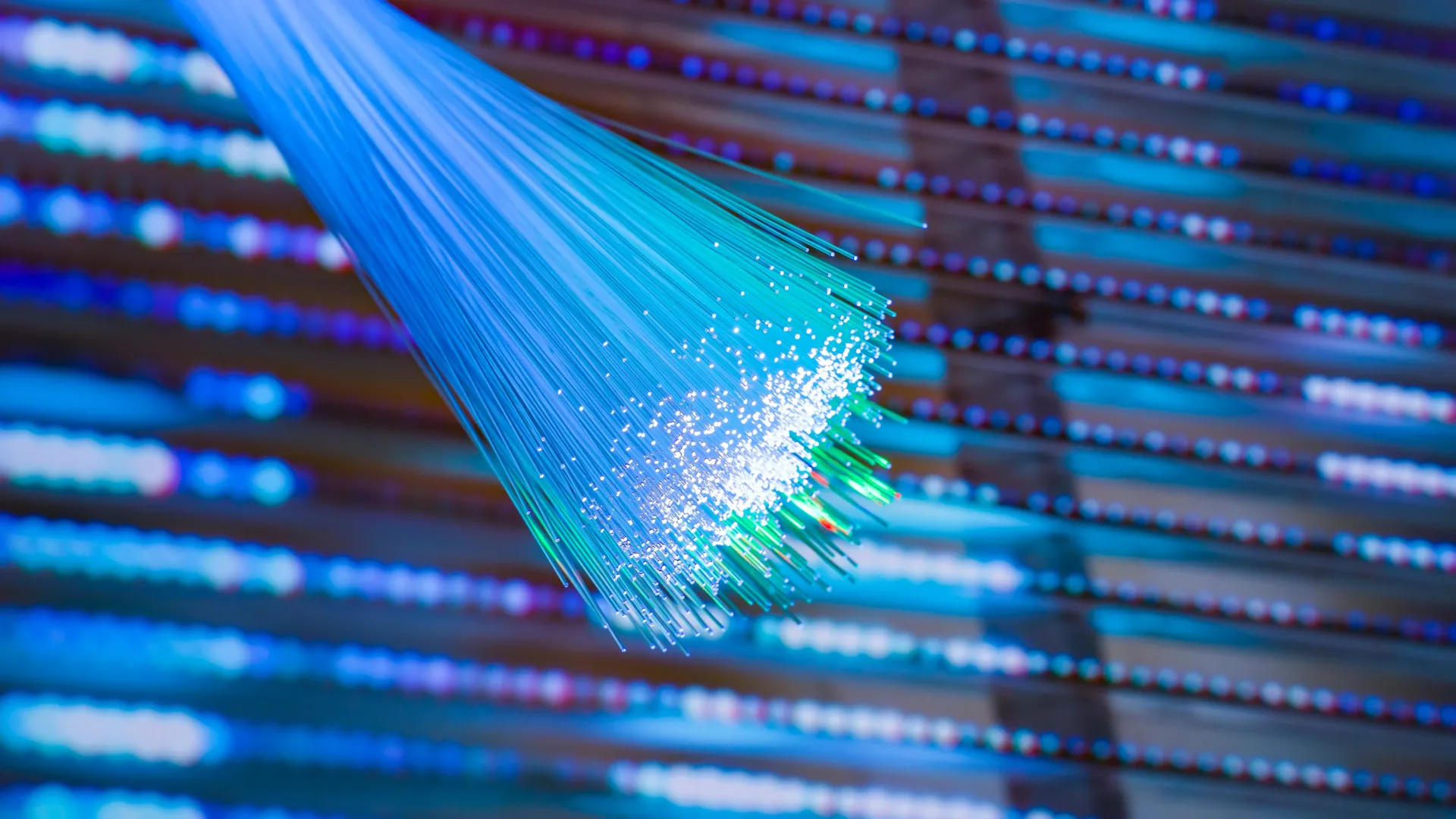
In a groundbreaking achievement that propels the realm of quantum computing out of theoretical discussions and into the tangible infrastructure of our digital world, engineers from the University of Pennsylvania have successfully demonstrated the viability of quantum networking on live, commercial fiber-optic cables. This pioneering experiment, meticulously detailed in the prestigious journal Science, not only showcases the remarkable resilience of fragile quantum signals but also confirms their ability to traverse the very same pathways that currently carry our everyday internet traffic. The team strategically deployed and validated their innovative approach within the robust fiber-optic network of Verizon, a leading telecommunications provider. This monumental stride signifies a critical inflection point, bridging the gap between laboratory curiosities and the practical implementation of a future quantum internet, a development scientists widely anticipate will revolutionize technology in ways as profound as the advent of the internet itself.
At the heart of this transformative endeavor lies the Penn team’s ingenious "Q-chip." This compact marvel of engineering is not merely a conduit for quantum information; it is a sophisticated orchestrator, capable of seamlessly coordinating both quantum and classical data streams. Crucially, the Q-chip "speaks the same language" as the modern web, employing the ubiquitous Internet Protocol (IP) that underpins the vast majority of online communication. This linguistic compatibility is a cornerstone for the eventual construction of a widespread quantum internet, a network poised to unlock computational capabilities far beyond the reach of today’s most powerful supercomputers.
The fundamental principles of quantum networking are rooted in the enigmatic phenomenon of quantum entanglement. This peculiar property binds pairs of particles in such a way that their fates are inextricably linked, regardless of the distance separating them. Any alteration to one entangled particle instantaneously influences its partner. Harnessing this profound connection holds the key to interconnecting quantum computers, enabling them to pool their immense processing power. The implications are staggering: accelerated development of artificial intelligence, vastly more energy-efficient AI models, and the design of novel drugs and materials with properties currently unimaginable.
The Penn team’s research marks a pivotal moment by demonstrating, for the first time on a live commercial fiber network, that a single integrated chip can perform a multitude of essential functions. It can not only transmit quantum signals with remarkable fidelity but also autonomously compensate for environmental noise, a persistent adversary to quantum information. Furthermore, it adeptly bundles quantum and classical data into standard internet-style packets, facilitating their routing through the established addressing systems and management tools that govern our current online ecosystem. Professor Liang Feng, a leading figure in Materials Science and Engineering (MSE) and Electrical and Systems Engineering (ESE) at Penn and the senior author of the Science paper, underscored the significance of this achievement: "By showing an integrated chip can manage quantum signals on a live commercial network like Verizon’s, and do so using the same protocols that run the classical internet, we’ve taken a key step toward larger-scale experiments and a practical quantum internet."
However, the journey toward a fully realized quantum internet is not without its formidable challenges, particularly concerning the inherent difficulty of scaling these delicate systems. The peculiar nature of quantum particles, famously alluded to by Erwin Schrodinger’s thought experiment involving a cat in a box, presents a unique hurdle. Quantum particles exist in a superposition of states, akin to the cat being both alive and dead simultaneously, until a measurement is performed. This act of observation collapses the quantum state, rendering the particle’s unique properties inaccessible for further manipulation. This measurement-induced fragility makes scaling quantum networks exceptionally problematic. Robert Broberg, a doctoral student in ESE and a coauthor of the paper, explained the fundamental difference: "Normal networks measure data to guide it towards the ultimate destination. With purely quantum networks, you can’t do that, because measuring the particles destroys the quantum state."
To circumvent this fundamental limitation, the Penn researchers ingeniously developed the "Q-Chip," an acronym for "Quantum-Classical Hybrid Internet by Photonics." This innovative chip serves as a sophisticated intermediary, coordinating the transmission of both "classical" signals, which consist of conventional streams of light, and the more ethereal quantum particles. Yichi Zhang, a doctoral student in MSE and the paper’s first author, elaborated on the mechanism: "The classical signal travels just ahead of the quantum signal. That allows us to measure the classical signal for routing, while leaving the quantum signal intact." This clever arrangement functions much like a railway system, where a classical light locomotive paves the way for the quantum cargo. "The classical ‘header’ acts like the train’s engine, while the quantum information rides behind in sealed containers," Zhang explained. "You can’t open the containers without destroying what’s inside, but the engine ensures the whole train gets where it needs to go."
The ability to measure the classical header is critical, as it allows the entire system to adhere to the established Internet Protocol (IP) that governs the flow of data across today’s internet. "By embedding quantum information in the familiar IP framework, we showed that a quantum internet could literally speak the same language as the classical one," Zhang stated. "That compatibility is key to scaling using existing infrastructure." This linguistic parity ensures that the quantum internet can be integrated seamlessly with the existing digital backbone.
Adapting quantum technology to the unpredictable realities of the real world presents another significant hurdle. Unlike the carefully controlled environments of research laboratories, commercial transmission lines are subject to a myriad of environmental fluctuations. Changes in temperature due to weather, vibrations from human activities such as construction and transportation, and even seismic tremors can all wreak havoc on delicate quantum signals. To address this inherent instability, the researchers engineered a sophisticated error-correction mechanism. This method capitalizes on the correlation between the classical header and the quantum signal; interference affecting the classical signal is mirrored in the quantum signal. "Because we can measure the classical signal without damaging the quantum one," Feng explained, "we can infer what corrections need to be made to the quantum signal without ever measuring it, preserving the quantum state."
In rigorous testing, this innovative system demonstrated remarkable resilience, maintaining transmission fidelities exceeding 97%. This impressive result confirms its ability to effectively mitigate the noise and instability that typically degrade quantum signals when they venture outside the controlled confines of a laboratory. Furthermore, the Q-chip is constructed from silicon, leveraging established fabrication techniques. This compatibility with existing manufacturing processes suggests that the chip can be mass-produced, paving the way for scalable deployment of the new approach. Feng highlighted the current scale and future potential: "Our network has just one server and one node, connecting two buildings, with about a kilometer of fiber-optic cable installed by Verizon between them. But all you need to do to expand the network is fabricate more chips and connect them to Philadelphia’s existing fiber-optic cables."
Despite these significant advancements, the primary impediment to scaling quantum networks beyond metropolitan areas remains the inability to amplify quantum signals without destroying their entangled state. While some research groups have successfully transmitted "quantum keys" – the foundation of ultra-secure communication – over long distances using conventional fiber, these systems employ weak coherent light to generate random numbers, a technique optimized for security rather than for linking actual quantum processors. Overcoming this amplification challenge will necessitate the development of entirely new hardware. However, the Penn study provides an indispensable foundational step, demonstrating the feasibility of running quantum signals over commercial fiber using internet-style packet routing, dynamic switching, and on-chip error mitigation that are fully compatible with the protocols governing today’s networks.
Robert Broberg captured the sentiment of this pivotal moment: "This feels like the early days of the classical internet in the 1990s, when universities first connected their networks. That opened the door to transformations no one could have predicted. A quantum internet has the same potential." This groundbreaking research, supported by a consortium of prestigious foundations and governmental agencies including the Gordon and Betty Moore Foundation, the Office of Naval Research, and the National Science Foundation, along with endowments from the University of Pennsylvania and the City University of New York, represents a crucial leap forward. It heralds the dawn of an era where the extraordinary capabilities of quantum mechanics are no longer confined to specialized laboratories but are poised to become an integral part of our interconnected future. The collaborative efforts of researchers from the University of Pennsylvania, including Alan Zhu, Gushi Li, and Jonathan Smith, alongside Li Ge from the City University of New York, have laid the groundwork for what promises to be the next profound revolution in information technology.