Faris Adani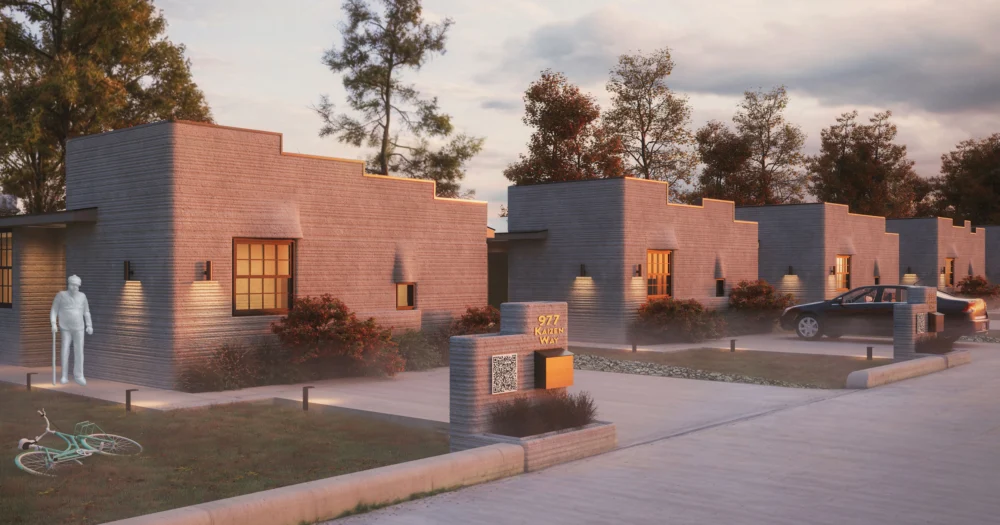
The compelling vision of 3D-printed housing, heralded as a revolutionary solution to global housing crises, has consistently painted a picture of a future where robots construct homes with unprecedented speed, minimal waste, reduced labor, and, crucially, at a significantly lower cost for consumers. This narrative, amplified by innovative startups and technological evangelists, posits additive manufacturing as the panacea for affordability and efficiency in an increasingly strained housing market. However, the initial foray into practical application, as demonstrated by companies like 4Dify in Yuba County, California, suggests that the economic realities are far more complex and, at present, surprisingly counterintuitive to this utopian promise. The realization of "America’s first 3D-printed neighborhood" by 4Dify offers a critical case study, revealing a significant disconnect between the aspirational pitch and the tangible financial outcomes, especially concerning the much-anticipated affordability factor.
4Dify’s ambitious project in Yuba County, situated just north of Sacramento, represents a landmark achievement in construction technology. The neighborhood comprises five distinct 1,000-square-foot residences, each brought to life by a formidable concrete printer, an investment reportedly worth around $1.5 million. The inaugural house, a testament to the nascent technology’s capabilities, took approximately 24 days to fabricate. While 4Dify anticipates streamlining this process to a mere 10 days per home in the future, the sheer speed of construction, while impressive, appears to be overshadowed by the final price tag, which challenges the core premise of affordability.
The initial offering price for the first 4Dify home was set at $375,000. On the surface, this might appear to be a considerable bargain within the Yuba County market, where the median home price hovers around $450,000. Such a comparison might lead an unsuspecting observer to conclude that 3D printing is indeed delivering on its promise of cheaper homes, offering a gateway to homeownership for those otherwise priced out of traditional markets. This perspective, however, masks a deeper, more troubling economic reality that emerges when one scrutinizes the cost structure on a per-square-foot basis, a standard metric for evaluating construction efficiency and value.
The critical metric that unravels the narrative of affordability is the price per square foot. At 1,000 square feet, the $375,000 price tag translates to an astounding $375 per square foot for 4Dify’s concrete structures. This figure stands in stark contrast to the median price per square foot in Yuba County, which, according to RedFin data, is a more palatable $268. The difference of over $100 per square foot highlights a significant premium associated with these novel dwellings, effectively making them more expensive on a unit-area basis than conventionally built homes in the same locale. This disparity casts a long shadow over the claims of cost-efficiency, suggesting that the savings touted in labor and waste are not translating into direct financial benefits for the end-consumer.
Further contextualizing this cost, the price per square foot of 4Dify’s homes places them in a surprisingly upscale category. For comparison, constructing a custom-built home of 2,500 square feet in the northwest suburbs of Chicago, a market known for its robust construction costs, can be comparable to or even less than the per-square-foot cost of these 3D-printed residences. This comparison underscores that far from being a budget-friendly alternative, these initial 3D-printed homes are positioned as a premium, perhaps even luxury, offering. This fundamentally contradicts the widespread expectation that additive manufacturing would primarily address the need for low-cost, high-volume housing solutions.
Beyond the upfront purchase price, prospective homeowners of these innovative dwellings face a unique set of challenges and uncertainties. The risks associated with maintaining and insuring a new type of construction are substantial. Traditional homes benefit from decades, if not centuries, of accumulated knowledge regarding wear and tear, common repair issues, and long-term durability. A 3D-printed home, built with novel materials and construction techniques, presents an uncharted territory. Owners may encounter unpredictable pain points as the structure ages, ranging from specialized repair needs to difficulties in finding qualified contractors. Furthermore, insurance providers, wary of unknown risks, might impose higher premiums or even be reluctant to offer comprehensive coverage, adding to the long-term financial burden.
The question then arises: why is the promise of "faster, cheaper, less waste" not translating into genuinely affordable homes? Several factors contribute to this economic disconnect. The initial investment in the sophisticated 3D printing equipment, such as 4Dify’s $1.5 million machine, represents a substantial capital expenditure that must be amortized across the homes produced. While the technology reduces manual labor, it introduces the need for highly specialized personnel to operate, maintain, and program these advanced machines. Furthermore, the specialized concrete mixtures and other finishing materials required for 3D printing may still command a premium compared to conventional building materials. Research and development overheads, regulatory compliance for novel construction methods, and the inherent inefficiencies of a nascent supply chain also contribute to the elevated costs.
A significant hurdle to achieving true affordability is the challenge of scale and standardization. The economic benefits of additive manufacturing truly materialize when production volumes are high, allowing for the efficient amortization of equipment costs and the optimization of material procurement. At present, 3D printing in construction is still largely in its experimental phase, with individual projects rather than mass production being the norm. Without the economies of scale that characterize traditional large-scale housing developments, the cost savings remain largely theoretical. The "chicken and egg" dilemma persists: builders need to achieve scale to lower costs, but the current high costs deter the widespread adoption necessary for scaling.
The regulatory environment also plays a crucial role. Building codes, traditionally designed around conventional construction methods, often struggle to accommodate novel technologies like 3D printing. Obtaining permits can be a protracted and complex process, requiring extensive testing and documentation to prove compliance with safety and structural integrity standards. Moreover, the acceptance of 3D-printed homes by lenders and appraisers is another nascent area. Banks may be hesitant to finance properties built with unproven methods, and appraisers might struggle to assign accurate market values due to a lack of comparable sales data, potentially impacting resale values and homeowner equity.
Aesthetically, the current generation of 3D-printed homes, often described as "concrete yurts," can have a distinctive, sometimes monolithic appearance. While this unique aesthetic might appeal to some, it can also limit design flexibility and mainstream market appeal. As the technology matures, advancements in material science and printing techniques will likely allow for greater architectural variety and more nuanced finishes, but for now, the design language remains somewhat constrained.
Despite these significant economic hurdles, the long-term potential of 3D printing in construction should not be entirely dismissed. For niche applications, such as rapid deployment in disaster-stricken areas, remote locations with limited access to skilled labor, or even extraterrestrial habitats, the technology offers unparalleled advantages in speed and resource efficiency. Companies like Icon and Mighty Buildings are also making strides, often focusing on slightly different segments or employing alternative strategies to tackle the cost conundrum, demonstrating that the industry is still evolving rapidly. However, for 3D printing to fulfill its promise as a mainstream solution to the affordable housing crisis, a paradigm shift is required. This would entail substantial reductions in material costs, further automation of post-printing finishing work, significant streamlining of regulatory processes, and widespread adoption that drives economies of scale.
In conclusion, while 4Dify’s "America’s first 3D-printed neighborhood" represents a fascinating leap in construction technology, its current economic reality paints a stark picture. The homes, rather than being an affordable alternative, command a premium price per square foot, making them an expensive novelty rather than a widespread solution to the housing crisis. Until companies like 4Dify can drastically reduce their prices by building at a much larger scale, overcoming the current challenges in material costs, regulatory frameworks, and market acceptance, 3D-printed homes will remain an intriguing experiment. The initial economic data suggests that the dream of cheaper, mass-produced housing through additive manufacturing is still a distant horizon, fraught with more complexity and cost than initially envisioned.