Faris Adani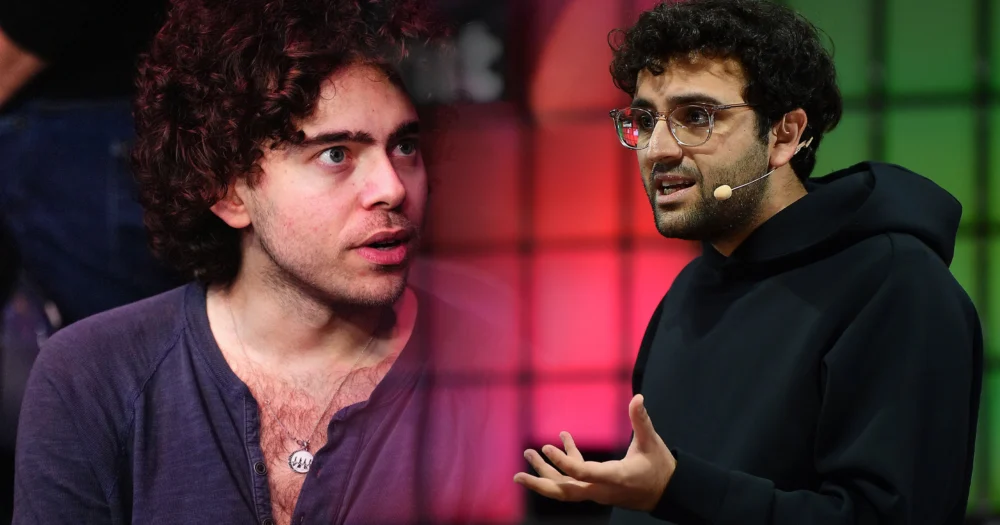
The CEOs of Polymarket and Kalshi Are Locked in a Bitter Feud as Prediction Markets Explode
Sign up to see the future, today – a future increasingly shaped by the burgeoning, and often contentious, world of prediction markets, where can’t-miss innovations from the bleeding edge of science and tech collide with the timeless human impulse to gamble.
In this rapidly expanding frontier of speculative finance, two names have emerged as undisputed titans: Polymarket and Kalshi. These platforms are not merely facilitating bets; they are fundamentally reshaping how individuals engage with future events, transforming everything from geopolitical crises to celebrity appearances into tradable assets. From high-stakes wagers on when the United States might invade Iran or Venezuela, to more lighthearted predictions about whether Amazon cofounder Jeff Bezos would make an appearance at this year’s Super Bowl, these platforms have democratized, and perhaps dangerously normalized, the act of betting on tomorrow.
However, this proliferation of an undeniably addictive trend, often amplified through major partnerships with mainstream media outlets hungry for engagement, has sparked significant alarm. Critics warn of an alarming number of young people getting roped into what essentially amounts to unregulated gambling, masquerading as sophisticated financial forecasting. The lines between informed speculation and pure chance have blurred, raising serious questions about consumer protection and market integrity.
The controversy is far from academic. Both Polymarket and Kalshi have found themselves in the crosshairs of regulators, facing over a dozen federal lawsuits across the US. At the heart of these legal battles is a fundamental dispute: should these platforms be regulated as conventional gambling operations, akin to sports betting sites, or as federally regulated financial exchanges, offering legitimate event contracts? The answer will determine the very future of the industry.
A Bitter Feud: Shayne Coplan vs. Tarek Mansour
Despite their shared industry and regulatory challenges, Polymarket and Kalshi are far from allies. Instead, their respective CEOs, Shayne Coplan and Tarek Mansour, are locked in a bitter, high-stakes feud, as NPR reports. This animosity stems from fundamental differences in their operational philosophies, regulatory approaches, and even their visions for the nascent prediction market industry.
Kalshi, under the leadership of the 29-year-old MIT graduate Tarek Mansour, has deliberately pursued a strategy of regulatory compliance. It has positioned itself as a Commodity Futures Trading Commission (CFTC)-regulated company, operating firmly within the legal frameworks of the US. This “play-it-safe” approach aims to lend an air of legitimacy and stability to its operations, appealing to users and institutions wary of the Wild West nature of some crypto-native platforms.
Polymarket, by stark contrast, has embraced a far more audacious, “Wild West” ethos. It operates offshore, technically making it unavailable to US-based consumers. However, this hasn’t deterred an enormous number of users within the US, who readily circumvent geographical restrictions using VPNs. Polymarket’s embrace of cryptocurrency wallets for anonymous betting further amplifies its unregulated nature, raising serious concerns about the potential for insider trading to flourish unchecked. This anonymity, while appealing to privacy advocates, creates a fertile ground for market manipulation and raises profound ethical questions about the integrity of information aggregation.
The public’s understanding of this crucial distinction, however, remains unclear at best. Mansour has aggressively worked to paint Kalshi as the safer, ethically superior alternative to Polymarket. He famously likened his rivalry with Coplan to the epic gridiron battles between NFL quarterbacks Tom Brady and Eli Manning during a podcast appearance earlier this year, framing the competition as a clash of titans with vastly different playbooks. Mansour’s campaign to discredit his rival was not limited to veiled analogies; in late 2024, he admitted to coordinating an anti-Polymarket social media campaign. This aggressive maneuver came to light after Coplan’s apartment in New York City was raided by the FBI as part of a money-laundering investigation, a moment Mansour seemingly seized upon to further his company’s narrative.
On the flip side, Shayne Coplan has expressed deep aggravation over the competition posed by Kalshi. He views Kalshi not as a legitimate rival, but as an imitation, stating to CNBC last year, “Polymarket is Polymarket, and they’re a Polymarket copycat.” This reflects a belief that Polymarket is the original innovator, and Kalshi is merely a sanitized version designed to appease regulators rather than push the boundaries of decentralized finance.
Dustin Gouker, a prominent consultant and prediction markets expert, elaborated on this dynamic to NPR: “Kalshi hates getting lumped in with Polymarket. They’re trying to draw this line in the sand that they’re this CFTC-regulated prediction market and Polymarket is not. I’m not sure that message is getting through, but it’s furthering the animosity between the two companies.” This observation highlights the core tension: Kalshi’s desperate need for differentiation and Polymarket’s defiant embrace of its unregulated status, fueling a rivalry that transcends mere business competition.
Billions at Stake: The Ethical Minefield of Prediction Markets
The stakes in this corporate and personal feud are colossal. Users are pouring billions of dollars into both platforms, placing money on a dizzying array of outcomes. These range from seemingly innocent wagers, like the outcomes of baseball games, to far more ethically dubious bets concerning global geopolitics, such as the US invasion of Iran. The sheer volume of money and the sensitive nature of some markets amplify the regulatory and ethical challenges facing the industry.
Mansour has demonstrated a more cautious approach when confronted with these ethically fraught bets, particularly in contrast to Polymarket’s more hands-off stance. A notable instance involved Kalshi users betting a staggering $54 million on when Iran’s Ayatollah Ali Khamenei would be “out as Supreme Leader.” Following Khamenei’s assassination, Mansour controversially voided these bets, citing a “death carveout” clause in Kalshi’s terms. This decision, while perhaps intended to navigate a moral quagmire, outraged many users who felt their legitimate wagers were unfairly cancelled. The controversy culminated on Friday when Kalshi was hit with a class-action lawsuit, accusing the company of selectively invoking the carveout only after the late Iranian leader’s death, implying a retroactive application of terms to avoid payouts.
Meanwhile, Polymarket’s decision to operate outside the purview of US regulators has attracted a different kind of scrutiny. Its offshore status, coupled with anonymous crypto transactions, makes it inherently difficult to monitor for illicit activities, including insider trading or market manipulation that could have real-world consequences, particularly on sensitive geopolitical events. The lack of regulatory oversight means that, unlike traditional financial markets, there are fewer safeguards to ensure fair play or prevent actors with privileged information from exploiting the market for personal gain.
The Shadow of Political Influence
Adding another layer of complexity, and indeed controversy, to this landscape is the palpable influence of politics. The Trump administration has notably shown little enthusiasm for reining in Polymarket, dropping Biden-era investigations into Coplan’s company last year. This move has been interpreted by some as a politically motivated decision, possibly reflecting a pro-business, anti-regulation stance, or perhaps even personal connections. Further complicating matters, Donald Trump Jr.’s venture capital firm, 1789 Capital, has poured millions of dollars into Polymarket, highlighting a friendly relationship between the company and the administration. In an incredible twist of fate, Trump Jr. is simultaneously a “strategic adviser” to Kalshi, creating a striking conflict of interest that blurs the lines between political power, investment, and market influence. This dual role underscores the entangled nature of the prediction market industry with high-level political figures, raising questions about potential favoritism or the erosion of impartial regulation.
The Marketing Arms Race and Future Outlook
Beyond the legal battles and personal animosities, Polymarket and Kalshi are locked in an aggressive marketing arms race, each vying to outdo the other with attention-grabbing stunts and major partnerships. This competition for public mindshare often descends into direct mimicry and one-upmanship. After Kalshi launched a publicity stunt involving handing out free groceries to people in New York City, Polymarket reacted almost instantly. The offshore platform countered by opening what the company claimed to be the city’s “first free grocery store,” directly challenging Kalshi’s outreach efforts and showcasing the intense, almost childish, rivalry for public attention and market dominance.
As billions of dollars continue to flow into these platforms, the future of prediction markets remains uncertain. The clash between innovation and regulation, the ethical quandaries surrounding sensitive bets, and the ongoing feud between Polymarket and Kalshi define an industry at a critical juncture. Whether these platforms evolve into legitimate financial instruments or succumb to stricter gambling regulations will depend on the outcomes of their legal battles, their ability to navigate ethical complexities, and ultimately, how the public perceives their true nature.
More on prediction markets: Anonymous Polymarket Accounts Won $1.2 Million on Trump’s Iran Strikes in Suspicious Bets