isnaini azizah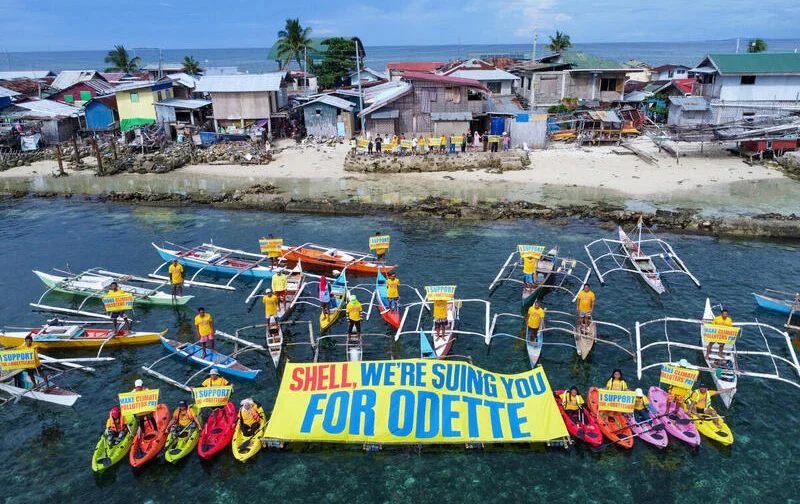
The economic ascent of the United States and the European Union, pillars of global prosperity, was built on a foundation of profound environmental disregard, a legacy that has now manifested as climate atrocities on a global scale. These economic powerhouses have consumed an overwhelmingly disproportionate share of the world’s fossil fuels, primarily oil and gas, effectively planting carbon time bombs whose devastating detonations are now most acutely felt in the planet’s poorest and hottest regions. In stark contrast, nations such as the Solomon Islands and Chad, characterized by their low-lying geography or sweltering climates, have contributed a minuscule fraction of global carbon dioxide emissions. Yet, due to their geographical vulnerability and historical context, they stand among the countries most susceptible to the escalating and increasingly ferocious consequences of global warming. This translates into a future marred by more frequent and devastating cyclones, crippling heatwaves, widespread famines, and catastrophic floods, threatening the very fabric of life in these vulnerable communities.
The moral imperative for those nations and corporations responsible for this environmental crisis to provide redress is undeniable and ironclad. A compelling case can be made that compensation should be extended for the homes that will inevitably be destroyed, the coastlines that will be irrevocably submerged by rising sea levels, and the lives that will be prematurely cut short by the escalating impacts of climate change. Estimates suggest that the major economies of the world owe a staggering "climate debt" to the rest of the global population, a debt approaching an astronomical $200 trillion in reparations, reflecting the accumulated harms and future projected losses.
Legally, however, constructing a robust case for climate justice has historically been a formidable challenge. Beyond the intricate jurisdictional hurdles that often complicate international litigation, the nascent stages of climate science struggled to definitively trace the provenance of airborne carbon dioxide molecules across vast oceanic distances and through extended periods. This scientific uncertainty provided fertile ground for deeply entrenched corporations, fortified by formidable legal teams, to exploit these complexities and evade accountability.
However, the landscape of climate litigation is undergoing a significant transformation, and the tides of justice may finally be turning. An increasing volume of climate-related lawsuits are being filed, with a notable surge originating from the Global South. Governments, non-governmental organizations, and ordinary citizens from the nations most exposed to the ravages of climate change are persistently exploring novel legal arguments and presenting them before an array of international courts. Encouragingly, some of these judicial bodies are demonstrating a growing willingness to hold nations and their industrial sectors accountable for their contributions to the climate crisis, framing it as a matter of fundamental human rights. Concurrently, the scientific capacity to precisely attribute specific extreme weather events to particular sources of emissions and to quantify their degree of culpability is advancing with remarkable speed and accuracy.
While it is true that no court has yet definitively held a climate emitter liable for climate-related damages, this is largely due to systemic barriers rather than a lack of scientific evidence or moral justification. A primary obstacle is the general immunity afforded to nations from lawsuits initiated in foreign jurisdictions. Consequently, the focus of most legal challenges has necessarily shifted towards major carbon-producing corporations. These entities, however, have historically leveraged a potent defense: while they may extract, refine, and sell the world’s fossil fuels, the primary source of emissions, they argue, originates from the subsequent combustion of these fuels in vehicles, power plants, and factories. As Michael Gerrard and Jessica Wentz of Columbia Law School’s Sabin Center eloquently articulate in a recent publication in Nature, the companies’ defense often rests on the assertion that they merely supply the raw materials, and it is not their responsibility if others choose to ignite them.
Despite these entrenched defenses, victims of extreme weather events are undeterred and are continuously exploring new legal avenues and innovative approaches, bolstered by increasingly compelling scientific evidence. In a landmark case, plaintiffs in the Philippines have initiated legal action against the oil giant Shell, alleging its complicity in driving Super Typhoon Odette, a catastrophic storm in 2021 that claimed over 400 lives and displaced nearly 800,000 people. This lawsuit draws critical support from an attribution study that unequivocally demonstrated that climate change rendered extreme rainfall events, such as those experienced during Odette, twice as likely.

The visual testament to the plight of those affected is powerful. Survivors of Super Typhoon Odette in the Philippines, using makeshift fishing boats and kayaks, united to display a giant banner proclaiming: "SHELL, WE’RE SUING YOU FOR ODETTE." This image powerfully encapsulates the human dimension of the legal battle for climate justice.
Overall, the evidence linking corporate culpability to specific climate-related disasters is becoming increasingly accessible and irrefutable. For instance, a groundbreaking study published in Nature in September successfully quantified the contribution of particular companies to a series of devastating 21st-century heatwaves, providing a granular level of detail that was previously unattainable.
A series of recent legal decisions signal a more favorable environment for these types of lawsuits. Notably, a number of determinations by the European Court of Human Rights in climate cases have affirmed that states bear legal obligations to protect their citizens from the adverse effects of climate change. Furthermore, while a German court may have dismissed the case of a Peruvian farmer who sued a German power company over concerns that a melting alpine glacier threatened his property, the court acknowledged, in principle, that major carbon polluters could be held liable for climate damages directly attributable to their emissions.
This principle is poised to be rigorously tested in at least one ongoing lawsuit. Dozens of Pakistani farmers, whose lands were inundated during the catastrophic flooding events of 2022, have filed suit against two major German power and cement companies. This case represents a critical juncture in the fight for climate accountability.
Even if this particular lawsuit ultimately fails, the outcome would likely reflect systemic flaws rather than a deficiency in the scientific evidence or the moral argument. The fundamental reality remains that major carbon-polluting countries and corporations bear a disproportionately heavy responsibility for the climate-change-fueled disasters that are devastating communities worldwide.
For decades, wealthy nations actively fostered business practices that contributed to atmospheric pollution, even as the existential threat of climate change loomed ever larger. Concurrently, oil and gas companies have acted as the linchpin suppliers for a world deeply addicted to fossil fuels. They have operated with full awareness of the immense social, environmental, and human costs imposed by their business model, while simultaneously engaging in aggressive lobbying efforts to thwart any regulations that would compel them to internalize these harms or adopt more sustainable practices.
They knew the risks. They profited from the destruction. In a civilized society where the rule of law is paramount, they must be held accountable and bear the price for their actions.