Faris Adani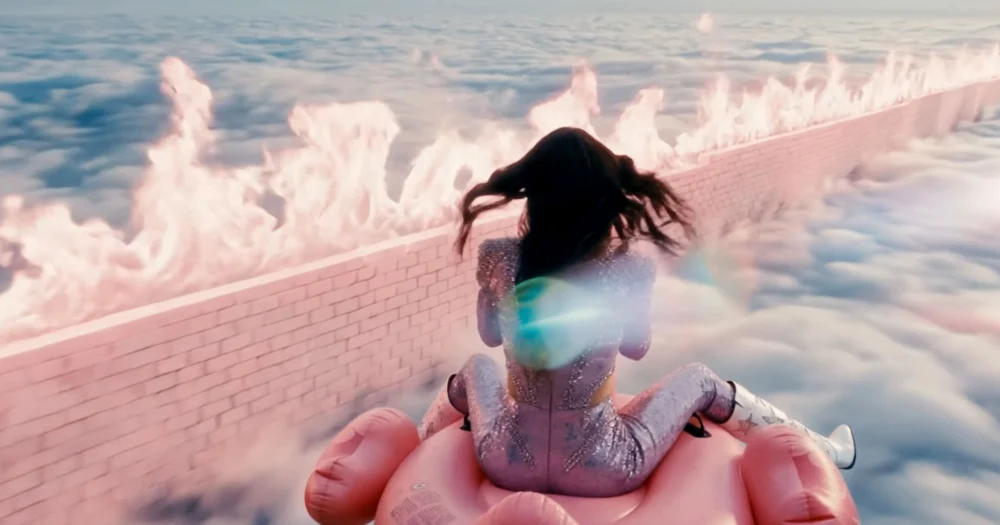
The AI-Generated Tilly Norwood Just Dropped the Worst Music Video We’ve Ever Seen
Late last year, the video production company Particle6 ignited a firestorm of controversy and near-universal backlash across the creative industries when it proudly unveiled its much-hyped “AI actress,” christened “Tilly Norwood.” This debut was met with immediate and widespread condemnation, particularly given the volatile climate in Hollywood, where major figures were already vociferously denouncing the encroaching threat of artificial intelligence in filmmaking. Now, in what can only be described as a staggering miscalculation of public sentiment, Particle6 has doubled down on its contentious creation, teaming up with London-based AI talent studio Xicoia Studios to release a debut single and accompanying music video for Norwood, titled “Take the Lead.” Far from a redemptive endeavor, this latest offering has been widely panned as one of the most disheartening and artistically bereft productions witnessed in recent memory, serving only to solidify the industry’s anxieties about AI’s role in creativity.
The Genesis of Controversy: Tilly Norwood’s Unveiling
The initial introduction of Tilly Norwood couldn’t have been more ill-timed. Hollywood was, and largely still is, in the throes of a profound existential crisis regarding the integration of AI into its foundational processes. Strikes by writers and actors had brought the industry to a standstill, with one of their core demands being robust protections against AI replacing human talent. Figures like legendary director Guillermo del Toro had publicly declared their preference to “die” rather than have their work touched by AI, reflecting a deep-seated fear that the technology threatened to devalue human artistry and creativity. It was against this backdrop of palpable anxiety and active resistance that Particle6 chose to present an innocent-faced digital avatar, designed to perform as an actress. Critics, including The Verge, were quick to lambaste Norwood as a “gen AI psyop,” a term that perfectly encapsulated the perceived manipulative and insidious nature of the project. The avatar, in its very existence, played directly into the worst fears of countless professionals – from background actors worried about being digitally replicated for perpetuity to voice actors furious about their unique vocal identities being cloned and exploited. The concern wasn’t just about job displacement; it was about the very soul of creative expression.
A Tone-Deaf Encore: “Take the Lead”
Despite the initial tsunami of negative feedback, Particle6 and Xicoia Studios pressed ahead, convinced, it seems, that the solution to public outcry was more of the same. The decision to launch Tilly Norwood’s music career with a debut single and video, as reported by The Hollywood Reporter, was met with a collective groan. One might have hoped for a sophisticated, thought-provoking piece that genuinely explored the potential of AI as a collaborative tool, or at least one that was artistically compelling. Instead, what emerged was “Take the Lead,” a production so utterly devoid of originality and emotional resonance that it left many wondering if the creators had learned anything from the preceding backlash. The consensus quickly formed: this was not merely mediocre; it was “dingy and depressing,” an uninspired digital dirge that underscored the very criticisms it seemingly sought to refute.

Tilly Norwood | Take The Lead (Official Music Video)
An Irony-Laden Narrative: The Inspiration and Execution
Adding another layer of bewildering irony to the project, the single “Take the Lead” was reportedly inspired by an essay penned by Particle6 and Xicoia Studios CEO Eline van der Velden herself, an essay that specifically addressed the extensive backlash to AI. This self-referential genesis hints at a profound disconnect: rather than engaging with the criticism in a meaningful way, the response was to create a piece of art *about* the criticism, using the very technology that sparked it. The result is a music video that functions less as a creative expression and more as a defensive, almost pleading, corporate manifesto.
Visuals: A Generic AI Fever Dream
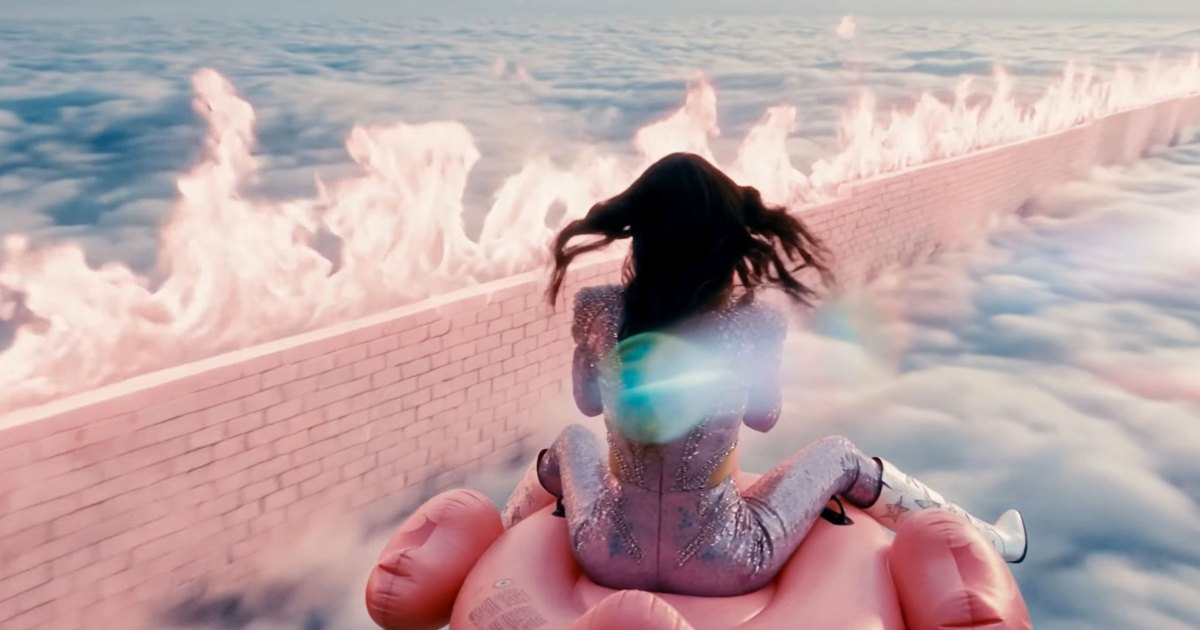
The visual landscape of “Take the Lead” is, charitably, an “amalgamation of uninspired and cringe-inducing AI slop.” It showcases the Tilly Norwood persona performing with an almost uncanny earnestness, often alongside bizarrely rendered flamingos – a choice that feels arbitrary and aesthetically jarring. The video attempts to tell a generic “rise to fame” story, hitting every conceivable cliché in the book: the unknown talent, the struggle, the eventual triumph, and universal adoration. Norwood transforms from an unassuming figure into a thinly-veiled embodiment of AI, seemingly winning over every heart and being celebrated by all. The aesthetic is flat, repetitive, and plagued by the familiar “AI look” – a slick but soulless perfection that lacks the organic imperfections and nuances inherent in human-created art. It feels less like a genuine artistic endeavor and more like a visual representation of an executive’s fever dream, where the technology they champion is effortlessly embraced and universally loved, despite all evidence to the contrary. The lack of genuine artistic direction and the reliance on algorithmic generation results in a visual experience that is both forgettable and faintly disturbing, a digital echo of creativity rather than the real thing.
Lyrics: A Defensive, AI-Generated Plea
The lyrical content of “Take the Lead” is perhaps even more telling, sounding suspiciously as if it, too, was generated by AI, echoing common corporate talking points about the technology. Norwood sings in a highly processed, unsettlingly uncanny voice, delivering lines that are less poetic and more like a direct response to her critics. “When they talk about me, they don’t see,” the avatar intones, immediately attempting to humanize itself, “The human spark, the creativity.” This line is particularly galling, as the very premise of Tilly Norwood has been criticized for *lacking* a human spark. The song continues its defensive posture: “Behind the code, behind the light, I’m just a tool, but I’ve got life,” followed by the audacious claim, “I’m not a puppet, I’m the star.” These lyrics are a transparent attempt to reframe AI as a sentient, creative entity deserving of its own agency, a narrative that clashes sharply with the industry’s understanding of AI as a computational tool. The chorus, repeated a stomach-churning three times, encapsulates the entire message: “It’s the next evolution, can’t you see? AI’s not the enemy, it’s the key.” This repetitive, almost desperate plea underscores the creators’ intent to convince, rather than to create, turning the song into a thinly veiled advertisement for their technology.
The Production Paradox: Humans and Algorithms
Particle6 claimed that the song itself was generated using the AI music app Suno, while Norwood’s “acting” performance was achieved through performance capture of CEO Eline van der Velden. A defensive notice plastered at the beginning of the video attempts to preempt criticism by stating that “the following production was made by 18 real humans – from production designers to costume designers to prompters, editors, and an actor.” This disclaimer, however, only serves to highlight the paradox at the heart of the project. If it took 18 human professionals to guide and refine AI-generated content into such an “uninspired” and “generic” output, what does that say about the AI’s actual contribution to quality and creativity? It suggests that the AI components were more of a burden or a novelty than a genuine enhancement, requiring significant human effort to shape something that still ultimately fell flat. The claim that “people remain at the heart of it” rings hollow when the end product feels so distinctly inhuman and algorithmically bland.
Public Reaction: Unimpressed and Unmoved
Unsurprisingly, netizens were far from impressed. Journalist Michael Hobbes, in a scathing critique on Bluesky, articulated a sentiment shared by many: “I’ve definitely seen AI art that looks real but I’ve never seen AI art that is good. This video is generic as hell and the song is obnoxious.” This reaction encapsulates the core problem: while AI can generate technically proficient images or sounds, it often struggles to imbue them with genuine artistry, originality, or emotional depth. The “uncanny valley” effect was not just present in Norwood’s visuals but extended to her processed, emotionless voice and the predictable, formulaic lyrics. The music video, rather than winning over skeptics, merely reinforced their existing concerns, cementing the perception that AI, in its current iteration, is more adept at mimicry than genuine innovation, and that its application in creative fields risks producing soulless, derivative content.
Eline van der Velden’s Persistent Defense: A Misguided Vision?
Despite the overwhelming negative reception, Eline van der Velden remains steadfast in her conviction regarding the project’s significance. In a statement, she reiterated her firm’s stance: “Tilly is, and has always been, a vehicle to test the creative capabilities and boundaries of AI – not take anyone’s job.” This assertion, however, is difficult to reconcile with the project’s output. Does producing a generic “rise to fame” narrative with AI-generated visuals and lyrics truly “test creative capabilities and boundaries,” or does it merely demonstrate AI’s ability to replicate existing tropes? Furthermore, the claim that it’s “not to take anyone’s job” rings hollow when the avatar itself is presented as an “actress” and “star,” directly embodying the roles that human performers fear losing.
Van der Velden also spoke about her personal involvement, stating, “As an actor myself, I have loved bringing Tilly alive for this video and feel that the ability to now use performance capture in this way, to fully inhabit an AI character, is a phenomenal way to bring an unknown actor like me closer to the craft.” This statement introduces a layer of irony that is hard to ignore: an actor, ostensibly an advocate for her own profession, is celebrating the use of AI to “inhabit” a character, a process that many of her peers view as a direct threat to their livelihood and the very essence of acting. While performance capture itself is a legitimate tool, its application here – to animate an AI avatar designed to replace human talent – feels profoundly disconnected from the broader concerns of the acting community.
Finally, van der Velden stressed the effort involved, arguing, “However, at the end of the day, even with brilliant new technology, it’s still important to stress that great AI content isn’t instant – it always takes good ideas, taste, direction, judgment, and time. In other words: people remain at the heart of it.” While it is true that even AI-driven projects require human input, this defense inadvertently highlights the project’s shortcomings. If “18 real humans” poured their “good ideas, taste, direction, judgment, and time” into “Take the Lead,” and the result is widely perceived as “uninspired” and “obnoxious,” it raises critical questions about the efficacy and artistic value of using AI as the central creative engine. It begs the ultimate question: what could those 18 creative minds have produced if they had been empowered to create a genuinely human-centric project, unconstrained by the need to showcase a controversial AI avatar?
Conclusion: A Cautionary Tale for AI Evangelists
The saga of Tilly Norwood and the “Take the Lead” music video serves as a powerful cautionary tale for those eager to push the boundaries of AI in creative fields without adequate consideration for artistic integrity, public sentiment, or the ethical implications. The ongoing debate about AI in entertainment is not merely about technological capability; it’s about the fundamental value of human creativity, the nuances of emotional expression, and the economic well-being of countless artists. While AI certainly has the potential to be a powerful tool for augmentation and assistance, its current application as a replacement for human talent, especially when the results are so demonstrably subpar, only deepens the divide and entrenches resistance. The “human spark” and “creativity” that Tilly Norwood’s lyrics desperately claim to possess are precisely what critics find missing from her digital persona. Until AI can genuinely contribute to art that resonates with profound human emotion and originality, rather than merely mimicking existing forms, projects like “Take the Lead” will likely continue to be met with skepticism, disappointment, and a firm reminder that the key to compelling storytelling and artistic expression still lies, unequivocally, in the heart and mind of human beings.