Faris Adani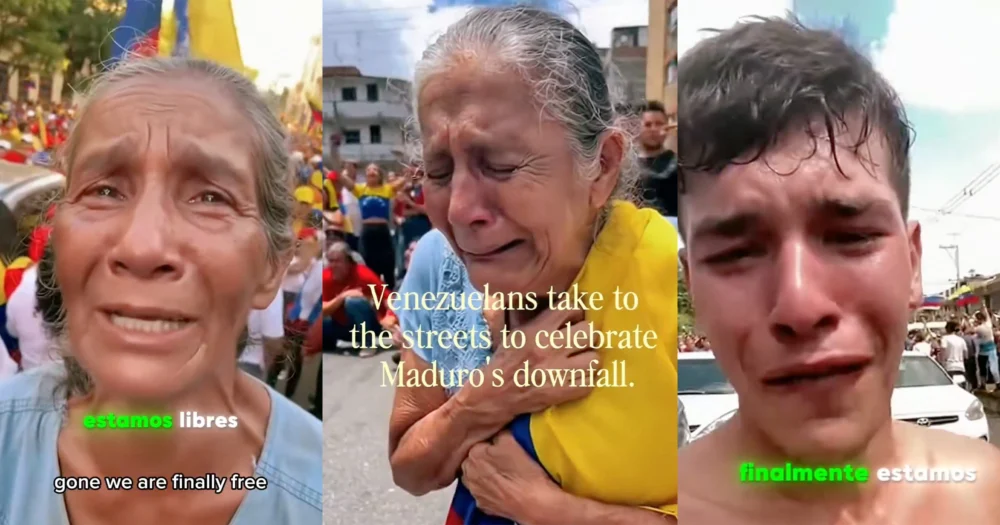
That Video of Happy Crying Venezuelans After Maduro’s Kidnapping? It’s AI Slop
In the turbulent aftermath of the deadly United States attack on Venezuela and the subsequent kidnapping of President Nicolás Maduro, a new and insidious front has opened in the information war: generative artificial intelligence. Netizens eager to manufacture support for these dramatic military strikes have quickly found a powerful, albeit deceptive, ally in AI, deploying it to craft narratives that starkly contradict the on-the-ground reality.
The crisis, unfolding in early 2026, saw a sudden and decisive intervention by the United States, culminating in the apprehension of President Maduro. The stated aims of the intervention, often echoed by proponents in the West, centered on restoring democracy and alleviating Venezuela’s protracted economic woes. However, these claims have been met with a fierce debate, particularly concerning who holds the legitimate right to define the narrative surrounding such a momentous military action. By numerous credible accounts from within Venezuela, the vast majority of those directly impacted by the attacks—Venezuelans living and working in their homeland—are resolutely opposed to the foreign incursion. Thousands have mobilized in spontaneous and organized protests across numerous Venezuelan cities, demanding Maduro’s release and respect for their nation’s sovereignty. The human cost of the US strikes has been grim, with the New York Times reporting an initial death toll of 80 soldiers and civilians, a figure tragically expected to rise as rescue efforts continue and the full extent of the devastation becomes clear.
While the recency of the attacks prevents comprehensive, accurate polling data on national sentiment, a significant November 2025 survey by Hinterlaces provided crucial insight into the pre-invasion mood. This survey revealed that a striking 86 percent of Venezuelans favored Maduro remaining head of state to navigate the country’s complex economic challenges. In stark contrast, only 8 percent expressed support for the far-right opposition party, which has openly received backing from then-US President Donald Trump. This nuanced reality further complicates the narrative pushed by interventionists; even many Venezuelans who harbored deep-seated opposition to Maduro’s administration were equally, if not more, opposed to a direct United States incursion aimed at his ouster, viewing it as a blatant violation of national sovereignty and a dangerous precedent for the region. The memory of past US interventions in Latin America looms large, fostering a deep-seated distrust of foreign military action, regardless of the domestic political climate.
Yet, a starkly different picture is being painted for American audiences, particularly among fervent Trump supporters. According to their narrative, Venezuelans are not only welcoming the invasion but are “thrilled” by it. Their “evidence,” however, comes in the form of what has quickly become recognizable as “AI slop.”
A particularly egregious example surfaced on X (formerly Twitter), where the account “Wall Street Apes” shared a minute-long video that quickly amassed over five million views. This video purported to show Venezuelan citizens openly weeping tears of joy and gratitude following the attacks and Maduro’s kidnapping. However, for anyone even remotely familiar with the burgeoning visual language of generative AI, the video’s fabricated nature was immediately apparent. It was a compilation of low-quality AI clips, characterized by tell-tale signs: unnatural facial expressions that bordered on the uncanny valley, repetitive and often bizarre body language, inconsistent lighting, distorted backgrounds, and a general lack of authentic detail that betrays its artificial origin. The digital artifacts, slight shimmering, and sometimes nonsensical movements of background elements further underscored its synthetic creation.
The video’s AI-generated narrator, speaking in a robotic cadence, declared, “The people cry for their freedom, thanks to the United States for freeing us. The hero, thank you Donald Trump.” This direct, emotionally charged, and entirely manufactured dialogue was designed to resonate with a specific audience, reinforcing a pre-existing political agenda. The speed with which such content can be generated and disseminated, bypassing traditional media gatekeepers, marks a significant shift in the landscape of propaganda.
The effectiveness of this digital charade was evident in the responses it garnered. A US-based account with nearly 140,000 followers, “SKYRIDER4538,” replied under the clip, “I’m so jealous. I want the same freedom and the same joy for Iran and the Iranian people.” This sentiment, echoed by many, highlights the dangerous success of AI-generated misinformation in shaping public perception and even inciting desires for further foreign intervention, based on entirely fabricated narratives. The emotional manipulation inherent in such videos—showing “crying for freedom”—is a potent tool, especially when targeted at audiences already primed to believe in the righteousness of American interventionism.
The rapid spread of this AI slop did not go unchallenged. Critics and media watchdogs were quick to shoot back, warning that such mega-viral posts augured a frightening new era of misinformation. Geopolitical analyst Ben Norton articulated this concern, writing, “The US empire’s war propaganda is getting much more sophisticated. You can bet the US government will use AI to try to justify its many more imperialist wars of aggression.” Norton’s observation underscores a critical point: AI doesn’t just create new propaganda; it makes existing propaganda more potent, scalable, and difficult to debunk, blurring the lines between reality and simulation with unprecedented ease.
Indeed, Norton’s fears were quickly substantiated. Plenty more AI-generated misinformation surfaced in the immediate aftermath of the attacks, disseminated not only by anonymous accounts but also by prominent conservative politicians. Vince Lago, the mayor of Coral Gables, Florida, for instance, was implicated in sharing AI-generated content that supported the interventionist narrative. In some of the most alarming instances, AI-generated images depicting Maduro in various US custody centers began to circulate within hours of his reported kidnapping—well before any authentic images were officially released by the Trump administration. These images, often created with astonishing speed and a deceptive degree of realism, filled the information vacuum, setting a false precedent and influencing initial perceptions of the unfolding events. The ability to create seemingly credible visual evidence out of thin air represents a profound challenge to journalistic integrity and public trust.
As Mexican political journalist José Luis Granados Ceja astutely observed, this current wave of AI slop is not an entirely novel phenomenon but rather an evolution of decades-long efforts by the US government and allied media to manufacture consent among Western populations for intervention in the oil-rich South American state. Ceja drew a powerful historical parallel, noting, “In 2002, Venezuelan President Hugo Chávez was briefly ousted in what came to be called the ‘world’s first media coup’ where the lies said on TV paved the road.” He continued, in response to the latest AI propaganda, “It shouldn’t be a surprise then that in 2025 new tech and fake AI videos are being used toward similar ends.”
Ceja’s analysis highlights a crucial continuity. The methods may change—from television propaganda to sophisticated AI deepfakes—but the underlying objective of shaping public opinion to legitimize foreign intervention remains. The 2002 “media coup” against Chávez demonstrated how control over information and narrative could be weaponized to destabilize a government. Two decades later, AI offers an even more potent arsenal, allowing for the creation of hyper-realistic, emotionally manipulative content at scale, capable of reaching millions instantly and eroding the very foundations of truth in public discourse. This digital arms race in information warfare poses an existential threat to democratic processes and the informed consent of citizens, not just in Venezuela, but globally. The battle for truth in the age of AI has truly begun, and its first casualties are already being counted in the geopolitical arena.
**More on misinformation:** *Racists Are Using AI to Spread Diabolical Anti-Immigrant Slop*