anjir abdul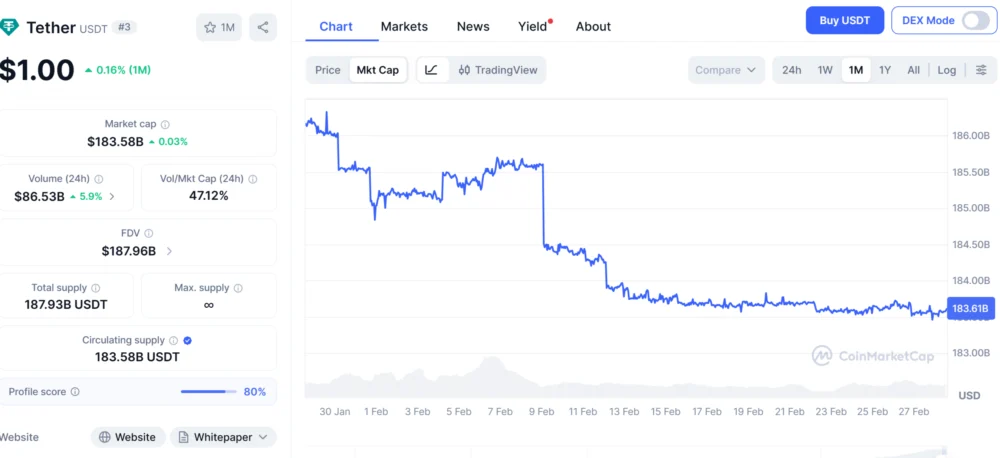
Tether, the issuer of the world’s largest stablecoin, USDt, has reportedly frozen an staggering $4.2 billion worth of its tokens directly tied to suspected criminal activity over the past three years. This monumental figure underscores the escalating scale of illicit finance within the cryptocurrency ecosystem, while simultaneously highlighting the increasing reliance of global authorities on stablecoin issuers to swiftly identify and halt suspicious funds. The bulk of these blocked assets, according to reports, have been restricted since 2023, a period marked by intensified scrutiny from regulators and law enforcement agencies worldwide concerning crypto-related fraud, money laundering, and sanctions evasion.
The El Salvador-based firm, a linchpin in the digital asset economy with its dollar-pegged USDt token, relayed these significant figures to Reuters on a Friday, providing a rare glimpse into the operational realities of combating financial crime in the crypto space. With more than $180 billion USDt currently in circulation—a substantial increase from approximately $70 billion three years prior—Tether’s central role in the crypto market makes its actions in compliance critically important. The company’s unique ability to directly freeze tokens on the blockchain by blacklisting specific wallet addresses, upon request from relevant authorities, positions it as a powerful, albeit controversial, gatekeeper in the fight against illicit financial flows.
This proactive stance by Tether is not merely a corporate initiative but a direct response to the growing demands from governments and international bodies seeking to bring order and accountability to the often-unregulated frontiers of digital finance. The sheer volume of frozen funds signals both the pervasive nature of crypto crime and the maturing capabilities of stablecoin issuers and law enforcement to track and intercept these funds.
A Deep Dive into the Scale of Illicit Activity and Compliance Efforts
The reported $4.2 billion in frozen USDt over three years, with a significant acceleration observed since 2023, paints a stark picture of the challenges and advancements in crypto compliance. The intensification of regulatory scrutiny has forced stablecoin issuers like Tether to bolster their anti-money laundering (AML) and know-your-customer (KYC) frameworks, as well as their cooperation protocols with law enforcement. This shift marks a pivotal moment, moving from an era where crypto was often perceived as an anonymous haven for illicit activities, to one where the transparency of public blockchains, combined with centralized issuer controls, can be leveraged for forensic investigations and asset recovery.
The types of criminal activities linked to these frozen funds are diverse, ranging from sophisticated "pig-butchering" scams that defraud individuals of their life savings to large-scale money laundering operations facilitating illegal gambling or sanctions evasion. The global nature of cryptocurrency transactions means these criminal enterprises often span multiple jurisdictions, necessitating complex international cooperation between law enforcement agencies and stablecoin issuers.
Tether’s mechanism for freezing funds is straightforward yet highly effective: when a legitimate request is received from a recognized authority, Tether can add the implicated wallet address to a blacklist on the blockchain. Once blacklisted, funds within that wallet become immobile, preventing further transactions. This centralized control, while sometimes a point of contention for proponents of pure decentralization, is precisely what makes USDt a valuable tool for authorities seeking to recover stolen assets or disrupt criminal networks. It offers a tangible point of intervention that is often absent in more decentralized blockchain protocols.
Illustrative Cases of Cooperation and Seizure
The report highlights several recent instances where Tether’s cooperation proved instrumental in seizing illicit funds, demonstrating the practical application of its freezing capabilities:
Just recently, Tether announced its successful assistance to the U.S. Department of Justice (DOJ) in seizing nearly $61 million in USDt. These funds were linked to so-called "pig-butchering" scams, a particularly insidious form of financial fraud. In these schemes, criminals cultivate long-term, trusting relationships with victims, often through dating apps or social media, before persuading them to invest in fraudulent cryptocurrency platforms. The emotional manipulation and financial devastation caused by these scams make their disruption a high priority for law enforcement. Tether’s ability to act swiftly upon DOJ requests allowed for the interception of funds before they could be further laundered or dissipated.
Earlier this month, Tether also made headlines for freezing approximately $544 million in cryptocurrency at the behest of Turkish authorities. This massive freeze targeted funds allegedly tied to an extensive illegal online betting and money-laundering operation. Such operations often exploit the global reach and pseudonymous nature of cryptocurrencies to move vast sums across borders, making them difficult to track through traditional financial channels. Tether’s intervention in this case underscores the company’s commitment to assisting international law enforcement in dismantling large-scale illicit networks.
These specific examples, totaling over $600 million in just a short period, are emblematic of the broader trend contributing to the $4.2 billion figure. They showcase the critical role stablecoin issuers play as a first line of defense, acting as central points of control that can respond to legal mandates with direct on-chain actions.

Broader Industry Trends and the Role of Analytics
The efforts by Tether are not isolated. According to blockchain analytics firm Elliptic, by late 2025, major stablecoin issuers Tether and Circle (issuer of USDC) had collectively blacklisted around 5,700 wallets, holding an estimated $2.5 billion in total. A significant three-quarters of these addresses contained USDt when they were frozen, further emphasizing Tether’s frontline position in this battle. This data from Elliptic provides crucial external validation of the scale of these operations and the widespread nature of illicit activity involving stablecoins. It also highlights the indispensable role of blockchain analytics firms, which utilize sophisticated tracing tools to identify suspicious transactions and associated wallet addresses, often providing the crucial intelligence that stablecoin issuers and law enforcement agencies need to act.
The collaboration between stablecoin issuers, law enforcement, and analytics firms represents a powerful triumvirate in the evolving landscape of crypto compliance. As criminal methodologies become more sophisticated, so too must the tools and strategies employed to combat them. The continuous feedback loop between identifying new criminal patterns, developing enhanced tracing capabilities, and implementing rapid freezing mechanisms is essential for staying ahead of illicit actors.
USDT Supply Dynamics Amidst Compliance Efforts
Interestingly, alongside these robust compliance activities, USDt has also experienced significant market movements. As Cointelegraph reported, USDt was on track for its largest monthly supply drop in three years, with its circulating supply falling by approximately $1.5 billion in February, following a $1.2 billion decline in January. This contraction echoes a period seen after the FTX collapse in late 2022 and could potentially signal tighter liquidity within the broader cryptocurrency markets.
A reduction in stablecoin supply can have several implications. It might suggest a decrease in overall demand for stablecoins as a medium of exchange or a store of value, or it could indicate large-scale redemptions by institutional players. Reduced stablecoin liquidity can, in turn, affect trading volumes and overall market stability.
However, Tether offered a nuanced perspective on this trend, stating that the figures reflect "short-term distribution changes" rather than a weakening in underlying demand for USDt. The company also pointed out that USDC, another major stablecoin, experienced a multi-billion dollar reduction during the same period, suggesting that the trend might be a broader market phenomenon rather than specific pressure on Tether. Short-term distribution changes could encompass various scenarios, such as large investors rebalancing their portfolios, shifting capital to other assets, or a temporary reduction in arbitrage opportunities that typically drive stablecoin minting. Understanding the exact drivers requires deeper market analysis, but Tether’s consistent growth over the past few years suggests any dips are often temporary corrections in its overall upward trajectory.
The Paradox of Centralization and the Future of Stablecoins
Tether’s ability to freeze billions in USDt presents a fascinating paradox within the cryptocurrency ethos. While many in the crypto community champion decentralization and censorship resistance, Tether’s centralized control over its stablecoin’s issuance and circulation is precisely what enables it to act as a powerful deterrent and enforcement arm against financial crime. This control allows for swift, decisive action that is often impossible with truly decentralized cryptocurrencies.
This capability, however, also raises questions about censorship and the potential for abuse of power. Critics argue that a single entity having the power to freeze assets on a global scale, even under legal mandates, introduces a point of control that could be misused. Yet, in the current global regulatory environment, this very feature is increasingly seen as a necessary compromise for stablecoins to gain broader acceptance and integration into mainstream finance. The ongoing challenge for Tether and other stablecoin issuers will be to strike a delicate balance: maintaining robust compliance mechanisms to satisfy regulators and combat crime, while simultaneously upholding user trust and adhering to principles of transparency and due process.
The future of stablecoins will undoubtedly be shaped by this evolving dynamic. As regulators continue to formulate comprehensive frameworks for digital assets, the expectations for stablecoin issuers regarding AML, KYC, and cooperation with law enforcement will only grow. This will likely lead to further enhancements in tracing technologies, more sophisticated risk assessment models, and deeper integration between the crypto industry and traditional financial crime-fighting institutions.
In conclusion, Tether’s freezing of $4.2 billion in USDt linked to criminal activity over three years is a landmark figure, underscoring the formidable challenge of illicit finance in the digital age. It reflects both the scale of criminal exploitation of cryptocurrencies and the growing effectiveness of collaborative efforts between stablecoin issuers and global law enforcement. As the crypto ecosystem matures, the ability of entities like Tether to act as responsible stewards, capable of combating sophisticated financial crimes, will be crucial in building trust, ensuring regulatory compliance, and ultimately paving the way for the broader adoption of digital assets within a secure and lawful framework. The ongoing battle against crypto crime is a testament to the dynamic interplay between technological innovation, regulatory evolution, and human ingenuity, with stablecoin issuers at the forefront of this critical fight.