Faris Adani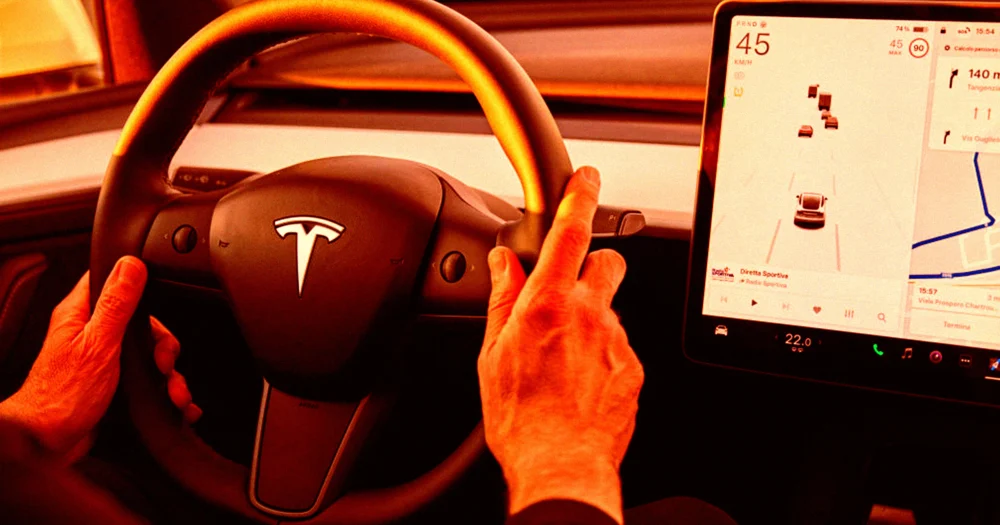
In a dramatic pivot that signals a profound shift in its strategy and acknowledges years of mounting criticism, Tesla has officially discontinued its Autopilot driver-assistance suite in the United States and Canada. This significant reversal comes amidst a backdrop of plummeting vehicle sales, shrinking profits, and an intensifying regulatory and legal scrutiny that has cast a long shadow over the company’s ambitious self-driving claims. Effective February 14, much of the functionality previously associated with Autopilot will be paywalled, forcing owners to subscribe to the more advanced, and equally controversial, Full Self-Driving (FSD) package to access features that were once standard.
For over a decade, the term "Autopilot" has been synonymous with Tesla’s pioneering, albeit often contentious, foray into automated driving. Introduced in 2014, the system initially offered advanced cruise control and auto-steer capabilities, promising a glimpse into a future where cars could largely drive themselves. However, from its inception, the branding itself sparked debate, implying a level of autonomy that the system never truly possessed. Even as Tesla consistently reminded drivers of the necessity to remain attentive and prepared to take over, the nomenclature, heavily influenced by CEO Elon Musk’s futuristic visions, often led to consumer misunderstanding and, tragically, dangerous misuse.
Musk himself has been a central figure in this narrative, making annual, and consistently unfulfilled, predictions of achieving "Level 5" autonomy – true, unsupervised self-driving where human intervention is never required – just "next year." These pronouncements, delivered with characteristic confidence, fueled both investor excitement and public anticipation, but also set unrealistic expectations that the technology repeatedly failed to meet. The chasm between Musk’s rhetoric and the reality of Tesla’s driver-assistance capabilities widened over time, contributing to a growing chorus of skepticism from industry experts, safety advocates, and frustrated customers.
The decision to kill Autopilot is not merely a rebranding exercise; it’s a profound concession to the storm of criticism that has engulfed the company. Autopilot, and by extension FSD, has been implicated in hundreds of crashes and dozens of fatalities across North America. These incidents, often involving Teslas colliding with stationary emergency vehicles or other obstacles while Autopilot was engaged, have triggered high-profile investigations by federal regulators, most notably the National Highway Traffic Safety Administration (NHTSA). The agency has probed the efficacy of Tesla’s driver monitoring systems and the fundamental safety assumptions underlying its semi-autonomous technology.
Beyond regulatory inquiries, Tesla has faced a litany of lawsuits, including a landmark $329 million wrongful death settlement last year. This particular case underscored the immense legal liability associated with autonomous driving technology and the perceived misleading marketing practices employed by the company. Such legal setbacks have not only been financially costly but have also severely impacted public trust in Tesla’s safety claims. The cumulative weight of these safety concerns and legal challenges has undoubtedly played a pivotal role in the company’s decision to overhaul its driver-assistance strategy.
The timing of this change is particularly telling. As Ars Technica highlighted, a California court ruled in December that Tesla engaged in "deceptive marketing" by implying that its "Autopilot" branding equated to full self-driving. This ruling gave Tesla a mere 60 days to rectify its misleading claims or face a potential ban on selling cars in California, one of its most lucrative markets. The discontinuation of Autopilot and the shift to a subscription-based FSD model aligns almost perfectly with this deadline, suggesting a direct response to the legal pressure. This move effectively removes the contentious "Autopilot" branding from the standard feature set, ostensibly addressing the court’s concerns, even if the underlying FSD system continues to bear a similarly ambitious, and arguably misleading, name.
However, the motivations behind this dramatic shift extend beyond legal compliance and safety concerns. Financial pressures are undeniably a major driving force. Tesla has recently experienced a significant downturn, marked by plummeting sales and shrinking profit margins, reflecting increased competition in the EV market and broader economic headwinds. In this challenging environment, recurring revenue streams, such as software subscriptions, become incredibly attractive. The shift to a subscription-first model for essential driver-assistance features transforms a one-time vehicle purchase into an ongoing revenue source, providing greater financial stability and predictability.
This pursuit of recurring revenue is also inextricably linked to Elon Musk’s colossal $1 trillion pay package, which is contingent upon Tesla achieving ambitious financial and operational milestones, including reaching 10 million active subscriptions to its driver assistance software. By bundling previously standard features into a paid FSD subscription, Tesla is directly addressing this critical performance metric. This move ensures that even basic functionalities now contribute towards the subscription goal, creating a powerful incentive for the company to push customers towards the monthly payment model.
Under the new regime, starting February 14, Tesla owners will need to shell out a steep $99 per month to enable features such as autosteer and advanced lane keep assist. These were functionalities that vehicles previously possessed without an additional subscription. The only basic driver-assistance feature that will remain standard, even without a subscription, is Traffic Aware Cruise Control. This represents a substantial change for new buyers and existing owners alike, effectively making core convenience and safety features an ongoing expense. Before this date, customers still have the option to permanently unlock FSD for a one-time payment of $8,000, a price point that Musk has repeatedly boasted will only increase as the system’s capabilities supposedly improve.
The company’s branding strategy, differentiating between "Autopilot" and "Full Self-Driving" (FSD), has long been a source of confusion. FSD, despite its name, remains a "supervised" Level 2 system, requiring the driver to stay fully engaged and ready to intervene at all times. It’s an add-on package that has been described as "easily fooled" and a perpetual "beta" product, with Tesla effectively using its paying customers as real-world testers. The promise of an "unsupervised" FSD, where drivers can genuinely disengage and even sleep, remains the ultimate aspiration for Musk. He has even warned that the $99/month price for supervised FSD will rise significantly when this truly autonomous version materializes, touting it as a "massive value jump."
However, when, or even if, such an "unsupervised" version of FSD will ever materialize remains a profound mystery. Given Musk’s extensive track record of wildly optimistic timelines regarding self-driving technology, many industry analysts and experts believe that true Level 5 autonomy is still many years, if not decades, away. The technical challenges of navigating unpredictable environments, handling an infinite array of "edge cases," and securing regulatory approval for truly driverless operation are immense. Critics argue that Tesla’s continuous overpromising and under-delivering on autonomy has eroded trust, not just in the company, but potentially in the broader field of autonomous driving.
This radical shift by Tesla holds significant implications for the automotive industry and the future of advanced driver-assistance systems. It underscores the growing trend towards subscription-based features in vehicles, a model that promises lucrative recurring revenue but risks alienating customers who expect purchased functionalities to remain theirs. More importantly, it highlights the ongoing struggle between ambitious technological visions and the complex realities of safety, regulation, and consumer perception in the pursuit of self-driving cars. For Tesla, killing Autopilot and paywalling basic features is a high-stakes gamble, driven by financial necessity and regulatory pressure, that will profoundly reshape its relationship with its customers and its place in the evolving landscape of automotive technology. The road ahead, much like the promise of unsupervised FSD, remains uncertain.