Faris Adani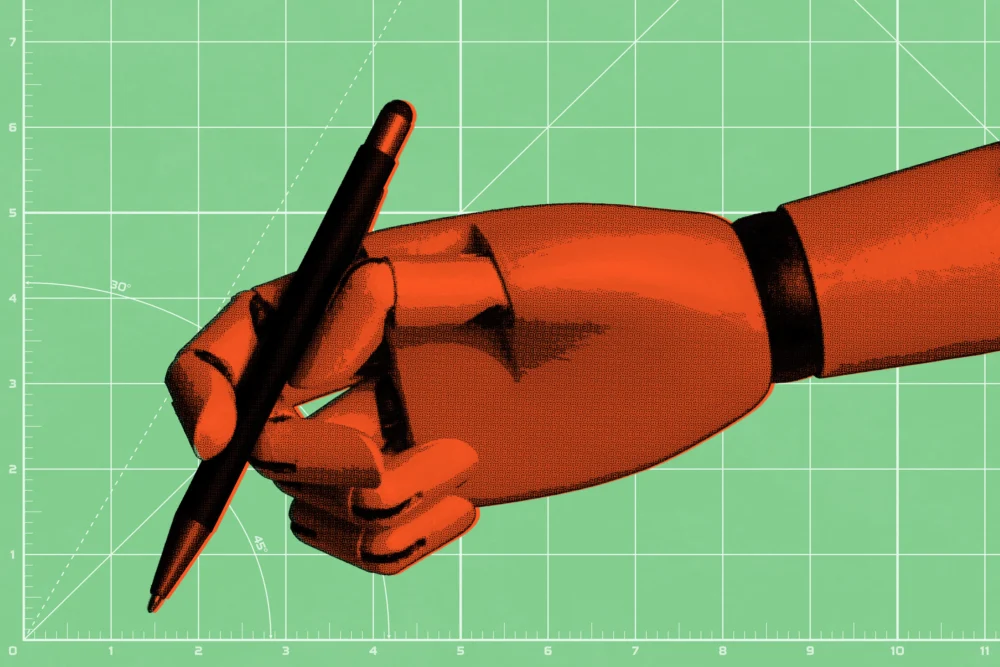
The nostalgic warmth of peeling open an envelope to discover a meticulously handwritten letter, a tangible testament to someone’s time, thought, and affection, is rapidly becoming a relic of a bygone era, now threatened by an unsettlingly efficient innovation: AI-driven robotic penmanship that promises all the charm with none of the genuine human effort. This seemingly benign technological marvel, exemplified by companies like Handwrytten, a young AI firm dripping with corporate-twee aesthetics, is redefining what "personal touch" means in the digital age, transforming heartfelt gestures into a scalable, automated service. What once signified a profound investment of oneself, a unique human imprint, can now be churned out by a Rube Goldberg machine of automation, raising profound questions about authenticity, connection, and the very essence of human communication.
In a world increasingly saturated with fleeting electronic communications – emails, texts, instant messages – the physical, handwritten letter has always stood as a bastion of sincerity. It’s the tangible manifestation of a moment paused, an effort expended, a thought carefully inscribed. Whether it’s a deeply felt thank-you note following a momentous occasion like a wedding, a poignant message from a cherished friend on a distant journey, or simply a gesture of sympathy, the act of receiving such a letter resonates with a unique emotional weight. It suggests that the sender valued the recipient enough to dedicate precious time and physical effort to the communication. This inherent value, however, is precisely what companies like Handwrytten aim to replicate, or perhaps, simulate, by employing a sophisticated blend of artificial intelligence and advanced robotics.
Handwrytten’s audacious claim is that its proprietary system can produce notes "virtually indistinguishable from human writing," offering "unmatched speed, quality, and realism." The process begins with a large language model (LLM) – an advanced AI capable of generating human-like text – crafting the content of the message. This AI is designed to mimic various tones, sentiments, and styles, theoretically allowing it to produce everything from a cheerful birthday greeting to a somber condolence note, all tailored to specific inputs. Once the digital prose is perfected, it is fed into a "proprietary robot" armed with a real pen and stationery. This robotic arm meticulously inks out the words, replicating the subtle variations, pressure, and flow that are hallmarks of human handwriting. The entire operation is a testament to modern engineering and AI capabilities, yet it simultaneously feels like a poignant commentary on our evolving relationship with genuine human connection.
The primary market for Handwrytten, as gleaned from its website, appears to be businesses. This makes a certain cynical sense: enterprises constantly seek ways to personalize customer interactions at scale, to stand out in an inbox flooded with generic marketing emails. A physical, handwritten note, even an automated one, is perceived as having a higher open rate, a greater impact, and a stronger ability to foster customer loyalty. Imagine a real estate agent sending a "handwritten" thank-you after a viewing, a car dealership acknowledging a recent purchase with a personalized note, or a charity thanking a donor. For these businesses, the service represents a strategic advantage – a way to leverage the psychological power of a personal touch without the prohibitive cost and time investment of actual human labor. It’s an optimized illusion of care, a testament to how far companies will go to cultivate perceived authenticity in a hyper-digital world, even if that authenticity is machine-generated.
However, Handwrytten isn’t exclusively a B2B operation. For the "regular Joes" who might wish to outsource their personal correspondence, the company offers several subscription tiers. The "Silver" package, priced at $100 per month, provides 24 cards. The "Gold" tier offers 50 cards for $198, and the "Platinum" tier, a hefty investment at $378 monthly, delivers 100 cards. These prices underscore the perceived value of this automated service, suggesting that even individuals are willing to pay a premium to offload the emotional labor of maintaining personal connections. Testimonials, such as that from a user identified as Sean McElhaney, highlight the convenience: "I always want to send thank you cards, but I typically don’t get around to it. Until now. Handwrytten makes it so simply to send thank you cards, I have it on autopilot!" This sentiment encapsulates the modern dilemma: the desire for connection juxtaposed with the pervasive lack of time or inclination to genuinely foster it.
The service takes its quest for personalization to an even more unsettling level: users can upload their own handwriting. For a one-time fee, Handwrytten’s robots can "ape your chicken scratch," rendering notes in a script indistinguishable from your own. This feature blurs the lines between assistance and outright forgery. While it offers an "extra-personal touch" by mimicking one’s unique script, it simultaneously divests the act of writing of its inherent intimacy. Is it still your message if a robot, using your simulated hand, pens it based on an AI-generated text? The company further boasts a "special birthday automation system," promising that users will "never miss a birthday again!" While convenient, such automation transforms a meaningful personal milestone into a task managed by an algorithm, further eroding the genuine human effort traditionally associated with remembering and celebrating loved ones.
The emergence of Handwrytten is not an isolated phenomenon; it represents a burgeoning industry. The company proudly declares itself the "overall leader in the handwritten notes space," but acknowledges a competitive landscape populated by at least ten other major players. These competitors, with their similarly saccharine and vaguely tech-inspired names like "LettrLabs," "Postable," and "Cardly," all vie for a share of this market, demonstrating a collective recognition of the demand for automated authenticity. This proliferation of services signals a broader societal shift: a growing comfort with, and perhaps even a preference for, outsourcing aspects of human interaction and emotional expression to artificial intelligence and robotics. It raises fundamental questions about the future of communication, the nature of sincerity, and what it truly means to connect with another human being.
On one hand, these innovations represent remarkable technological achievements. The precision of robotic arms, the sophistication of language models capable of generating nuanced text, and the seamless integration of these technologies into a consumer-facing service are genuinely impressive. They offer undeniable convenience and efficiency, allowing individuals and businesses to maintain a semblance of personal connection in an increasingly impersonal world. Yet, on the other hand, there is a distinct sense of something valuable being lost. The "bleeding edge of science and tech" is here applied not to solving grand challenges, but to simulating human warmth, to automating empathy. It’s a progress that feels inherently regressive, replacing genuine human endeavor with optimized, scalable "connection."
Ultimately, the rise of companies like Handwrytten forces us to confront uncomfortable truths about our relationships and our definitions of authenticity. While the prospect of sending a perfectly penned, seemingly personal note without lifting a finger is undeniably appealing in its convenience, it begs the question: What is the true cost of this efficiency? If every "handwritten" note carries the suspicion of being machine-generated, does it retain any of its original emotional power? In an age where we are, ironically, "drowning in electronic communication," the solution presented is not a return to genuine human interaction, but a more sophisticated form of automated communication, cloaked in the guise of traditional sincerity. Thanks to these bold innovators, consumers can now enjoy all the superficial authenticity of a handwritten letter with the sheer market efficiency of a bulk email blast. One can only wonder if this is truly the progress humanity desires.