isnaini azizah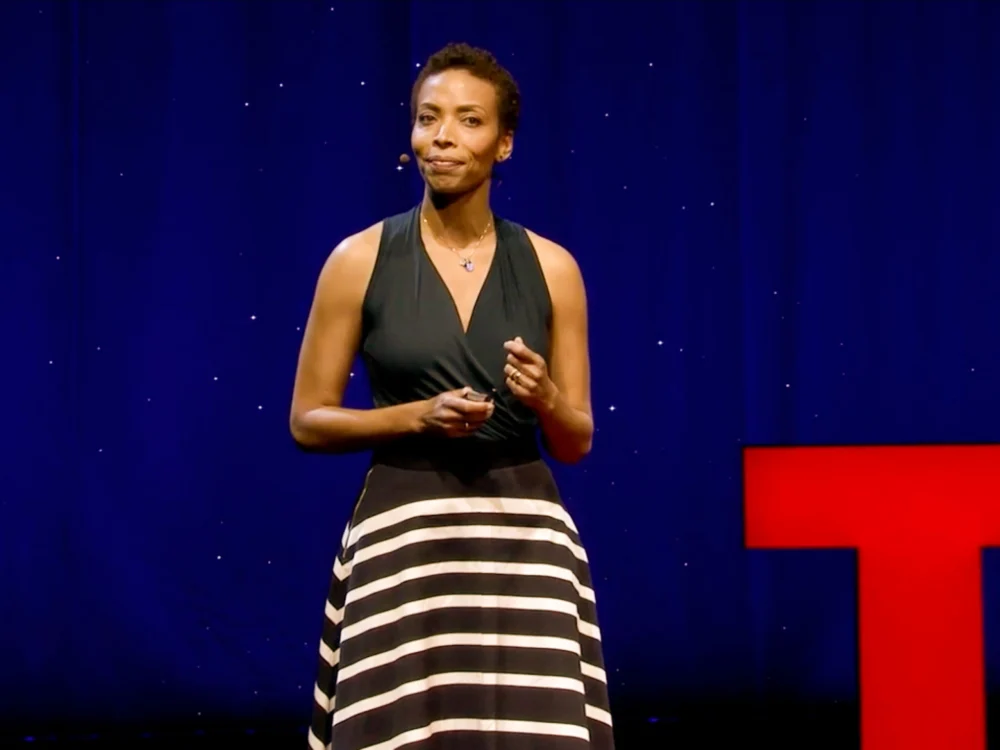
Aomawa Shields, an astrophysicist and astrobiologist by profession, approaches the cosmos with a unique blend of scientific rigor and artistic flair, a testament to her journey from aspiring astronaut and classically trained actor to a leading researcher in the search for life beyond Earth. Her work at the University of California, Irvine, where she leads a team using sophisticated computer models to probe the conditions on exoplanets, is a culmination of a lifelong fascination with the universe, ignited by childhood dreams and theatrical inspiration. But beyond the laboratory and the lecture hall, Shields has cultivated a rich tapestry of creative pursuits and a profound commitment to education and well-being, proving that a multifaceted life is not only possible but can enhance one’s professional endeavors.
Shields’ initial fascination with space was sparked at the age of 12 by the 1980s film SpaceCamp, which ignited a passion for becoming an astronaut. This dream was later amplified by a captivating encounter with the character Charlotte Blackwood, an astrophysicist portrayed as both glamorous and formidable in the blockbuster film Top Gun. This cinematic inspiration, coupled with a strong academic aptitude, led Shields to Phillips Exeter Academy, where she was drawn by its advanced astronomical observatory. It was during her high school years that her dual passions for astronomy and acting began to intertwine, a dynamic that would shape her unconventional path.
Despite her early commitment to science, Shields found herself drawn to the performing arts. She pursued her undergraduate studies at MIT, a decision rooted in its reputation as the nation’s premier science institution. However, her initial academic experience at MIT was challenging, and she found solace and expression in the creative arts. She participated in the Burchard Scholars Program, sang with the a cappella group the Muses, and acted in numerous plays. As her senior year approached, she faced a pivotal decision: to pursue graduate studies in acting or astronomy.
Ultimately, the allure of the stars won out, and Shields enrolled in a graduate program in astronomy at the University of Wisconsin-Madison. Yet, her time there was marked by a discouraging encounter with a professor who suggested she consider alternative career paths, a comment that deeply affected her and led her to question her place in the field. Feeling disillusioned, she pivoted, applying to UCLA and earning a Master of Fine Arts in acting, stepping away from astronomy for over a decade.

During her time as an actor, Shields juggled various jobs to support her artistic ambitions. A serendipitous encounter with a former undergraduate mentor led her to a job opening on a Caltech-operated website for a help desk operator at the Spitzer Space Telescope. This role, requiring only a bachelor’s degree, provided her with an unexpected reentry into the world of astronomy. While delegating complex questions to PhDs, she found herself attending astronomy talks again and was captivated by the rapid advancements in exoplanet research, a field that had blossomed during her hiatus.
Shields experienced some success in her acting career, including a role in the film Nine Lives, which premiered at the Sundance Film Festival. However, a significant setback occurred when she was selected to host the show Wired Science, only to lose the position when producers decided to change presenters. This "devastating moment" prompted her to reach out to astrophysicist Neil deGrasse Tyson. He advised her that a PhD was crucial for credibility in science television. Concurrently, her application to NASA’s astronaut candidate program did not advance beyond the initial stages, though she did later portray an astronaut in a Toyota commercial. These experiences, a confluence of professional disappointments and external advice, began to coalesce into a clear message: it was time to return to academia and pursue a PhD.
In 2014, Shields earned her doctorate in astronomy and astrobiology from the University of Washington. She explains that astrobiology, a relatively new and interdisciplinary field, investigates the origin, evolution, and distribution of life in the universe, delving into questions about how life began on Earth. Astrobiologists examine the habitability of planets, explore methods for detecting extraterrestrial life, and consider liquids other than water that could potentially support life. This collaborative field brings together astronomers, chemists, biologists, oceanographers, and geologists, each contributing their unique expertise to the overarching quest to answer the fundamental question: "Are we alone?" Shields finds immense value in this interdisciplinary approach, noting that astrobiologists don’t need to master every scientific discipline; instead, they leverage the expertise of colleagues across various departments to tackle complex scientific inquiries.
Her current research focuses on identifying planetary environments conducive to life beyond Earth, primarily through the use of climate models that mirror those used to predict Earth’s weather and climate. By inputting observational data from astronomers and exploring various hypothetical variables such as stellar radiation, atmospheric composition, and orbital parameters, Shields and her team can simulate planetary conditions. "There’s only so much that you can really tell about a planet from the telescope information that you get," she explains. "We can explore that parameter space with climate models and say: Okay, if it has this surface composition, this is what the temperature would be like on this planet. If it has this atmospheric composition, this type of orbit, this is what the climate would be like, and this is how habitable it would be across its surface."
Since the early 1990s, astronomers have discovered over 6,000 exoplanets, with hundreds in the Earth-size range that are of particular interest to Shields. A subset of these are located within their star’s "habitable zone," where conditions are temperate enough to support liquid water. While approximately 100 planets currently fit this description, the James Webb Space Telescope, launched in 2021, is poised to identify more potentially habitable worlds by detecting "biosignatures"—indicators of biological presence, such as specific atmospheric gases or reflections of water. Shields views the detection of these signals as the next significant "big mission" in astronomy.

Balancing the demands of her rigorous academic pursuits with her personal life, Shields has become an advocate for slowing down and prioritizing rest. Her health began to suffer under the weight of her overwhelming schedule, leading her to discover yoga nidra, an ancient meditation practice that induces a state of deep rest. Inspired by Karen Brody’s book Do Less, Shields found that 20-30 minutes of yoga nidra provided the equivalent of three hours of sleep, a revelation for a mother of a young child. She subsequently trained with Brody and became a certified facilitator, actively promoting the practice of rest as a daily discipline, particularly within the academic community. She is currently working on a book about her journey to moderate her commitments and set firm boundaries between her professional and personal life.
Shields has come to understand that her seemingly disparate interests in astronomy and acting are not mutually exclusive; in fact, their integration makes her a more effective educator. Her acting background allows her to craft engaging lectures and present her research, including her widely viewed TED Talk, in a way that resonates with non-scientists. She is also leveraging her theatrical experience to inspire the next generation of scientists through her outreach program, Rising Stargirls. This initiative, born from a National Science Foundation postdoctoral fellowship, integrates creative arts like theater and writing into astronomy workshops for middle-school girls.
Shields’ own experience highlights the transformative power of the arts. Acting, which she turned to when discouraged from pursuing astronomy, provided her with the confidence to re-enter the field. "I looked at acting as this outlet, this safe space," she explains. "Nobody could tell me that I was wrong as an actor." Rising Stargirls aims to empower young girls by demonstrating that their unique perspectives are vital to the study and practice of astronomy, emphasizing that science itself is a creative endeavor.
Recently, Shields has recognized the profound similarities between her roles as an astronomer and an actor, both of which are fundamentally about storytelling. Actors convey a character’s journey and evolution, while celestial bodies—stars and planets—also have life cycles, from birth to death. "It’s my job as a scientist to unveil the story—to discover the story of whether there’s life elsewhere," she states, underscoring the narrative thread that connects her diverse passions and drives her to explore the universe.