Imroatul Nasiyah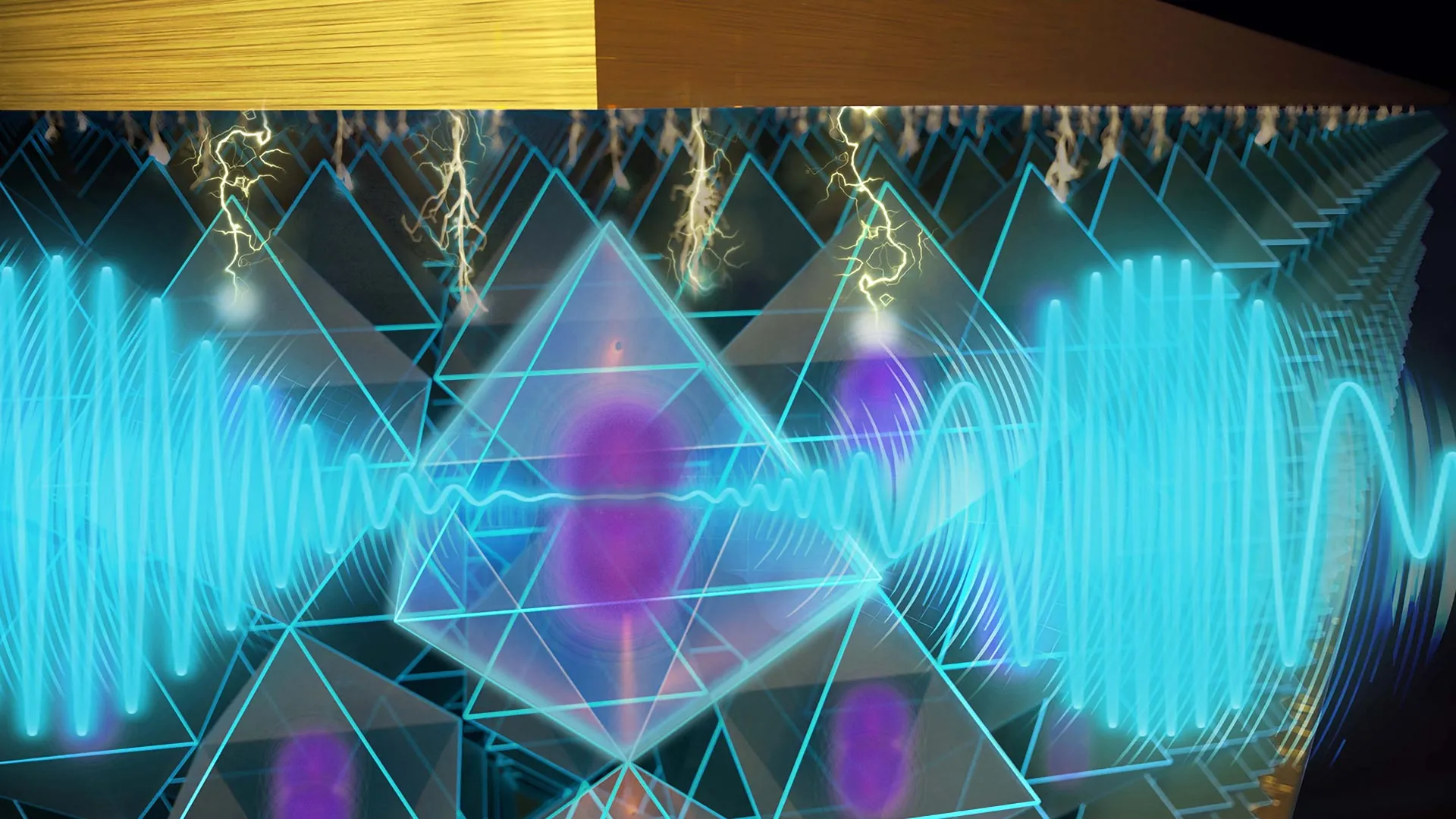
In a landmark achievement that bridges the gap between theoretical physics and tangible innovation, engineers at Stanford University have discovered a remarkable property in a seemingly ordinary material: strontium titanate (STO). This crystalline compound, far from succumbing to the extreme cold, actually amplifies its optical and mechanical capabilities at cryogenic temperatures, a breakthrough poised to revolutionize fields ranging from quantum computing and advanced sensors to space exploration and beyond. The 2025 Nobel Prize in Physics, recognizing advancements in superconducting quantum circuits, underscored the immense potential of quantum technologies, yet a persistent hurdle has been their reliance on cryogenic environments. Now, the Stanford team’s findings, published in the prestigious journal Science, offer a compelling solution, presenting a material that thrives, rather than falters, in the frigid realms where other substances lose their efficacy.
The core of this transformative discovery lies in strontium titanate’s exceptional electro-optic and piezoelectric properties, which are not only preserved but dramatically enhanced at temperatures near absolute zero. "Strontium titanate has electro-optic effects 40 times stronger than the most-used electro-optic material today," explained Jelena Vuckovic, the study’s senior author and a professor of electrical engineering at Stanford. "But it also works at cryogenic temperatures, which is beneficial for building quantum transducers and switches that are current bottlenecks in quantum technologies." This dual capability addresses a critical need in the burgeoning field of quantum technology, where precise control over light and mechanical vibrations at ultra-low temperatures is paramount for the development of stable and scalable quantum systems.
The "non-linear" nature of STO’s optical behavior is central to its groundbreaking potential. This means that when an electric field is applied, the material’s optical and mechanical characteristics undergo significant transformations. This electro-optic effect grants scientists an unprecedented ability to manipulate light – adjusting its frequency, intensity, phase, and direction with remarkable precision. Such fine-tuned control is essential for developing sophisticated optical components that can operate reliably in cryogenic conditions, paving the way for new generations of quantum transducers, switches, and interconnects that are currently limited by the performance of existing materials. These advancements are crucial for overcoming the decoherence issues that plague quantum bits (qubits) and for enabling more efficient transfer and processing of quantum information.
Beyond its optical prowess, STO’s piezoelectric nature further amplifies its utility in extreme environments. Piezoelectricity, the phenomenon where a material physically expands and contracts in response to an electric field, makes STO an ideal candidate for novel electromechanical components that can function with exceptional efficiency in extreme cold. The researchers highlight the particular value of these capabilities for applications in the vacuum of space, where temperature fluctuations and radiation can degrade the performance of sensitive instruments, and in the cryogenic fuel systems of rockets, where robust and reliable components are essential. "At low temperature, not only is strontium titanate the most electrically tunable optical material we know of, but it’s also the most piezoelectrically tunable material," stated Christopher Anderson, a co-first author of the study and now a faculty member at the University of Illinois, Urbana-Champaign. This dual tunability allows for the creation of highly integrated and compact devices that can perform complex functions, reducing system size and power consumption – critical factors for space-bound missions and advanced propulsion systems.
Perhaps one of the most astonishing aspects of this discovery is that strontium titanate is not a novel, exotic material. It has been known and studied for decades, is readily available, and is relatively inexpensive. "STO is not particularly special. It’s not rare. It’s not expensive," remarked Giovanni Scuri, another co-first author and a postdoctoral scholar in Vuckovic’s lab. "In fact, it has often been used as a diamond substitute in jewelry or as a substrate for growing other, more valuable materials. Despite being a ‘textbook’ material, it performs exceptionally well in a cryogenic context." This accessibility is a significant advantage, as it means the widespread adoption of STO in advanced technologies will not be hampered by supply chain issues or prohibitive costs. The research team’s insight was to recognize that the fundamental properties required for a highly tunable material already existed within STO. "We knew what ingredients we needed to make a highly tunable material. We found those ingredients already existed in nature, and we simply used them in a new recipe. STO was the obvious choice," Anderson explained. Their methodical approach and understanding of material science principles led them to this overlooked gem, which, upon testing, not only met but exceeded their expectations. Scuri added that the theoretical framework developed by the team could be instrumental in identifying and enhancing other nonlinear materials for various operating conditions, suggesting a broader impact beyond STO itself.
The performance of STO at cryogenic temperatures was nothing short of spectacular. When tested at a frigid 5 Kelvin (-450°F), its nonlinear optical response dwarfed that of existing leading materials. It exhibited a response 20 times greater than lithium niobate, the current industry standard for nonlinear optics, and nearly triple that of barium titanate, which was previously considered the benchmark for cryogenic performance. This dramatic improvement means that significantly less power will be required to achieve the same optical effects, leading to more energy-efficient and compact devices.
To further enhance STO’s already impressive capabilities, the researchers employed a clever isotopic substitution technique. By replacing a portion of the oxygen atoms within the crystal lattice with heavier isotopes, they nudged the material closer to a state known as "quantum criticality." This delicate tuning unlocked even greater tunability. "By adding just two neutrons to exactly 33 percent of the oxygen atoms in the material, the resulting tunability increased by a factor of four," Anderson revealed. "We precisely tuned our recipe to get the best possible performance." This level of control over material properties at the atomic scale demonstrates a sophisticated understanding of quantum mechanics and material science, opening up new avenues for designing and engineering materials with tailored functionalities.
The practical advantages of STO extend to its compatibility with existing manufacturing processes. The material can be synthesized, structurally modified, and fabricated at wafer scale using standard semiconductor equipment. This inherent compatibility is a critical factor for the mass production of next-generation quantum devices, such as laser-based switches that are essential for controlling and transmitting quantum information. The ability to leverage established semiconductor fabrication infrastructure significantly accelerates the timeline for bringing these advanced technologies to market.
The research received significant backing from industry giants actively invested in the future of quantum computing, including Samsung Electronics and Google’s quantum computing division. Their support highlights the commercial potential of this discovery and the urgent need for materials that can drive the advancement of their quantum hardware. The team’s immediate next step is to translate these findings into fully functional cryogenic devices, demonstrating the practical applications of STO’s unique properties. "We found this material on the shelf. We used it and it was amazing. We understood why it was good. Then the cherry on the top — we knew how to do better, added that special sauce, and we made the world’s best material for these applications," Anderson summarized, emphasizing the serendipitous yet scientifically rigorous nature of their discovery. "It’s a great story."
The study’s funding also came from a Vannevar Bush Faculty Fellowship through the U.S. Department of Defense and the Department of Energy’s Q-NEXT program, underscoring the national strategic interest in advancing quantum technologies and materials science. The collaborative nature of this research is further evidenced by the contributions from researchers at the University of Michigan and various labs within Stanford University, including the E. L. Ginzton Laboratory and the Stanford Nano Shared Facilities. This interdisciplinary effort, spanning theoretical understanding to practical fabrication, has culminated in a discovery that promises to reshape the landscape of advanced technologies. The unveiling of strontium titanate’s cryogenic super-performance marks not just a scientific breakthrough, but a significant leap forward in our ability to harness the power of quantum mechanics and explore the furthest reaches of space.