
 Imroatul Nasiyah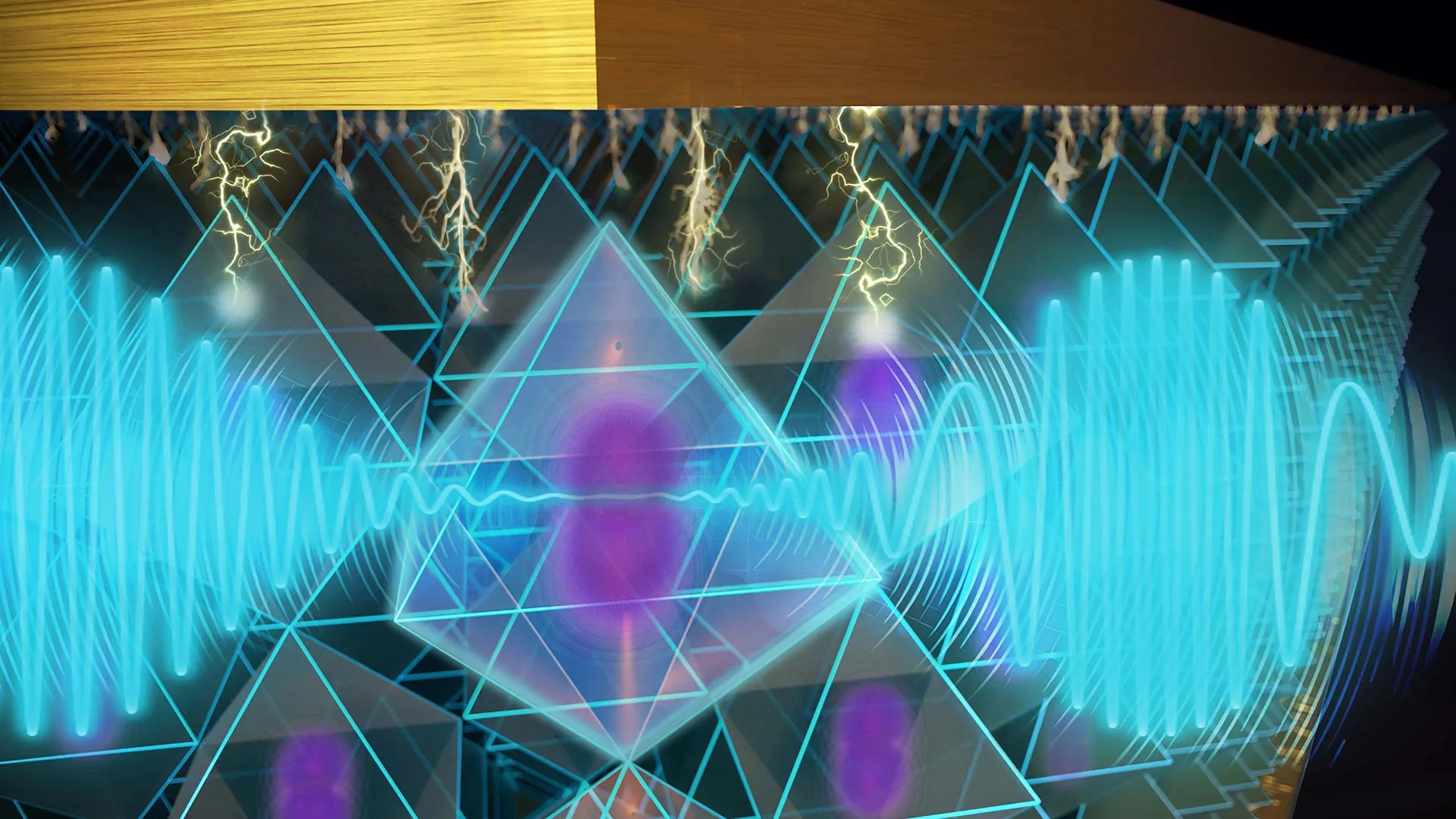
Now, a remarkable discovery by engineers at Stanford University promises to shatter this long-standing limitation. In a groundbreaking publication in the prestigious journal Science, the research team reports on strontium titanate (STO), a material that exhibits an astonishing characteristic: it not only maintains its performance in freezing conditions but actively enhances it. Rather than deteriorating, STO becomes significantly more capable, a stark contrast to other known materials that falter under extreme cold. The implications of this finding are profound, suggesting the potential for an entirely new generation of light-based and mechanical devices specifically engineered for cryogenic operation. These advancements could serve as critical enablers for accelerating progress in quantum computing, revolutionizing space exploration, and fostering innovation across a multitude of other advanced technological frontiers.
Jelena Vuckovic, the senior author of the study and a distinguished professor of electrical engineering at Stanford, elaborated on the significance of STO’s properties. "Strontium titanate possesses electro-optic effects that are a staggering 40 times stronger than those of the most commonly used electro-optic material today," she explained. "Crucially, it also functions optimally at cryogenic temperatures, which is a considerable advantage for constructing quantum transducers and switches – components that currently represent significant bottlenecks in the development of quantum technologies." This dual advantage of superior electro-optic performance and cryogenic operability positions STO as a potentially game-changing material.
The unique optical behavior of STO lies in its "non-linear" nature. This means that when an electric field is applied, its optical and mechanical properties undergo dramatic and controllable shifts. This potent electro-optic effect empowers scientists with an unprecedented ability to manipulate light with remarkable precision. They can adjust its frequency, intensity, phase, and direction in ways that are simply not possible with conventional materials. Such extraordinary versatility opens up a vista of possibilities for designing entirely new classes of low-temperature devices that can perform complex optical functions with unparalleled efficiency.
Beyond its optical prowess, STO also exhibits piezoelectricity, a property that causes it to physically expand and contract in response to applied electric fields. This characteristic makes STO an ideal candidate for the development of novel electromechanical components that can operate reliably and efficiently even in the extreme cold of cryogenic environments. The researchers highlighted that these capabilities are particularly valuable for applications in the harsh vacuum of space or within the cryogenic fuel systems of advanced rockets, where material stability and performance under extreme conditions are paramount.
Christopher Anderson, a co-first author of the study and now a faculty member at the University of Illinois, Urbana-Champaign, emphasized STO’s exceptional tunability. "At low temperatures, strontium titanate not only stands out as the most electrically tunable optical material we are aware of, but it also holds the distinction of being the most piezoelectrically tunable material," he stated. This dual tunability offers a rich platform for engineering sophisticated cryogenic devices with precise control over both optical and mechanical responses.
The remarkable performance of STO at cryogenic temperatures is all the more striking considering that it is not a newly discovered substance. Strontium titanate has been a subject of scientific investigation for decades and is notable for its affordability and widespread availability. "STO is not particularly special in terms of its rarity or cost," commented co-first author Giovanni Scuri, a postdoctoral scholar in Vuckovic’s lab. "In fact, it has often been employed as a substitute for diamond in jewelry or as a substrate for growing more valuable materials. Despite its status as a ‘textbook’ material, its performance in a cryogenic context is nothing short of exceptional."
The decision to investigate STO was not a random one but was guided by a deep understanding of the fundamental characteristics that contribute to a material’s high tunability. "We understood the essential ingredients required to create a highly tunable material," Anderson explained. "We discovered that these ingredients were already present in nature, and our contribution was to utilize them in a novel configuration. STO was the logical choice." He added, "When we put it to the test, it astonishingly met and even exceeded our expectations." Scuri further noted that the theoretical framework developed by the team could serve as a valuable tool for identifying or enhancing other nonlinear materials for a diverse range of operating conditions, extending beyond cryogenic applications.
The experimental results at near absolute zero were particularly revelatory. When tested at a frigid 5 Kelvin (-450°F), STO’s performance capabilities were nothing short of astonishing to the researchers. Its nonlinear optical response was found to be an astounding 20 times greater than that of lithium niobate, which is currently the leading material for nonlinear optical applications. Furthermore, it exhibited a response nearly triple that of barium titanate, a material previously considered the benchmark for cryogenic performance in this category.
In a further testament to their innovative approach, the team devised a method to push STO’s properties even further. By strategically replacing a portion of the oxygen atoms within the crystal lattice with heavier isotopes, they were able to nudge STO closer to a state known as quantum criticality. This subtle alteration had a profound effect, leading to even greater tunability. "By introducing just two additional neutrons to exactly 33 percent of the oxygen atoms in the material, we observed an increase in tunability by a factor of four," Anderson revealed. "This was a precise tuning of our recipe, allowing us to achieve the best possible performance."
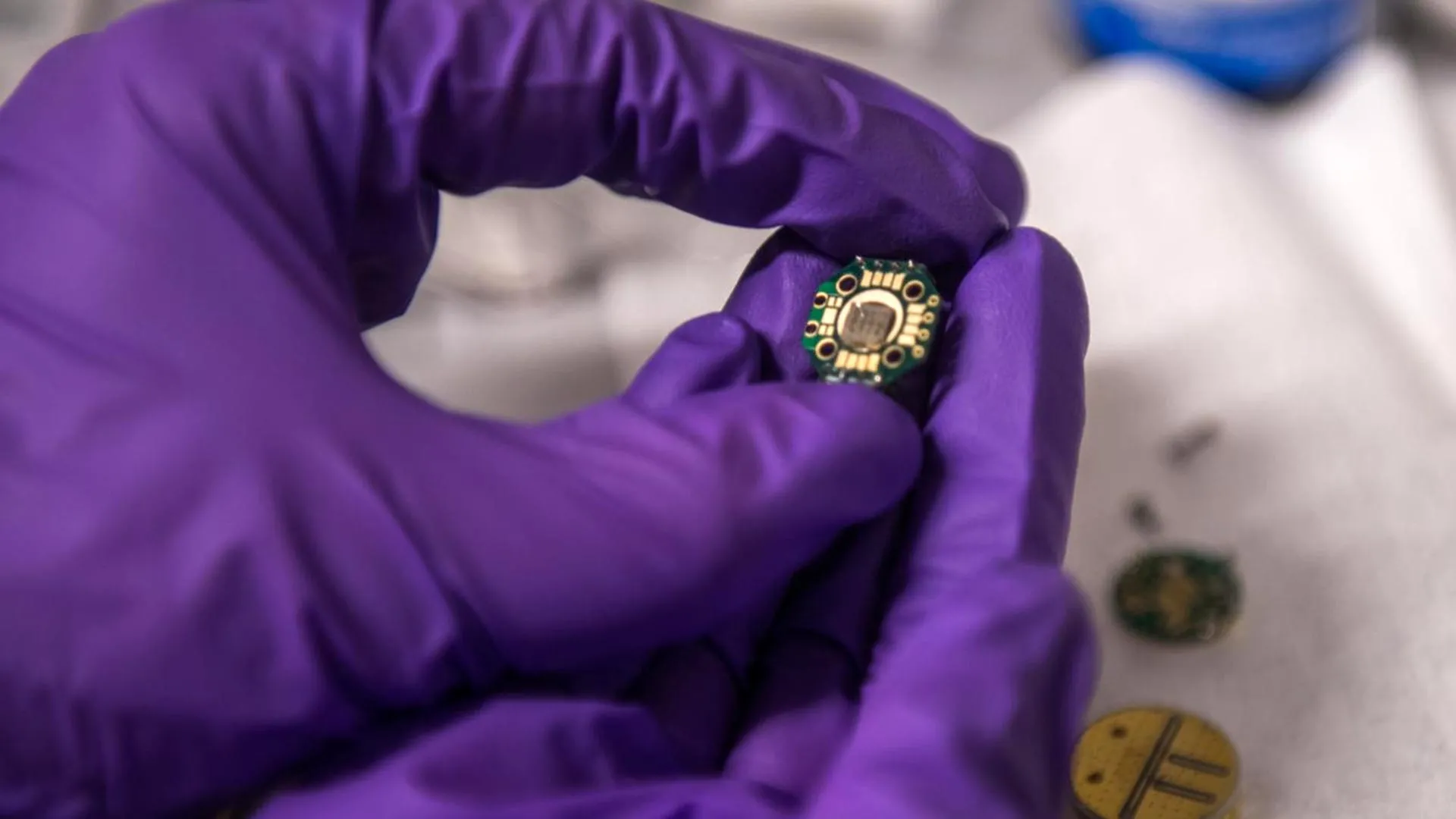
The practical advantages offered by STO also make it an attractive prospect for engineers looking to develop next-generation cryogenic devices. The material can be synthesized, structurally modified, and fabricated at a wafer scale using existing semiconductor manufacturing equipment. These characteristics make it exceptionally well-suited for integration into advanced quantum devices, such as the laser-based switches that are crucial for controlling and transmitting quantum information.
The significance of this discovery is underscored by the substantial backing it has received from major players in the technology sector. The research was partially funded by industry giants Samsung Electronics and Google’s quantum computing division, both of whom are actively investing in the search for advanced materials to propel their quantum hardware initiatives. The team’s immediate next step is to leverage STO’s unique properties to design and build fully functional cryogenic devices.
"We essentially found this material readily available, used it, and were amazed by its performance," Anderson reflected. "We understood the underlying reasons for its excellence. And then, as the ultimate validation, we discovered a way to further enhance it, adding that ‘special sauce,’ and in doing so, we created what is now the world’s best material for these specific applications. It’s a truly remarkable story of scientific discovery and engineering ingenuity."
In addition to the contributions from Samsung and Google, the study received crucial support from a Vannevar Bush Faculty Fellowship, an esteemed program funded by the U.S. Department of Defense, and the Department of Energy’s Q-NEXT program, a national quantum information science research center. The collaborative nature of this research is further evident in the list of contributors, which includes Aaron Chan and Lu Li from the University of Michigan; Sungjun Eun, Alexander D. White, Geun Ho Ahn, Amir Safavi-Naeini, and Kasper Van Gasse from Stanford’s E. L. Ginzton Laboratory; and Christine Jilly from the Stanford Nano Shared Facilities, all of whom played vital roles in bringing this transformative discovery to fruition.