Faris Adani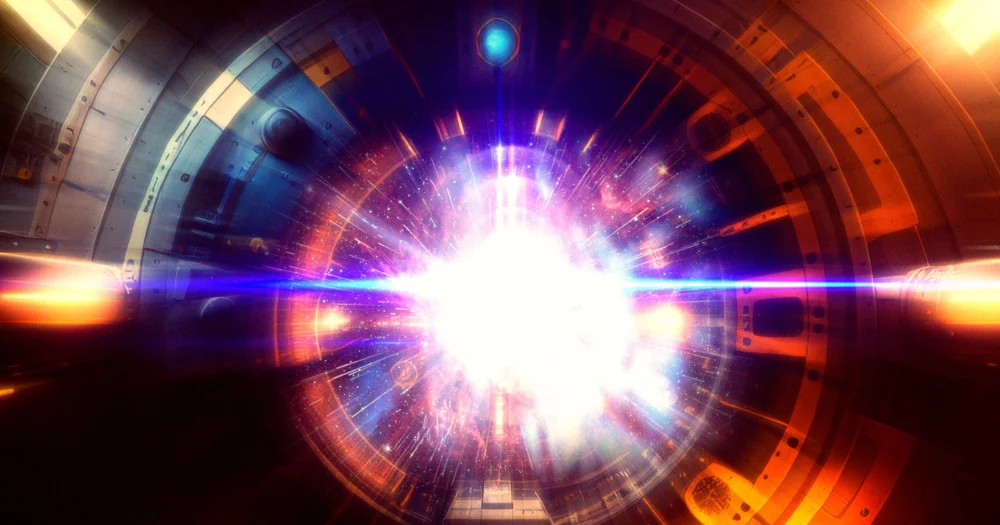
SpaceX, the ambitious aerospace manufacturer and space transportation services company founded by Elon Musk, is embarking on a significant new venture: the construction of its own particle accelerator in Florida. This state-of-the-art facility, specifically a 230 Mega-electronvolt (MeV) cyclotron, represents a strategic move to bring critical radiation effects testing in-house, accelerating the development and ensuring the resilience of its rapidly expanding fleet of spacecraft, from Starlink satellites to deep-space exploration vehicles like Starship and the Lunar Human Landing System.
The impetus behind this substantial investment is the pervasive and often destructive nature of space radiation. Beyond Earth’s protective magnetosphere and atmosphere, spacecraft are constantly bombarded by a torrent of high-energy charged particles originating from various cosmic phenomena. These include solar energetic particles (SEPs) ejected during solar flares and coronal mass ejections (CMEs), and galactic cosmic rays (GCRs) which are remnants from supernovae and other distant astrophysical events. While spectacular auroras are the visible manifestation of these particles interacting with Earth’s atmosphere, for electronics orbiting our planet or venturing further into the cosmos, this "solar weather" can quickly escalate from a nuisance to a mission-critical threat.
Space radiation poses several distinct challenges to electronic components. One of the most common and immediate concerns is a phenomenon known as Single Event Effects (SEE). An SEE occurs when a single high-energy particle strikes a sensitive region of an electronic device, such as a transistor within a computer chip. This impact can cause a momentary change in the electrical state, leading to a "bit flip" (Single Event Upset or SEU), which can alter data, disrupt processing, or even cause a system reset. More severe SEEs include Single Event Latch-up (SEL), where a particle triggers a destructive short circuit, potentially leading to permanent damage if not mitigated, and Single Event Burnout (SEB), which can physically destroy components. Over longer durations, the cumulative effect of radiation, known as Total Ionizing Dose (TID), can degrade semiconductor materials, leading to increased leakage currents, altered threshold voltages, and ultimately, device failure.
SpaceX’s Starlink constellation, comprising thousands of satellites in low Earth orbit, has already experienced firsthand the damaging consequences of space weather. During powerful solar storms, increased atmospheric drag caused by expanded atmospheric gases, combined with the direct impact of charged particles on electronics, has been shown to significantly shorten the lifespan of Starlink satellites, sometimes causing them to de-orbit much sooner than anticipated. This operational reality underscores the critical need for robust, radiation-hardened electronics. For a company that aims to deploy tens of thousands of satellites and facilitate human expansion across the solar system, understanding and mitigating these effects is paramount.
Currently, aerospace companies often rely on external facilities, such as national laboratories or university research centers, to conduct radiation testing. While effective, this approach can be subject to scheduling constraints, proprietary data concerns, and lead times that don’t align with SpaceX’s aggressive development cycles. By bringing this capability in-house, SpaceX gains "unprecedented agility," as highlighted by Michael Nicolls, VP of Starlink, in his announcement. This vertical integration allows engineers to rapidly test new designs, iterate on existing components, and validate the radiation tolerance of their hardware without external dependencies, thereby significantly accelerating their research and development timelines.
The core of this new facility is a cyclotron, a type of particle accelerator designed to accelerate charged particles, typically protons, to very high energies. A cyclotron operates on a relatively straightforward principle: a strong magnetic field bends the path of charged particles into a spiral, while an oscillating electric field provides repeated boosts of energy each time the particles cross a gap between two D-shaped electrodes (often called "dees"). As the particles gain energy, their speed increases, and they spiral outwards until they reach the desired energy level and are extracted as a beam.
SpaceX’s chosen energy level of 230 MeV for its proton beam is quite substantial. To put it in perspective, while it’s less powerful than the 590 MeV Ring Cyclotron at Switzerland’s Paul Scherrer Institute (considered the world’s most powerful by beam power), it is more than sufficient for the specific task of simulating the effects of space radiation on electronics. It’s also important to differentiate it from facilities like CERN’s Large Hadron Collider (LHC), which is a synchrotron, a different type of accelerator designed for much higher energies to probe fundamental physics. The 230 MeV energy range is ideal for mimicking the proton component of space radiation and inducing single-event effects and total ionizing dose damage in semiconductor devices.
The job postings on platforms like ZipRecruiter shed further light on the specific applications of this new facility. They indicate that the proton particle accelerator will be used to "screen and characterize electronics across all of our vehicles and platforms," including Dragon capsules, Falcon rockets, Starship, the Lunar Human Landing System, and Starlink and Starshield satellites. This comprehensive testing will focus on "chip and [Printed Circuit Board Assembly] level performance characterization." Engineers will be responsible for bombarding computer chips, circuit boards, and other avionics hardware with these highly energetic protons to observe how they react, identify vulnerabilities, and validate their designs against the harsh radiation environments they will encounter in space. This is critical for building "AI constellations," as mentioned, which will rely heavily on advanced, robust computing power.
This move aligns perfectly with SpaceX’s overarching philosophy of vertical integration. From engine design and manufacturing to launch operations and satellite production, SpaceX strives to control as many aspects of its operations as possible. Bringing radiation testing in-house is a logical extension of this strategy, ensuring tighter quality control, faster iteration cycles, and ultimately, greater reliability for its increasingly complex and ambitious missions. The ability to quickly test and qualify new components for radiation hardness means that SpaceX can deploy cutting-edge technology faster, without being bottlenecked by external testing schedules.
Beyond Earth orbit, the challenges of space radiation become even more acute. Missions to the Moon and Mars, central to SpaceX’s long-term vision, expose both electronics and human crews to significantly higher levels of radiation. The Earth’s magnetosphere provides a crucial shield, but once past this protective bubble, the full brunt of galactic cosmic rays and intense solar particle events becomes a major health concern for astronauts. Studies have shown that astronauts on the lunar surface are exposed to 2.6 times more radiation than those on the International Space Station, which remains largely within the Earth’s magnetosphere. While the cyclotron is primarily for electronics, the knowledge gained about radiation interaction with materials and shielding could indirectly inform human safety protocols for deep space exploration.
In essence, SpaceX’s investment in its own particle accelerator is not merely a technical upgrade; it’s a foundational step towards securing its future in space. By mastering the science of radiation effects and integrating it directly into its design and manufacturing process, SpaceX is positioning itself to build more resilient, longer-lasting, and ultimately more capable spacecraft. This capability will be indispensable as the company pushes the boundaries of satellite technology with its "AI constellations" and endeavors to make humanity a multi-planetary species, venturing into radiation environments far more extreme than anything encountered in Earth orbit. The cyclotron facility in Florida stands as a testament to SpaceX’s commitment to overcoming one of the most formidable challenges of space exploration: ensuring technology can withstand the relentless cosmic assault.