Imroatul Nasiyah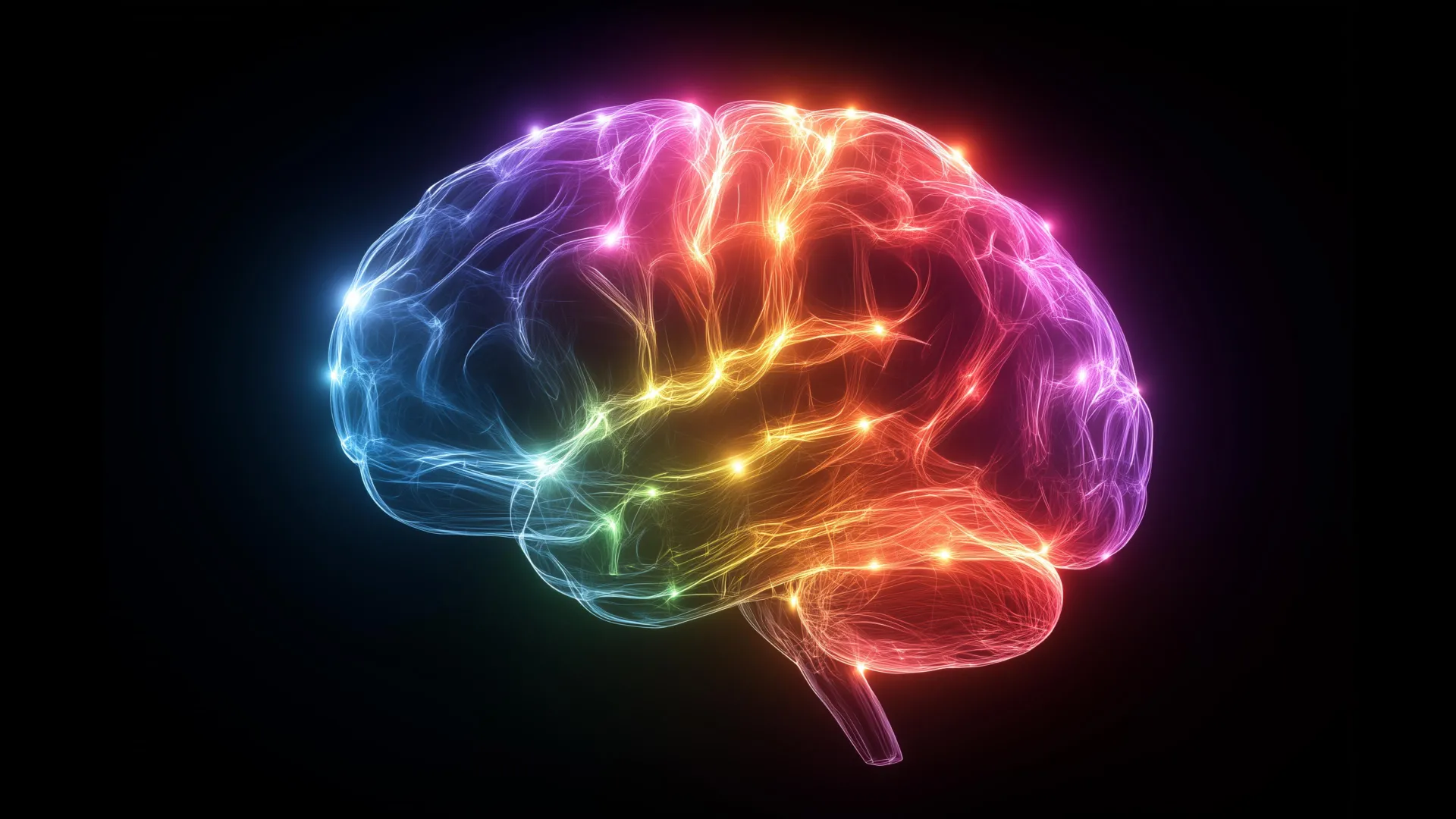
Researchers at Skoltech have unveiled a groundbreaking mathematical model that delves into the intricate workings of memory, offering a tantalizing glimpse into the optimal sensory input for cognitive function. Their analysis of this model has yielded surprising insights that hold significant potential for advancing robotic systems, artificial intelligence, and our fundamental understanding of how the human mind encodes and retrieves information. Published in the esteemed journal Scientific Reports, these findings propose that there may be an ideal number of senses for cognitive processing, and intriguingly, our familiar five might not be the most efficient configuration.
"Our conclusion is of course highly speculative in application to human senses, although you never know: It could be that humans of the future would evolve a sense of radiation or magnetic field," stated Professor Nikolay Brilliantov, a co-author of the study and a leading figure at Skoltech AI. "But in any case, our findings may be of practical importance for robotics and the theory of artificial intelligence. It appears that when each concept retained in memory is characterized in terms of seven features—as opposed to, say, five or eight—the number of distinct objects held in memory is maximized."
The research team meticulously followed a long-standing scientific tradition, originating in the early 20th century, by focusing on the modeling of fundamental memory units, known as "engrams." An engram can be conceptualized as a dispersed network of neurons across various brain regions that activate in unison. Each engram represents a distinct concept, which is defined by a unique set of features. For humans, these features are intrinsically linked to our sensory experiences. For instance, the concept of a "banana" is not merely a visual representation but encompasses its aroma, taste, texture, and other sensory qualities. Within this theoretical framework, the "banana" is transformed into a five-dimensional object situated within a vast mental landscape populated by all our stored memories.
Engrams are not static entities; they undergo a dynamic evolution over time. Their sharpness or diffuseness is modulated by the frequency with which they are activated by external sensory stimuli. This continuous process mirrors the complex interplay of learning and forgetting that characterizes our ongoing interaction with the environment.
Professor Brilliantov elaborated on this evolutionary aspect: "We have mathematically demonstrated that the engrams in the conceptual space tend to evolve toward a steady state, which means that after some transient period, a ‘mature’ distribution of engrams emerges, which then persists in time. As we consider the ultimate capacity of a conceptual space of a given number of dimensions, we somewhat surprisingly find that the number of distinct engrams stored in memory in the steady state is the greatest for a concept space of seven dimensions. Hence the seven senses claim."
In simpler terms, imagine that the myriad objects existing in the external world can be described by a finite set of characteristics, which correspond to the dimensions of a conceptual space. The researchers sought to determine how to maximize the capacity of this conceptual space, defined as the total number of distinct concepts that can be associated with these objects. A greater capacity in the conceptual space theoretically translates to a more profound and comprehensive understanding of the world. Their calculations revealed that this maximum capacity is achieved when the conceptual space is seven-dimensional. This mathematical revelation leads directly to their conclusion that seven is the optimal number of senses for efficient memory storage and retrieval.
A crucial aspect of their findings is that this optimal number, seven, appears to be remarkably robust and independent of the specific details of their model. It does not fluctuate based on the intricate properties of the conceptual space or the nature of the stimuli that provide sensory impressions. Instead, it emerges as a persistent characteristic of memory engrams themselves. However, the researchers acknowledge a caveat: engrams of varying sizes that are clustered around a common central point are considered to represent similar concepts and are therefore counted as a single entity when assessing memory capacity. This implies that redundancy or very similar representations do not contribute to the distinctness of stored information in their model.
The enigma of memory, deeply intertwined with consciousness and other complex cognitive functions in humans and other living beings, continues to be a subject of intense scientific inquiry. The advancement of theoretical models of memory, such as the one developed by the Skoltech team, is paramount to unlocking new avenues of understanding regarding the human mind. Furthermore, these models hold immense promise for the development of artificial intelligence agents capable of replicating humanlike memory capabilities.
The implications of this research extend beyond theoretical neuroscience. For robotic systems, a deeper understanding of optimal sensory integration could lead to more efficient and sophisticated perception and decision-making. Imagine robots that can better interpret and categorize their environment, leading to more fluid and intuitive interactions with humans. In the realm of artificial intelligence, the seven-sense hypothesis could guide the design of neural networks and learning algorithms. Instead of relying on a fixed number of input channels, AI systems could potentially be engineered to process information across a more optimal, seven-dimensional feature space, leading to enhanced learning efficiency and a richer internal representation of data. This could be particularly impactful in areas like natural language processing, image recognition, and complex problem-solving, where the ability to extract nuanced meaning from data is crucial.
The concept of evolving senses, while speculative for humans in the immediate future, highlights the adaptive nature of biological systems. If future evolutionary pressures or technological advancements were to introduce new sensory modalities, this research provides a framework for understanding how such additions might optimally integrate with existing cognitive architectures. The study suggests that the brain’s architecture is not arbitrary but may be finely tuned to specific dimensionalities for peak performance.
Professor Brilliantov’s emphasis on the "highly speculative" nature of applying these findings directly to human senses is a testament to the scientific rigor of the research. However, he wisely tempers this by acknowledging the unpredictable nature of future human evolution and the potential for novel sensory experiences. The core of their contribution lies in the mathematical elegance of their model, which demonstrates a universal principle of information processing and storage. The number seven emerges not from an arbitrary choice but from the fundamental mathematics governing the organization and retrieval of discrete concepts within a multi-dimensional information space.
The researchers’ focus on engrams as the basic units of memory aligns with contemporary neuroscience. While the precise biological substrate of an engram is still a subject of active research, the conceptualization of it as a distributed neural pattern that represents a memory is widely accepted. By mathematically modeling the evolution and capacity of these engrams in relation to the dimensionality of the features that define them, Skoltech’s work offers a quantitative approach to understanding a qualitative aspect of cognition.
The robustness of the number seven across different model parameters further strengthens the claim. This suggests that the principle is not dependent on the minutiae of how sensory information is encoded or how concepts are structured, but rather on a more fundamental geometric property of information representation. The caveat regarding similarly clustered engrams is also important, as it implies that the efficiency of memory is not just about the quantity of stored items but also about their distinctness and discriminability.
In conclusion, the research from Skoltech provides a compelling mathematical argument for the existence of an optimal number of senses, suggesting that seven might be that number. While direct application to current human experience remains speculative, the implications for AI and robotics are profound, offering a roadmap for designing more intelligent and efficient systems. This work underscores the power of mathematical modeling in unraveling the mysteries of the brain and pushing the boundaries of artificial intelligence.