anjir abdul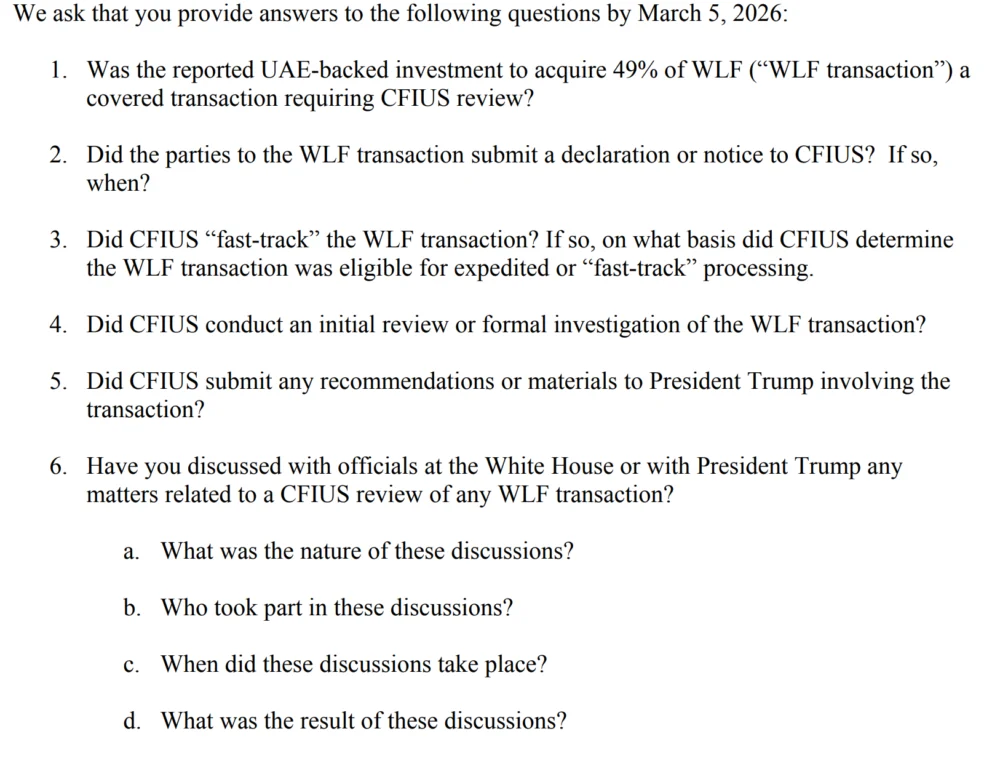
In a formal letter dispatched on a recent Friday, Senator Elizabeth Warren of Massachusetts and Senator Andy Kim of New Jersey addressed Treasury Secretary Scott Bessent, who also serves as the chair of the Committee on Foreign Investment in the United States (CFIUS). Their communication specifically pressed for a thorough government determination regarding whether CFIUS should launch an investigation into a deal in which a United Arab Emirates (UAE)-backed investment entity reportedly committed to acquiring a 49% stake in World Liberty Financial (WLFI) for an approximate sum of $500 million. The senators’ inquiry underscores a growing apprehension within Congress regarding the opacity and potential implications of foreign capital inflows into sensitive sectors of the U.S. economy, particularly those involving financial technology and personal data.
The lawmakers’ letter detailed that this substantial transaction allegedly took place just days prior to Donald Trump’s presidential inauguration, a timing that adds a layer of scrutiny to the deal. According to their assertions, this agreement would position the foreign fund as the largest shareholder in WLFI and its sole publicly known outside investor, granting it considerable influence over the company’s strategic direction and operations. Given the sensitive nature of financial technology and the reported connections to a former U.S. President’s family, the senators specifically asked Secretary Bessent to confirm whether CFIUS had been duly notified of the transaction. Furthermore, they urged the committee, if necessary, to undertake a "comprehensive, thorough, and unbiased investigation" to fully assess any potential risks.
The investment in question was reportedly backed by Sheikh Tahnoon bin Zayed Al Nahyan, a figure of considerable influence who holds the position of the UAE’s national security adviser. This connection alone elevates the deal’s profile, drawing attention to the geopolitical implications of such an investment. The agreement allegedly stipulated that approximately $187 million of the total investment would be directed to entities linked to the Trump family. Beyond the financial aspects, the deal reportedly granted two board seats on WLFI to executives associated with G42, a prominent technology company based in the UAE. G42 itself has previously faced scrutiny from U.S. intelligence agencies due to concerns about its ties to China, adding another layer of complexity and potential national security risk to the current transaction. This pre-existing concern regarding G42’s affiliations intensifies the senators’ call for a rigorous CFIUS review, particularly concerning the potential for data access and technology transfer.
At the core of Senators Warren and Kim’s argument is the apprehension that the specific structure of this deal could inadvertently or intentionally enable a foreign government to exert undue influence over a U.S. company that handles vast amounts of sensitive financial and personal information belonging to American citizens. They meticulously pointed out that WLFI’s own privacy disclosures indicate that the firm collects a wide array of data. This includes, but is not limited to, cryptocurrency wallet addresses, Internet Protocol (IP) addresses, unique device identifiers, approximate location data, and certain identity records gathered through its service providers. The aggregation of such data, if accessed or compromised by a foreign entity, presents a significant risk to the privacy and security of individuals, potentially exposing them to various forms of exploitation or surveillance.

CFIUS, an interagency committee chaired by the Secretary of the Treasury, is specifically mandated to review foreign investments in U.S. businesses to determine their potential impact on national security. Its purview extends to transactions that could provide foreign entities with access to sensitive technologies, critical infrastructure, or personal data belonging to U.S. citizens. The senators’ letter serves as a formal trigger for this review process, highlighting specific categories of concern that fall squarely within CFIUS’s jurisdiction. Their request for answers by March 5 underscores the urgency they attach to this matter, seeking timely clarification on the committee’s awareness and intended course of action.
This is not the first instance of congressional concern regarding World Liberty Financial. Last year, Senators Warren, alongside Senator Jack Reed, had previously called upon U.S. authorities to investigate alleged links between WLFI’s token sales and sanctioned foreign actors. In a November letter addressed to both the Justice Department and the Treasury, they cited alarming claims that WLFI governance tokens had reportedly been acquired by blockchain addresses suspected of being tied to North Korea’s notorious Lazarus Group, a state-sponsored hacking organization known for its illicit financial activities. Furthermore, the previous letter also mentioned alleged connections to entities linked to Russia and Iran, nations that are subject to extensive U.S. sanctions and pose significant national security challenges. These earlier allegations, preceding the current UAE investment controversy, paint a picture of a company whose operations have already attracted scrutiny for potential vulnerabilities to illicit financial flows and foreign interference. The new revelations about the UAE stake, especially with the G42 connection, only amplify these existing concerns, suggesting a pattern of foreign engagement that warrants closer examination.
The broader context of cryptocurrency regulation also plays a role in these concerns. The nascent and rapidly evolving nature of the crypto industry often presents unique challenges for traditional regulatory frameworks, including those designed to oversee foreign investment. The potential for opaque ownership structures, cross-border transactions, and the pseudonymous nature of some blockchain activities can complicate efforts to track beneficial ownership and prevent illicit financial activities. This environment makes robust oversight from bodies like CFIUS even more critical when foreign entities seek to invest in crypto ventures handling sensitive user data.
Adding to the complexity, earlier this month, former U.S. President Donald Trump publicly addressed the reported multimillion-dollar investment, which links an Abu Dhabi royal and entities connected to the World Liberty Financial crypto platform. Speaking to reporters, Trump stated that he was unaware of the specifics of the deal and denied having any direct involvement in the transaction. He clarified that the matter was being managed by his family, specifically his sons. "My sons are handling that — my family is handling it," Trump reportedly stated, further adding, "I guess they get investments from different people." While this statement clarifies his direct involvement, it does not alleviate the concerns about the "Trump-linked" nature of the company and the potential for foreign influence on entities associated with a prominent political family, especially during an election year.
The cumulative weight of these concerns—the significant foreign investment from a sensitive region, the alleged ties to a former President’s family, the reported direction of funds to Trump-linked entities, the involvement of a firm (G42) previously scrutinized for ties to China, and the earlier allegations of WLFI’s token sales being linked to sanctioned actors—creates a compelling case for a thorough CFIUS investigation. The committee’s mandate is precisely to assess such multifaceted risks, ensuring that foreign investment in the U.S. does not undermine national security interests, compromise sensitive data, or provide avenues for undue foreign influence. The requested deadline of March 5 signals the senators’ determination to receive prompt answers and to ensure that the appropriate governmental mechanisms are engaged to safeguard American interests in an increasingly interconnected and complex global financial landscape. The outcome of this inquiry will undoubtedly set a precedent for how foreign investments in the burgeoning cryptocurrency sector, particularly those with political connections, are scrutinized and regulated in the United States.