Imroatul Nasiyah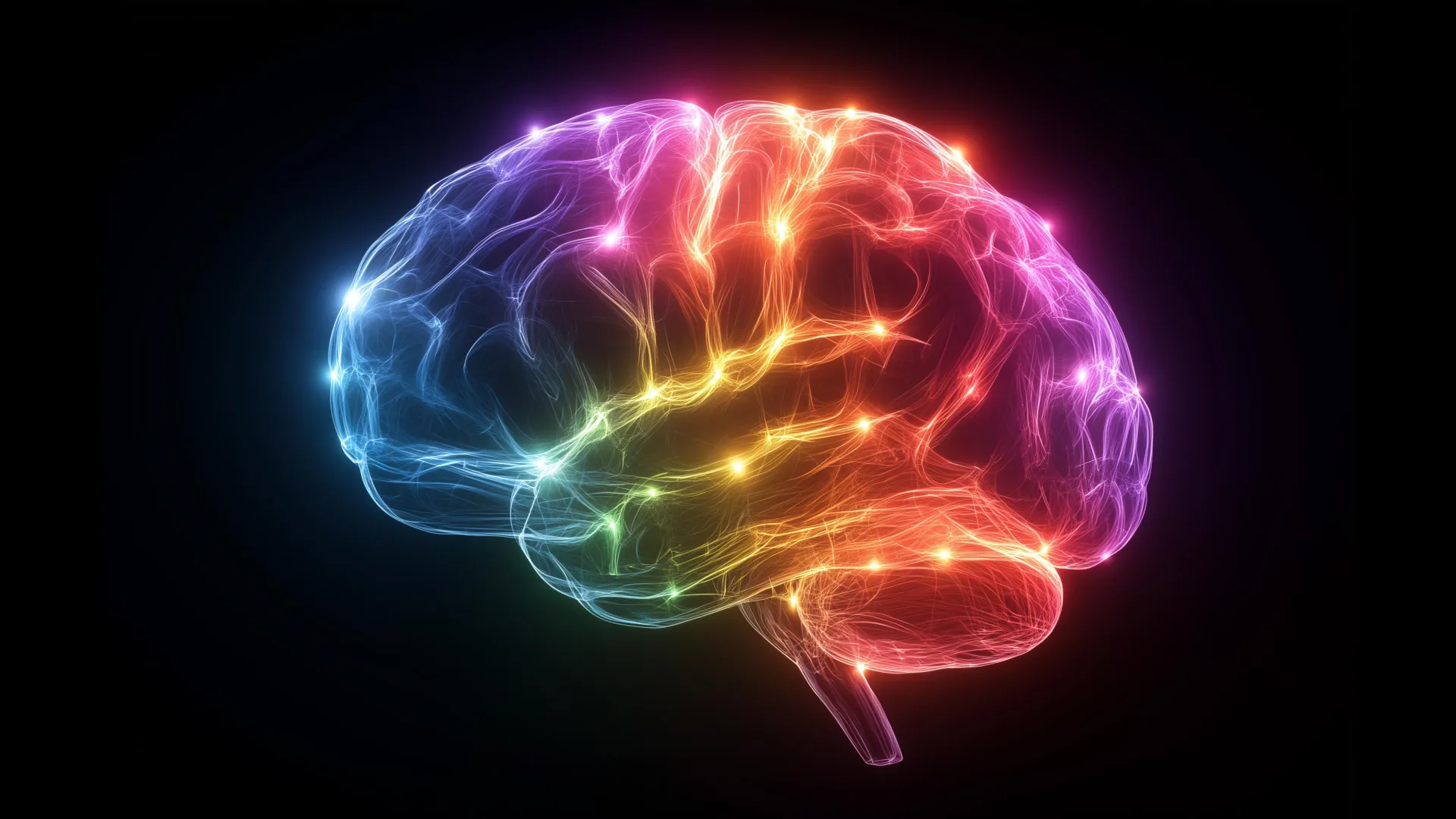
A groundbreaking mathematical model developed by researchers at Skoltech has unveiled a provocative hypothesis: the human brain might achieve optimal memory capacity and information processing when conceptualizing the world through seven distinct sensory inputs, rather than the traditionally accepted five. This revelation, published in the esteemed journal Scientific Reports, stems from an in-depth analysis of how memory, or "engrams," functions within a theoretical framework. While the direct application to human biology remains speculative, the findings hold significant promise for advancing the fields of robotics, artificial intelligence, and our fundamental understanding of cognitive processes. The core of this discovery lies in the surprising mathematical demonstration that memory storage capacity is maximized when each concept is characterized by precisely seven features, suggesting a potential sweet spot for sensory dimensionality.
Professor Nikolay Brilliantov, a co-author of the study and a leading figure in Skoltech AI, emphasized the speculative nature of the findings concerning human evolution but underscored their immediate practical importance. "Our conclusion is of course highly speculative in application to human senses, although you never know: It could be that humans of the future would evolve a sense of radiation or magnetic field. But in any case, our findings may be of practical importance for robotics and the theory of artificial intelligence," Professor Brilliantov stated. He elaborated on the central tenet of their research: "It appears that when each concept retained in memory is characterized in terms of seven features—as opposed to, say, five or eight—the number of distinct objects held in memory is maximized." This assertion directly challenges our ingrained understanding of human perception and opens a new avenue for scientific inquiry.
The Skoltech team’s research builds upon a long-standing tradition of modeling memory, dating back to the early 20th century. Their focus was on the fundamental units of memory, known as "engrams." In this theoretical construct, an engram is not a singular neuron but rather a distributed network of neurons across various brain regions that collectively activate in unison. Each engram serves as a representation of a specific concept, defined by a set of inherent features. For humans, these features are intuitively linked to our sensory experiences. For instance, the concept of a "banana" is not just its visual form but also its unique smell, its taste, its texture, and perhaps even the sound it makes when bitten. Within the Skoltech model, this multifaceted understanding transforms the banana into a "five-dimensional object" within a complex, multidimensional mental space that encompasses all our stored memories.
A crucial aspect of the engram model is its dynamic nature. Engrams are not static entities; they evolve and change over time. This evolution is influenced by the frequency with which they are activated by external sensory input. When an engram is repeatedly triggered by sensory experiences, it becomes "sharper" and more robust, signifying the process of learning and strengthening memories. Conversely, infrequent activation leads to engrams becoming "diffuse," representing the natural process of forgetting. This continuous interplay between internal neural representations and external stimuli is the bedrock of how we learn and adapt to our environment.
Professor Brilliantov further explained the mathematical underpinnings of this evolutionary process. "We have mathematically demonstrated that the engrams in the conceptual space tend to evolve toward a steady state, which means that after some transient period, a ‘mature’ distribution of engrams emerges, which then persists in time," he commented. The truly groundbreaking revelation emerged when the researchers examined the ultimate capacity of this conceptual space for a given number of dimensions. "As we consider the ultimate capacity of a conceptual space of a given number of dimensions, we somewhat surprisingly find that the number of distinct engrams stored in memory in the steady state is the greatest for a concept space of seven dimensions. Hence the seven senses claim." This statement is the core of their provocative hypothesis, suggesting a fundamental numerical optimum for sensory processing in memory formation.
To translate this into a more intuitive understanding, consider the objects that populate our world. Each object can be described by a finite set of characteristics or features. In the Skoltech model, these features correspond to the dimensions of a conceptual space. The researchers sought to determine the dimension that would allow for the greatest number of distinct concepts to be stored and differentiated within this space. A larger capacity in this conceptual space, they argue, directly translates to a deeper and more comprehensive understanding of the world. Their mathematical analysis revealed that this maximum capacity is achieved precisely when the conceptual space has seven dimensions. This, in turn, leads to their conclusion that seven is the optimal number of senses for maximizing memory storage.
A significant strength of their finding, according to the researchers, is its robustness. This optimal number of seven dimensions, they claim, is not contingent on the specific details of their mathematical model, nor on the particular properties of the conceptual space or the nature of the stimuli that provide sensory impressions. The number seven appears to be an intrinsic and persistent characteristic of engrams themselves, regardless of the specifics of their implementation. However, the researchers acknowledge a crucial caveat: when multiple engrams of varying sizes cluster around a common center, they are considered to represent similar concepts and are counted as a single concept for the purpose of calculating memory capacity. This refinement is important for understanding how the model accounts for nuanced distinctions within our memories.
The intricate relationship between memory, consciousness, and the broader phenomenon of life remains one of science’s most profound mysteries. Advancing our theoretical understanding of memory, as exemplified by the Skoltech model, is therefore instrumental not only for unlocking deeper insights into the human mind but also for the ambitious goal of recreating human-like memory capabilities in artificial intelligence agents. The potential implications of a seven-sense model extend far beyond theoretical neuroscience. In robotics, it could lead to the development of more sophisticated and adaptable machines capable of richer environmental interaction and learning. For AI, it might pave the way for systems that can process and store information with unprecedented efficiency and depth, potentially leading to more human-like intelligence. While the journey from a mathematical model to tangible biological or technological applications is often long and complex, the Skoltech researchers have provided a compelling new perspective on the fundamental architecture of memory, urging us to reconsider the very limits of our sensory experience and the potential for a richer, more nuanced understanding of the world.