Faris Adani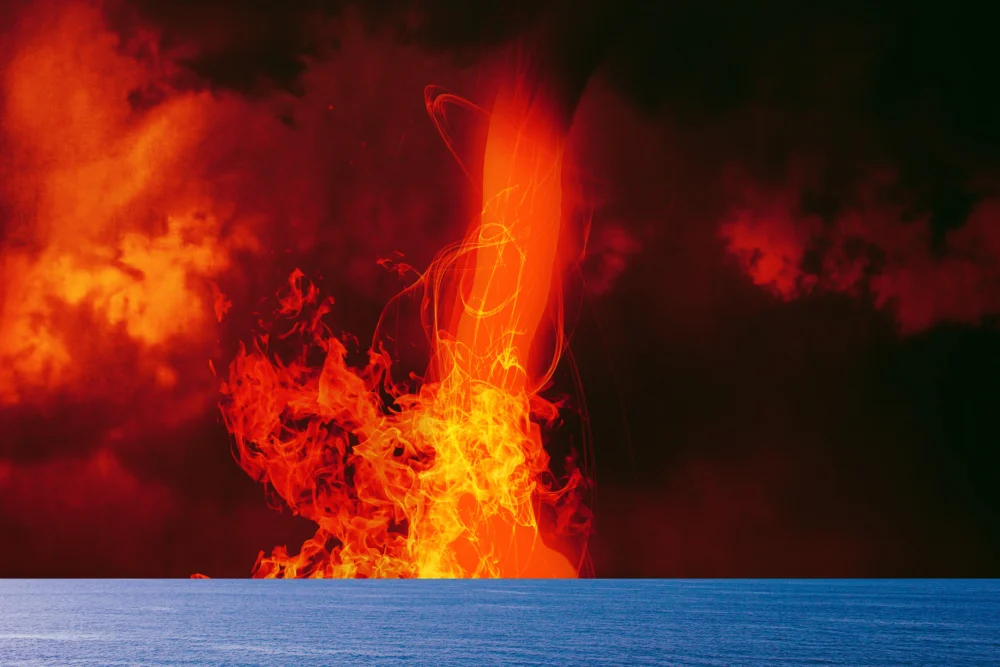
Scientists Suggest That Igniting Oil Spills to Create Fire Tornadoes Might Actually Be Good for the Oceans.
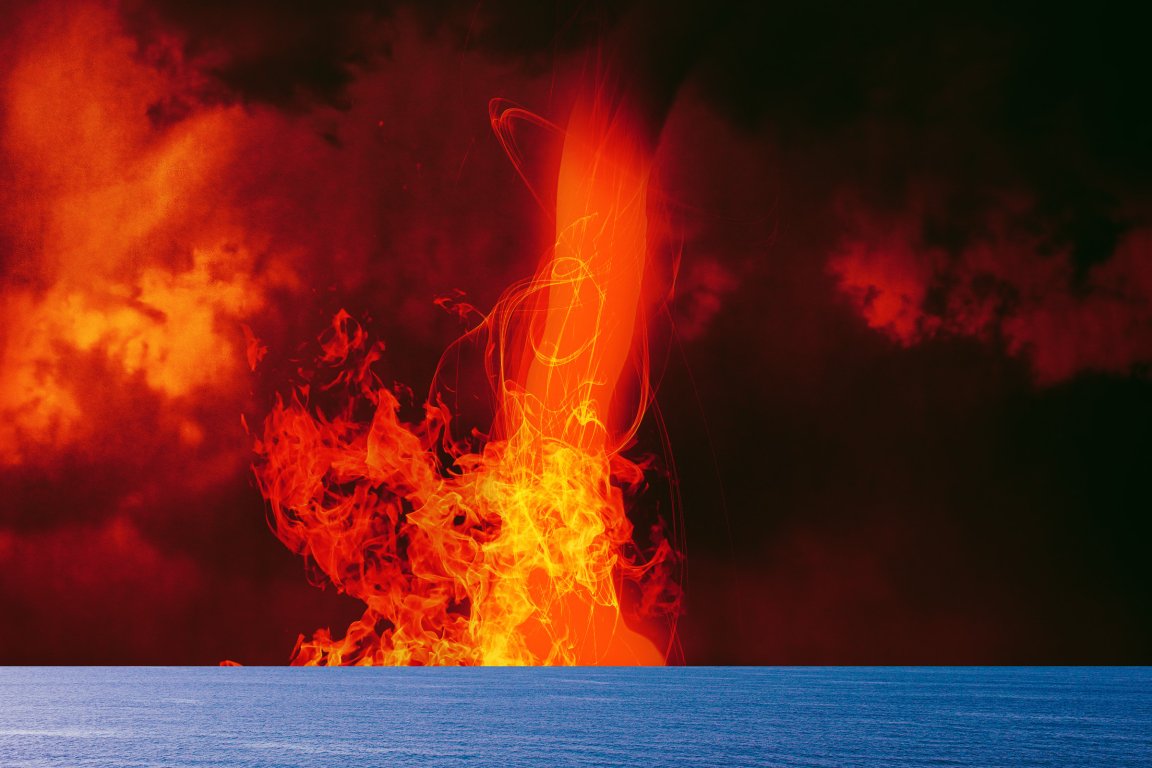
When the urgency of ocean conservation is discussed, common solutions that spring to mind often include tangible actions like widespread coral transplantation to revive endangered reefs, conscientious consumer shifts away from problematic materials such as plastic straws, or ambitious technological endeavors like gigantic robotic systems designed to sweep vast expanses of water clean of floating plastic debris. These approaches, while varied in scale and method, share a common thread: they aim to remove pollutants or restore damaged ecosystems through direct, often gentle, intervention. However, a groundbreaking and remarkably counter-intuitive proposal from environmental researchers at Texas A&M University is poised to redefine our understanding of ocean remediation, suggesting a method that sounds more like a scene from a disaster movie than a scientific solution: the deliberate creation of massive fire tornadoes to combat oil spills.
A recent publication on the university’s website highlighted a paper in the journal Fuel, which delves into the most effective strategies for cleaning up the thousands of oil spills that mar our oceans each year. The core of their proposition involves intentionally igniting what are technically known as “fire whirls” — a term far less dramatic than the university’s preferred “fire tornado.” While the concept of setting a vast expanse of oil ablaze might initially trigger alarm, the research meticulously explores the potential of these controlled conflagrations as an innovative and highly efficient method to mitigate the devastating impacts of oil pollution.
The Pervasive Threat of Oil Spills and Current Remediation Challenges
Oil spills, whether from tanker accidents, offshore platform blowouts, or pipeline ruptures, represent a persistent and severe threat to marine and coastal ecosystems worldwide. The immediate aftermath of a spill is often characterized by widespread devastation: seabirds coated in thick crude, suffocated marine mammals, and vast stretches of coastline fouled by an oily residue that can persist for decades. Beyond the visible destruction, oil disrupts ocean currents, alters sediment composition, and introduces toxic compounds into the food web, leading to long-term health issues for wildlife and potential economic hardship for human communities reliant on fishing and tourism. The sheer volume of oil released, even in smaller, more frequent spills, accumulates into a significant global environmental burden, underscoring the urgent need for more effective cleanup methodologies.
Current oil spill remediation techniques, while continuously evolving, each come with their own set of limitations. Containment booms and skimmers are frontline tools, physically corralling and removing oil from the water surface. However, their effectiveness is heavily dependent on calm seas and is often challenged by strong currents, rough weather, or the viscosity of the oil itself. Chemical dispersants break down oil into smaller droplets, allowing it to mix into the water column, ostensibly to be diluted and degraded. Yet, concerns linger about the toxicity of the dispersants themselves and the potential for these smaller oil droplets to become more readily ingested by marine organisms or settle on the seabed, merely shifting the problem rather than solving it. Bioremediation harnesses natural microorganisms to break down hydrocarbons, a slow but environmentally benign process often limited by temperature, nutrient availability, and the specific composition of the oil. Each method plays a role, but none offers a universally swift, comprehensive, and environmentally optimal solution.
Remarkably, one of the most widely accepted and, until now, effective methods for large-scale oil spills is in-situ burning (ISB). This technique involves gathering a substantial pool of crude oil on the water’s surface, typically within fire-resistant booms, and then igniting it. The primary advantages of ISB are its speed and its ability to remove large quantities of oil rapidly, converting it into combustion byproducts and a smaller, more manageable residue. However, ISB is not without its drawbacks. It produces significant plumes of black smoke, rich in particulate matter (soot), which can impact air quality and human health downwind. Furthermore, it requires specific environmental conditions, such as relatively calm waters and sufficient oil thickness, to sustain an efficient burn, and it cannot be used too close to shore or sensitive habitats due to smoke and potential fire spread.
Harnessing the Power of Fire Whirls: A Paradigm Shift
The theory behind using fire whirls for oil spill remediation is elegantly simple yet profoundly impactful. A fire whirl, unlike a conventional pool fire, is a rotating column of flame that draws air inward and upward, creating a highly efficient combustion environment. This rapid spinning motion acts much like a natural chimney, intensifying the heat and accelerating the rate at which the fuel (in this case, oil) is consumed. The result is a fire that burns significantly hotter and, crucially, much faster than a typical, static oil pool burn-off. This enhanced combustion efficiency is the key differentiator from traditional in-situ burning.
The researchers at Texas A&M sought to quantify these theoretical advantages through rigorous experimentation. To create a controlled environment that simulated a fire whirl on a scalable model, they constructed a unique setup: three 16-foot walls arranged in a loose triangular configuration. This arrangement was designed to induce the necessary rotational airflow, allowing the scientists to observe and measure the characteristics of the resulting fire whirl. The experiment successfully generated a stable, controlled fire-tornado that reached an impressive 17 feet in height at its peak. This controlled setting allowed the researchers to meticulously probe the fire whirl’s environmental impact, combustion efficiency, and overall performance.
Groundbreaking Results and Future Prospects
The findings were striking and validated the initial hypothesis. Compared to conventional in-situ burn-offs, the controlled fire whirl demonstrated remarkable improvements. The most significant discovery was that the fire whirl produced an astonishing 40 percent less soot. This reduction in particulate emissions is a critical advantage, addressing one of the primary environmental concerns associated with traditional ISB. The enhanced oxygen mixing within the swirling vortex leads to a more complete combustion of the hydrocarbons, minimizing the formation of incomplete combustion byproducts like soot. Furthermore, the fire whirl proved exceptionally efficient at consuming the fuel, burning off up to 95 percent of the oil, leaving behind minimal residue.
Elaine Oran, a distinguished professor of aerospace engineering at Texas A&M and a leading voice in this research, encapsulated the significance of these findings. “This is the first time anyone has conceived using fire whirls for oil spill remediation, and it’s really just the beginning,” she stated. “Our goal is to harness the chaotic nature of fire whirls as a powerful, precise restoration tool, to protect coastlines, marine ecosystems and the environment as a whole.” Her vision underscores the ambition behind the project: to transform a seemingly destructive phenomenon into a targeted and beneficial instrument for environmental cleanup.
The speed of combustion is another compelling advantage that positions fire whirls as a superior option. As Professor Oran highlighted, “Fire whirls burn through crude oil spills nearly twice as fast as in-situ fire pools, potentially giving cleanup crews faster operational and response times to eliminating the oils from spreading.” In the context of an oil spill, where every hour counts in preventing the spread of oil and minimizing ecological damage, this accelerated cleanup time could be a game-changer. Faster response and removal mean less time for oil to penetrate sensitive habitats, contaminate wildlife, or drift into critical coastal zones, thereby significantly mitigating the overall environmental impact.
Navigating Challenges and Charting the Path Forward
While the initial results are highly promising, the practical application of fire whirl technology in real-world oil spill scenarios presents a complex set of challenges that require further research and development. One of the foremost hurdles is **scalability**. The experimental setup involved a controlled environment with specific wall configurations. Translating this to large, dynamic ocean environments, where hundreds or thousands of barrels of oil might be spread over vast areas, will necessitate robust, deployable containment structures capable of inducing and sustaining fire whirls safely and effectively.
**Safety concerns** are paramount. Working with large-scale controlled fires at sea demands meticulous planning and stringent safety protocols to protect cleanup crews, shipping lanes, and nearby coastal communities. The logistics of deploying and maintaining such operations in potentially harsh weather conditions, including strong winds and high waves, will be a significant engineering feat. Moreover, while soot reduction is a major benefit, a comprehensive **environmental impact assessment** will be crucial. Researchers must investigate all combustion byproducts, including gases like nitrogen oxides (NOx), carbon monoxide (CO), and volatile organic compounds (VOCs), to ensure that the overall atmospheric and aquatic impact is indeed favorable compared to existing methods. The specific **types of oil** also matter; different crude oils and refined products have varying viscosities and ignition points, which could affect the efficiency of fire whirl combustion.
**Regulatory hurdles** will undoubtedly arise. Introducing such a dramatic and novel remediation technique will require extensive testing, validation, and approval from international and national environmental agencies. Public perception, too, will play a critical role. Convincing the public that “fire tornadoes” are a viable and beneficial environmental solution will necessitate transparent communication and demonstrable proof of their safety and efficacy.
A Glimpse into the Future of Ocean Conservation
The Texas A&M research on fire whirls represents a bold leap in environmental engineering, pushing the boundaries of conventional thinking in oil spill remediation. It places this innovative approach within a broader context of cutting-edge solutions, which include advancements in robotic cleanup technologies, sophisticated biological agents for accelerated degradation, and novel absorbent materials. As the world grapples with the increasing frequency and intensity of environmental disasters, potentially exacerbated by climate change, the need for a diverse and adaptable toolkit of cleanup methods becomes ever more critical.
Ultimately, the prospect of using controlled fire tornadoes to safeguard our oceans is a testament to human ingenuity in the face of daunting environmental challenges. While “just the beginning” of a long research journey, the initial findings offer a beacon of hope for a more efficient and less environmentally damaging way to respond to oil spills. The ongoing quest for effective ocean conservation demands such audacious thinking, reminding us that sometimes, the most unexpected solutions can yield the most profound positive impacts.
More on pollution: Site of Elementary School Was Sprayed With Radioactive Fracking Waste, Worker Warns