Faris Adani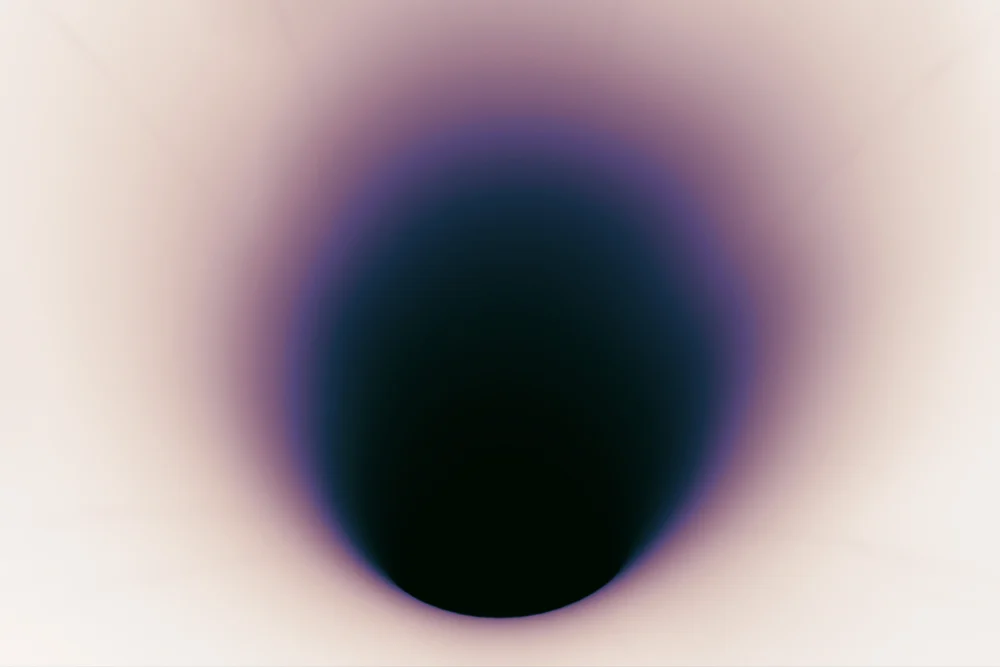
Scientists Say Something Bizarre Is Hiding Inside Black Holes
Sign up to see the future, today
Can’t-miss innovations from the bleeding edge of science and tech
The universe’s most enigmatic objects, black holes, continue to challenge our understanding of physics. What truly lies “inside” a black hole? Are they portals to another universe, or perhaps contain entire miniature universes within their crushing gravity? While these remain speculative, fringe theories, the truth is that no one knows for certain. The boundary of these incredibly heavy objects, known as the event horizon – the point past which nothing, not even light or information itself, can escape their powerful gravitational pull – effectively precludes us from knowing their interior secrets.
Current physics predicts that at the heart of every black hole resides a point of infinite density called a singularity. This concept, where spacetime curvature becomes infinite and all known laws of physics break down, seems impossible, yet it’s the best explanation science currently has to offer. The singularity represents a fundamental limit to our understanding, a place where general relativity, the theory describing gravity on cosmic scales, fails spectacularly.
A Mathematical Lens: Probing the Cosmos with Prime Numbers
However, mathematics offers another, surprisingly elegant avenue for probing the nature of these cosmic enigmas. Some visionary theorists now argue that the very structure of black hole interiors, particularly at the quantum level, could be described in terms of something most of us haven’t given much thought to since grade school: prime numbers. These fundamental units of arithmetic, in the form of hypothetical “prime number particles” or patterns, could swirl at the center of black holes, as outlined in a new piece in Scientific American discussing this emerging and groundbreaking research.
“I’d say many high-energy physicists don’t actually know much about that side of number theory,” Eric Perlmutter, a physicist at the Institute of Theoretical Physics in France, told the magazine, highlighting the interdisciplinary nature of this radical new approach.
The Unbreakable Building Blocks of Numbers
A quick refresher on prime numbers: they are natural numbers, or positive whole numbers greater than one, that can’t be divided evenly into smaller natural numbers other than one and themselves. Examples include 2, 3, 5, 7, 11, and so on. Crucially, every natural number greater than one can be expressed as a unique product of primes (e.g., 12 = 2 x 2 x 3). This property makes them the fundamental, indivisible units of mathematics. As Scientific American aptly explains, this makes prime numbers an analog to the “fundamental particles” in physics – like quarks or electrons – which cannot be broken down further into smaller constituents. The idea that these mathematical atoms could be physically relevant in extreme cosmic environments is profoundly exciting.
The Riemann Hypothesis: A Million-Dollar Mystery
Interest in prime numbers within the context of black holes stems directly from one of mathematics’ most profound and enduring mysteries: the Riemann Hypothesis. Proposed by German mathematician Bernhard Riemann in 1859, this conjecture predicts the seemingly random distribution of prime numbers. If you count primes out in order – 2, 3, 5, 7, 11, 13, 17, 19, and so on – there’s no obvious, easily discernible pattern in when they pop up. Despite being a cornerstone of number theory for over 160 years, the hypothesis has never been definitively solved. Its resolution would not only unlock deep secrets about the nature of numbers but also have far-reaching implications for fields like cryptography and quantum mechanics. The person who finally proves it would also win a million-dollar prize from the Clay Mathematics Institute.
The hypothesis centers on the “Riemann zeta function,” a complex mathematical function whose “non-trivial zeros” are predicted to lie on a specific line in the complex plane. If this holds true, it would provide an astonishing level of order to the seemingly chaotic distribution of primes. The tantalizing possibility that this mathematical order might reflect a physical reality inside black holes is what has captured the imagination of physicists.
Introducing “Primons”: Bridging Math and Matter
Over 120 years after Riemann’s initial proposal, a pioneering conceptual leap was made by physicist Bernard Julia. In 1990, Julia jumped on the idea to imagine a fundamental, non-interacting particle whose energy levels were precisely tied to prime numbers. He dubbed these hypothetical entities “primons,” and when considered in a group, they formed a “primon gas.” What made Julia’s work truly remarkable was his subsequent discovery: the statistical mechanics and thermodynamics used to describe the properties of this primon gas were mathematically identical to the Riemann zeta function. This established a concrete, albeit theoretical, link between a physical system and the central facet of the Riemann Hypothesis. It suggested that the abstract world of number theory might have a tangible, physical manifestation.
While primons remain purely theoretical constructs, they offer a powerful framework for exploring how mathematical patterns could emerge in physical systems. Their connection to the Riemann zeta function means that any physical system behaving like a primon gas would inherently embody the deep mathematical structure that governs prime numbers.
Quantum Chaos and Conformal Symmetries at the Event Horizon
The leap from theoretical primons to the heart of black holes comes from very recent, cutting-edge research. A study published in 2025 (note: this date implies future research or a typo in the original text, assuming it refers to hypothetical future research or a specific arXiv pre-print number that looks like a date) led by physicists at Cambridge University revealed a stunning finding: the quantum realm near a black hole singularity appeared to organize itself into a “conformal” pattern of prime numbers. This wasn’t just a random scattering; it suggested a deep, underlying order, like a dense cloud of Julia’s primon gas.
In physics, “conformal” symmetry implies that the system behaves the same way regardless of the scale at which you observe it – it’s scale-invariant. This type of symmetry is crucial in quantum field theories and plays a significant role in advanced concepts like the Anti-de Sitter/Conformal Field Theory (AdS/CFT) correspondence, which posits a duality between certain gravitational theories and quantum field theories. The appearance of such a pattern near a black hole singularity suggests that the extreme quantum gravity effects might be governed by incredibly precise mathematical structures, potentially even a specific type of conformal field theory where prime numbers dictate the energy states or configurations.
Beyond Four Dimensions: Gaussian Primes and Exotic Gravity
The research took an even more speculative, yet incredibly intriguing, turn in a follow-up paper (again, assuming future or placeholder arXiv date). The researchers speculated that if our universe had five dimensions instead of the traditional four (three spatial dimensions plus time), a black hole singularity might require an even more exotic class of numbers for its description: “Gaussian” prime numbers. Gaussian primes are complex numbers of the form a + bi (where a and b are integers, and i is the imaginary unit, the square root of -1) that cannot be factored into Gaussian integers with smaller norms. This expansion into complex numbers further deepens the mathematical tapestry describing these cosmic behemoths.
The suggestion of five dimensions is particularly significant. Many leading candidates for a unified theory of quantum gravity, such as string theory or M-theory, postulate the existence of extra spatial dimensions beyond the three we perceive. If these hidden dimensions play a role in shaping the internal structure of black holes, and if their influence manifests through the patterns of Gaussian primes, it would provide a powerful bridge between abstract mathematics, exotic theories of gravity, and the very fabric of spacetime at its most extreme limits.
The Language of the Cosmos
“We don’t know yet whether the appearance of prime number randomness close to a singularity has a deeper meaning,” Sean Hartnoll, the Cambridge physicist who led the research, told Scientific American. “However, to my mind, it is very intriguing that the connection extends to higher dimensional theories of gravity,” including some of the most promising candidates for a fully quantum mechanical theory of gravity. This suggests that the mathematical elegance of prime numbers might be a fundamental property of quantum gravity itself.
Eric Perlmutter, who has published his own work using Riemann’s ideas to describe aspects of quantum gravity, shares this optimism and sense of wonder. “The kinds of things we’re trying to understand, black holes in quantum gravity, are surely governed by some beautiful structures,” he told the magazine. “And number theory seems to be a natural language.”
This groundbreaking research hints at a profound and unexpected connection between the purest form of mathematics and the most extreme phenomena in the universe. If black holes truly harbor the secrets of prime numbers at their core, it could mean that the very fabric of reality, particularly at the quantum gravitational scale, is encoded in the fundamental units of arithmetic. This interdisciplinary exploration promises to push the boundaries of both physics and mathematics, potentially leading us to a unified theory that can finally unravel the mysteries of singularities, quantum gravity, and perhaps, the very origin of our universe.
More on space: Physicists Think They Saw a Black Hole Explode