Faris Adani
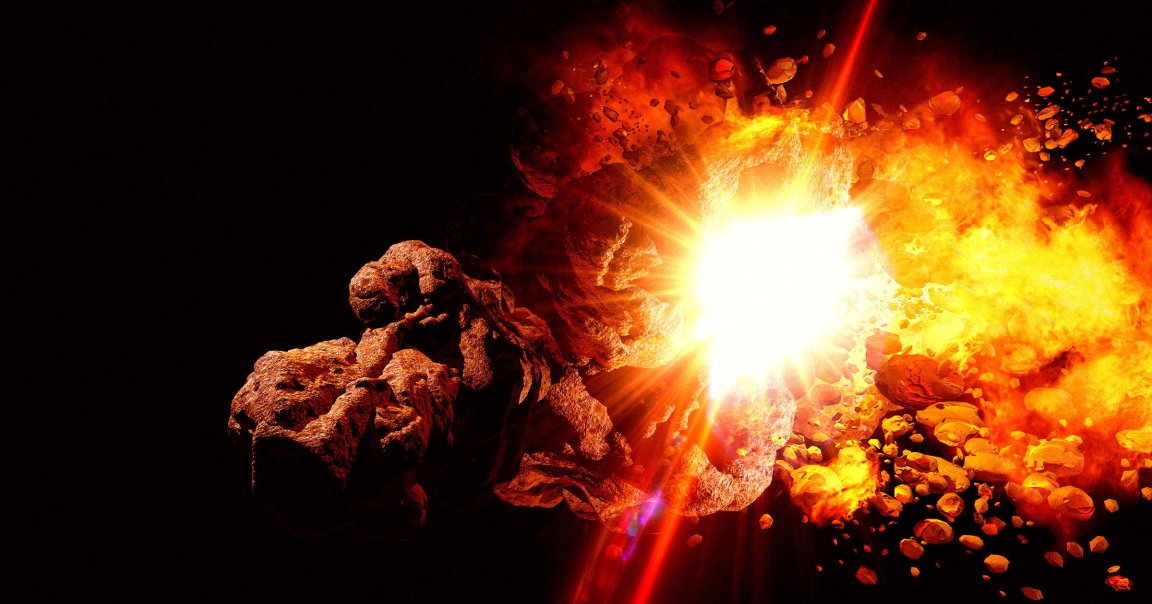
New Research Suggests Asteroids Are Surprisingly Resilient, Reopening the Nuclear Option for Planetary Defense.
The existential threat posed by celestial wanderers has long captivated humanity, from ancient prophecies of doom to modern scientific endeavors aimed at protecting our pale blue dot. While the chances of a catastrophic impact event in any given year are relatively low, the consequences of such an occurrence are unfathomable, demanding robust and reliable planetary defense strategies. History offers stark reminders: the Chicxulub impact 66 million years ago reshaped Earth’s biosphere, wiping out the dinosaurs, while the 1908 Tunguska event flattened 2,000 square kilometers of Siberian forest, demonstrating the destructive power of even an airburst from a relatively small object. More recently, the 2013 Chelyabinsk meteor, a mere 60 feet across, exploded over Russia with the energy of 30 Hiroshima bombs, injuring over 1,500 people and causing widespread damage, serving as a visceral wake-up call that such events are not just theoretical, but a tangible, albeit rare, danger.
In response to these threats, the scientific community has explored various methods to divert or mitigate potential asteroid impacts. The most celebrated recent success in this domain was NASA’s Double Asteroid Redirection Test (DART) mission in 2022. This proof-of-concept mission successfully demonstrated the kinetic impactor technique by crashing a spacecraft into Dimorphos, the moonlet of the asteroid Didymos, subtly altering its orbital path. While a monumental achievement, the kinetic impactor method has its limitations. It requires significant warning time – often years or decades – to ensure a small nudge can translate into a large enough deviation over vast cosmic distances. Furthermore, its effectiveness is highly dependent on the asteroid’s size, mass, composition, and structural integrity. A larger, more massive, or loosely-bound “rubble pile” asteroid might absorb the impact rather than deflect, or worse, fragment in an uncontrolled manner, potentially turning one large threat into a multitude of smaller, but still dangerous, projectiles. This inherent uncertainty necessitates a diverse arsenal of defense mechanisms, including those considered more extreme.
For decades, the idea of using nuclear weapons to neutralize an incoming asteroid has been a subject of both scientific discussion and popular science fiction, often fraught with intuitive concerns and ethical dilemmas. The primary worry has always been that a nuclear blast might simply shatter the asteroid, transforming a single, albeit massive, threat into a dangerous “shotgun blast” of radioactive debris raining down on Earth. This apprehension, coupled with international treaties like the 1967 Outer Space Treaty which prohibits the placement of nuclear weapons in space, has largely kept nuclear deflection as a theoretical “last resort” rather than a primary consideration. However, a groundbreaking new paper published in the esteemed journal Nature Communications is compelling scientists to revisit this controversial option. An international consortium of researchers, including distinguished scientists from CERN (the European Organization for Nuclear Research) and the University of Oxford, in partnership with the nuclear deflection startup Outer Solar System Company (OuSoCo), has conducted unprecedented experiments simulating the effects of extreme stress on asteroid materials, yielding surprising results.
The core of their research aimed to understand how asteroid materials react under conditions mimicking the energy deposition from a nuclear detonation. Since conducting a real-world nuclear test in space is impractical and politically unfeasible, the team ingeniously utilized CERN’s Super Proton Synchrotron (SPS) and its HiRadMat facility. Here, they subjected samples of a metal-rich meteorite to 27 short, yet incredibly intense, pulses of a high-energy proton beam. This beam, while not nuclear in itself, delivered a concentrated burst of energy that simulated the intense shockwaves and thermal stress an asteroid might experience from a nearby nuclear explosion. Following this simulated ordeal, the meteorite samples were transported to the ISIS Neutron and Muon Source at the Rutherford Appleton Laboratory in the UK. There, advanced microscopic analysis was performed to meticulously examine any changes to the samples’ internal structure, crystalline lattice, and material properties. The findings were truly unexpected and potentially revolutionary for planetary defense.
To the astonishment of the research team, the metal-rich meteorite samples did not simply shatter or degrade; instead, they exhibited a remarkable resilience. As Melanie Bochmann, cofounder of OuSoCo, articulated, the “material became stronger, exhibiting an increase in yield strength, and displayed a self-stabilizing damping behavior.” This means that under extreme stress, the material’s ability to resist deformation or fracture actually improved, and it showed a capacity to absorb and dissipate shockwaves more effectively, preventing them from propagating catastrophically through its structure. In simpler terms, these metal-rich space rocks are far tougher than previously modeled. This enhanced resilience implies that such asteroids could absorb a significant amount of energy from a nuclear detonation without fragmenting into countless smaller pieces. The traditional “shotgun blast” scenario, while still a concern for certain asteroid types, might be less of a risk for metal-rich objects than previously assumed, fundamentally altering the risk-benefit analysis for nuclear deflection missions.
The implications of this discovery are profound for how humanity might approach future asteroid redirection efforts, especially in high-stakes scenarios. Bochmann emphasized that “our experiments indicate that — at least for metal-rich asteroid material — a larger device than previously thought can be used without catastrophically breaking the asteroid.” This is critical because a larger nuclear device would generate a more powerful impulse, allowing for a greater deflection of the asteroid. The goal of nuclear deflection isn’t necessarily to vaporize an asteroid entirely, but rather to detonate a nuclear warhead *near* its surface (a stand-off detonation). The intense X-rays and plasma generated by the blast would ablate a layer of material from the asteroid’s surface, creating a powerful propulsive jet that subtly nudges the asteroid off its collision course. The newfound resilience suggests that such a powerful “nudge” could be applied more aggressively without the risk of uncontrolled fragmentation, offering a viable “emergency option for situations involving very large objects or very short warning times, where non-nuclear methods are insufficient and where current models might assume fragmentation would limit the usable device size.” This could be a game-changer for defending against the most dangerous threats where time is of the essence.
While the findings offer renewed optimism, the implementation of nuclear deflection still faces considerable challenges beyond material science. Treaty obligations, particularly the Outer Space Treaty, would require careful renegotiation or a specific international agreement for a planetary defense exemption, given its prohibition on placing nuclear weapons in space. Ethical concerns surrounding the intentional use of nuclear weapons, even for defensive purposes, and the potential for dual-use technologies would also need to be rigorously addressed. Furthermore, the political will and global cooperation required to mount such a mission are immense. Precision targeting of a fast-moving object in the vacuum of space, ensuring the blast occurs at the optimal distance and angle, would demand cutting-edge navigation and guidance systems. Crucially, the current research focused on metal-rich meteorites. Asteroids exhibit a vast diversity in composition, from rocky chondrites and achondrites to icy bodies and loosely aggregated “rubble piles.” The response of these different materials to a nuclear blast would likely vary significantly, necessitating further research to develop comprehensive defense strategies tailored to specific asteroid types.
Fortunately, opportunities to gather more critical data are on the horizon. Both NASA and the European Space Agency (ESA) are planning extensive studies of Apophis, an enormous asteroid ranging between 1,000 and 1,500 feet (300 to 450 meters) in width. This formidable object is slated to make an eerily close approach to Earth in April 2029, passing closer than many geosynchronous satellites, at just 20,000 miles (32,000 kilometers) from our planet’s surface. While Apophis poses no impact threat in 2029 or for the foreseeable future, its close flyby offers an unparalleled opportunity for scientists to study a large asteroid up close, gathering crucial data on its composition, structure, and rotational dynamics. NASA’s OSIRIS-APEX mission (formerly OSIRIS-REx) is already en route to Apophis, and ESA’s proposed Hera mission would further enhance our understanding. The insights gained from these missions will be invaluable for refining deflection models and developing more effective defense strategies.
Looking ahead, the research team plans to expand their studies to more complex and rocky asteroid materials. A key next step involves investigating “pallasites,” a fascinating class of meteorites composed of a metal matrix similar to the material already studied, but with up to centimeter-sized magnesium-rich olivine crystals embedded within. This more intricate structure will provide a deeper understanding of how composite asteroid materials react to extreme energy inputs. Beyond its immediate implications for planetary defense, this upcoming research holds broader scientific significance. As the researchers noted, “Because these objects are thought to originate from the core–mantle boundary of early planetesimals, such experiments could also provide valuable insights into planetary formation processes.” By simulating the high-pressure, high-energy conditions that might have existed during the early solar system, scientists can glean clues about how nascent planets and their building blocks formed and differentiated, shedding light on the very origins of our cosmic neighborhood. The quest to protect Earth from asteroids thus intertwines with the fundamental pursuit of understanding the universe itself, demonstrating humanity’s evolving capacity to both comprehend and safeguard its place within the cosmos.