Imroatul Nasiyah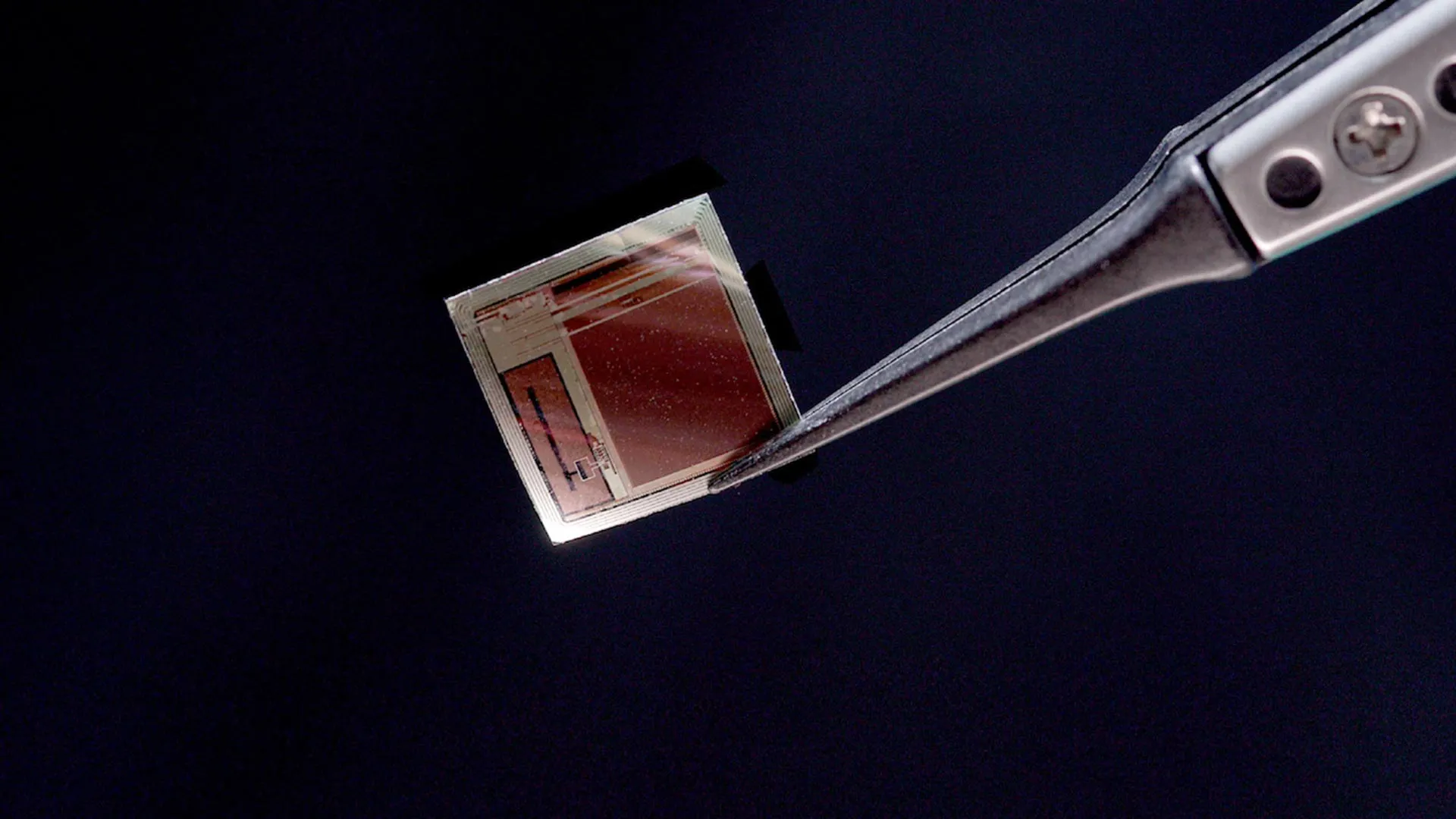
The remarkable promise of BISC stems from its exceptionally small form factor combined with its unparalleled data transmission capabilities. This groundbreaking device is the product of a synergistic collaboration involving leading institutions: Columbia University, NewYork-Presbyterian Hospital, Stanford University, and the University of Pennsylvania. At its heart is a single, ultra-thin silicon chip that establishes a wireless, high-bandwidth link between the intricate neural networks of the brain and external computing systems.
The detailed architecture of BISC is meticulously outlined in a study published on December 8th in the prestigious journal Nature Electronics. The system comprises three key components: the chip-based implant, a discreet wearable "relay station," and the sophisticated software platform that orchestrates their operation. Ken Shepard, the Lau Family Professor of Electrical Engineering, professor of biomedical engineering, and professor of neurological sciences at Columbia University, who spearheaded the engineering efforts as a senior author, highlights the stark contrast between BISC and existing technologies. "Most implantable systems are built around a canister of electronics that occupies enormous volumes of space inside the body," Shepard explains. "Our implant is a single integrated circuit chip that is so thin that it can slide into the space between the brain and the skull, resting on the brain like a piece of wet tissue paper." This ingenious design minimizes invasiveness, reducing surgical complexity and potential tissue damage.
Shepard collaborated closely with Andreas S. Tolias, PhD, a senior and co-corresponding author and professor at the Byers Eye Institute at Stanford University and co-founding director of the Enigma Project. Tolias’s extensive expertise in training artificial intelligence (AI) systems on vast datasets of neural recordings, including those generated by BISC, proved instrumental in evaluating the implant’s ability to accurately decode brain activity. "BISC turns the cortical surface into an effective portal, delivering high-bandwidth, minimally invasive read-write communication with AI and external devices," Tolias states. "Its single-chip scalability paves the way for adaptive neuroprosthetics and brain-AI interfaces to treat many neuropsychiatric disorders, such as epilepsy." This statement underscores the transformative potential of BISC in addressing a wide spectrum of neurological and psychiatric conditions.
Dr. Brett Youngerman, an assistant professor of neurological surgery at Columbia University and a neurosurgeon at NewYork-Presbyterian/Columbia University Irving Medical Center, served as the project’s primary clinical collaborator. He emphasizes the device’s revolutionary potential: "This high-resolution, high-data-throughput device has the potential to revolutionize the management of neurological conditions from epilepsy to paralysis." Youngerman, along with Shepard and Dr. Catherine Schevon, an epilepsy neurologist at NewYork-Presbyterian/Columbia, has already secured a National Institutes of Health grant to investigate BISC’s application in treating drug-resistant epilepsy. "The key to effective brain-computer interface devices is to maximize the information flow to and from the brain, while making the device as minimally invasive in its surgical implantation as possible. BISC surpasses previous technology on both fronts," Youngerman asserts, underscoring the dual advantages of high bandwidth and minimal invasiveness.
Shepard further elaborates on the technological advancements driving BISC: "Semiconductor technology has made this possible, allowing the computing power of room-sized computers to now fit in your pocket. We are now doing the same for medical implantables, allowing complex electronics to exist in the body while taking up almost no space." This analogy effectively conveys the profound miniaturization achieved by BISC, bringing the power of advanced computing to the microscopic scale within the brain.
Next-Generation BCI Engineering: A Leap in Design and Functionality
The fundamental principle behind BCIs is their ability to interface with the intricate electrical signals that neurons use for communication. Conventional medical-grade BCIs typically necessitate the integration of multiple discrete microelectronic components, such as amplifiers, data converters, and radio transmitters. These components are often housed within a substantial implanted canister, requiring either the removal of a portion of the skull or placement in another bodily location, like the chest, with wires extending to the brain. This approach presents challenges in terms of invasiveness, surgical complexity, and potential for complications.
BISC represents a radical departure from this established design. The entire intricate system is consolidated onto a single complementary metal-oxide-semiconductor (CMOS) integrated circuit. This chip has been meticulously thinned to an astonishing 50 micrometers and occupies less than 1/1000th the volume of a conventional implant. With a total volume of approximately 3 cubic millimeters, the flexible chip possesses the remarkable ability to conform to the brain’s undulating surface. This micro-electrocorticography (μECoG) device boasts an impressive array of 65,536 electrodes, facilitating 1,024 recording channels and an equally significant 16,384 stimulation channels. Crucially, the chip’s fabrication utilizes established semiconductor industry manufacturing methods, making it amenable to large-scale, cost-effective production.
The integrated nature of the BISC chip is a testament to advanced engineering. It seamlessly incorporates a radio transceiver, a wireless power circuit, digital control electronics, power management modules, data converters, and the essential analog components required for both neural recording and stimulation. The external relay station serves as the crucial link, providing power and enabling high-speed data communication through a custom ultrawideband radio link capable of achieving a throughput of 100 megabits per second (Mbps). This data transfer rate is an astounding 100 times faster than any other wireless BCI currently available. Operating as a standard 802.11 WiFi device, the relay station effectively bridges the implant to any compatible computer.
BISC is not merely a hardware innovation; it also features its own dedicated instruction set and a comprehensive software environment, effectively creating a specialized computing system tailored for brain interfaces. The high-bandwidth recording capabilities demonstrated in this study are pivotal for processing neural signals using advanced machine-learning and deep-learning algorithms. These sophisticated algorithms can then interpret complex intentions, perceptual experiences, and nuanced brain states with unprecedented accuracy. "By integrating everything on one piece of silicon, we’ve shown how brain interfaces can become smaller, safer, and dramatically more powerful," Shepard concludes, emphasizing the multifaceted improvements offered by BISC.
Advanced Semiconductor Fabrication: The Foundation of Miniaturization
The remarkable miniaturization and functionality of the BISC implant are made possible by its fabrication using TSMC’s 0.13-μm Bipolar-CMOS-DMOS (BCD) technology. This cutting-edge fabrication method synergistically combines three distinct semiconductor technologies onto a single chip, enabling the creation of highly integrated mixed-signal integrated circuits (ICs). This advanced process allows for the efficient co-existence of digital logic (from CMOS), high-current and high-voltage analog functions (from bipolar and DMOS transistors), and robust power devices (from DMOS). Each of these capabilities is critical for the optimal performance of the BISC system.
Moving From the Lab Toward Clinical Use: Bridging the Gap to Real-World Application
The transition of BISC from the laboratory to practical clinical applications has been a key focus. Shepard’s team has forged a strong partnership with Dr. Youngerman at NewYork-Presbyterian/Columbia University Irving Medical Center. Together, they have developed and refined surgical procedures for safely implanting the ultra-thin device in preclinical models, meticulously verifying its ability to produce high-quality, stable neural recordings. Initial short-term intraoperative studies in human patients are currently underway, marking a significant milestone in the development process.
"These initial studies give us invaluable data about how the device performs in a real surgical setting," Youngerman states. "The implants can be inserted through a minimally invasive incision in the skull and slid directly onto the surface of the brain in the subdural space. The paper-thin form factor and lack of brain-penetrating electrodes or wires tethering the implant to the skull minimize tissue reactivity and signal degradation over time." This description highlights the surgical advantages and long-term stability advantages of BISC.
Extensive preclinical research, focusing on the motor and visual cortices, has been conducted in collaboration with Dr. Tolias and Bijan Pesaran, a professor of neurosurgery at the University of Pennsylvania. Both are widely recognized leaders in the fields of computational and systems neuroscience, contributing their profound expertise to the project. "The extreme miniaturization by BISC is very exciting as a platform for new generations of implantable technologies that also interface with the brain with other modalities such as light and sound," Pesaran notes, envisioning future integrations beyond electrical signaling.
The development of BISC was generously supported by the Neural Engineering System Design program of the Defense Advanced Research Projects Agency (DARPA). The project draws upon Columbia University’s deep-seated expertise in microelectronics, the advanced neuroscience programs at Stanford and Penn, and the world-class surgical capabilities of NewYork-Presbyterian/Columbia University Irving Medical Center, creating a potent interdisciplinary synergy.
Commercial Development and Future AI Integration: Charting the Path Forward
To accelerate the technology’s path toward widespread practical use, researchers at Columbia and Stanford have established Kampto Neurotech. This startup was founded by Dr. Nanyu Zeng, an alumnus of Columbia’s electrical engineering program and one of the project’s lead engineers. Kampto Neurotech is currently focused on producing research-ready versions of the BISC chip and actively seeking funding to prepare the system for deployment in human patients. "This is a fundamentally different way of building BCI devices," Zeng asserts. "In this way, BISC has technological capabilities that exceed those of competing devices by many orders of magnitude."
As the field of artificial intelligence continues its rapid advancement, BCIs are increasingly recognized for their dual potential: restoring lost abilities in individuals with neurological disorders and enabling future enhancements to normal human function through direct brain-to-computer communication. "By combining ultra-high resolution neural recording with fully wireless operation, and pairing that with advanced decoding and stimulation algorithms, we are moving toward a future where the brain and AI systems can interact seamlessly — not just for research, but for human benefit," Shepard concludes. "This could change how we treat brain disorders, how we interface with machines, and ultimately how humans engage with AI." This visionary statement encapsulates the profound societal implications and transformative potential of BISC, heralding a new era of human-machine symbiosis and advanced neurological care.