Imroatul Nasiyah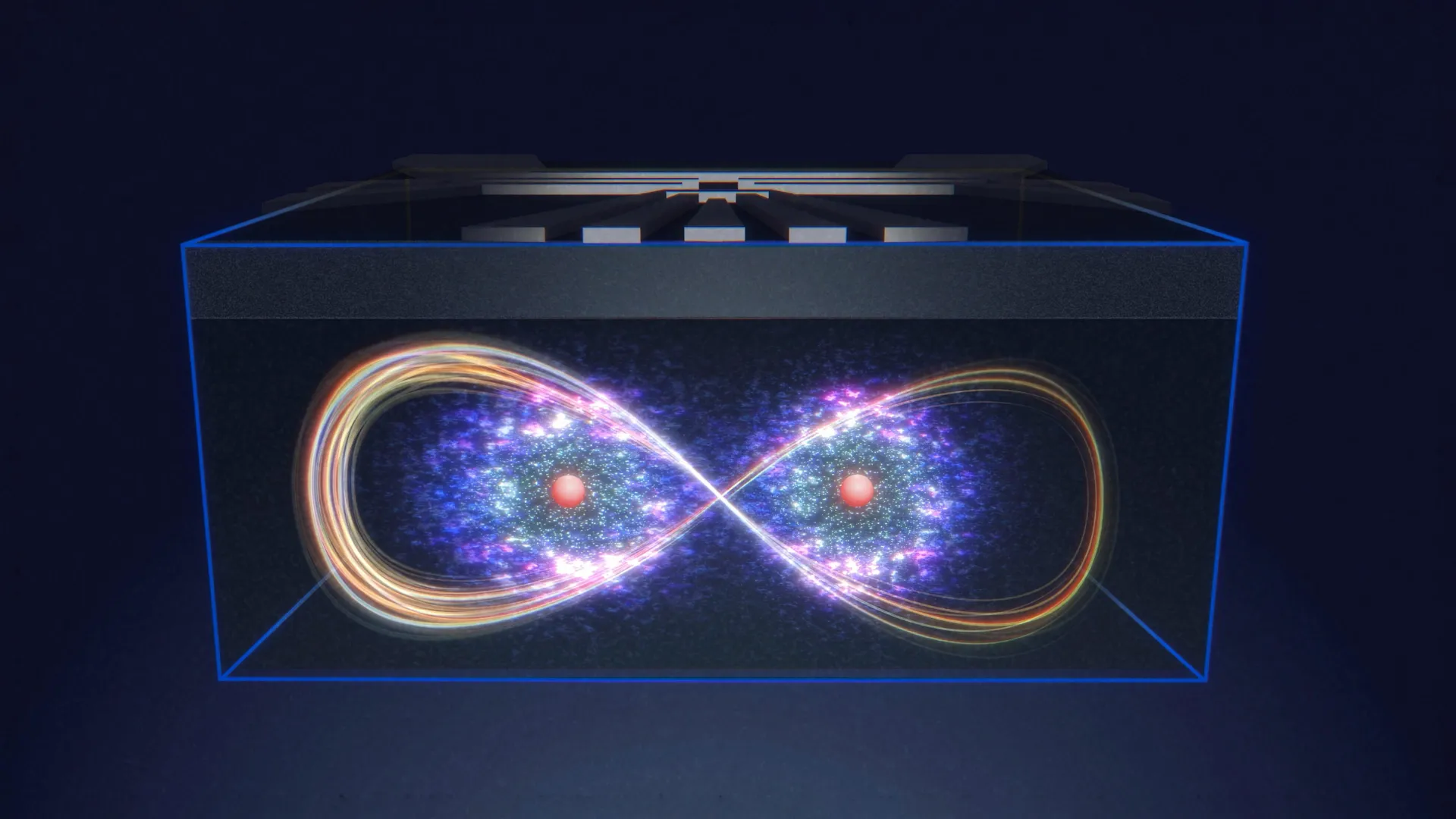
The groundbreaking research, published on September 18th in the prestigious journal Science, marks a pivotal step towards the realization of large-scale quantum computers, a pursuit that stands as one of the most exhilarating scientific and technological challenges of the 21st century. Dr. Holly Stemp, the lead author of the study, emphasized the transformative implications of this achievement, stating that it unlocks the potential to construct the future microchips essential for quantum computing using existing and widely adopted technology and manufacturing processes. "We succeeded in making the cleanest, most isolated quantum objects talk to each other, at the scale at which standard silicon electronic devices are currently fabricated," she explained, highlighting the alignment of quantum innovation with established semiconductor manufacturing.
The inherent challenge in quantum computing hardware development lies in a delicate balancing act: the need to rigorously shield delicate quantum computing elements from external interference and noise, while simultaneously facilitating their interaction to perform complex computations. This fundamental dichotomy has led to a diverse landscape of hardware approaches vying for dominance in the race to build the first operational quantum computer. Some platforms excel at executing rapid operations but are susceptible to noise, while others offer superior noise immunity but present significant hurdles in terms of operational control and scalability.
The UNSW team has strategically focused on a platform that, until this breakthrough, was largely categorized within the latter group – robust against noise but challenging to interconnect. Their approach involves encoding quantum information within the nuclear spin of phosphorus atoms, meticulously implanted within a silicon chip. Scientia Professor Andrea Morello of the UNSW School of Electrical Engineering & Telecommunications elaborated on the intrinsic advantages of this method: "The spin of an atomic nucleus is the cleanest, most isolated quantum object one can find in the solid state."
Professor Morello further highlighted the extensive groundwork laid by his group over the past 15 years, which has propelled this technology into a serious contender in the quantum computing race. "We already demonstrated that we could hold quantum information for over 30 seconds – an eternity, in the quantum world – and perform quantum logic operations with less than 1% errors," he stated, underscoring their previous achievements in silicon-based quantum information processing. He acknowledged, however, that this remarkable isolation, while beneficial for data integrity, presented a significant obstacle to interconnecting multiple atomic nuclei for large-scale processors.
Prior to this research, the only known method for operating multiple atomic nuclei involved placing them in extremely close proximity within a solid material and having them share a single electron. This shared electron, a fundamental particle in physics, possesses the quantum mechanical ability to "spread out" in space, enabling it to interact with multiple atomic nuclei simultaneously. Dr. Stemp, who conducted this research at UNSW and is now a postdoctoral researcher at MIT, explained this phenomenon: "Most people think of an electron as the tiniest subatomic particle, but quantum physics tells us that it has the ability to ‘spread out’ in space, so that it can interact with multiple atomic nuclei."
However, this shared electron approach has inherent limitations. The range over which an electron can spread is finite, and as more nuclei are added to the same electron, individual control over each nucleus becomes increasingly difficult, posing a significant challenge for scaling.
Making Atomic Nuclei Talk Through Electronic ‘Telephones’
To illustrate the profound shift brought about by their breakthrough, Dr. Stemp employed a compelling metaphor: "By way of metaphor, one could say that, until now, nuclei were like people placed in a sound-proof room. They can talk to each other as long as they are all in the same room, and the conversations are really clear. But they can’t hear anything from the outside, and there’s only so many people who can fit inside the room. This mode of conversation doesn’t ‘scale’."
The new research fundamentally alters this paradigm, akin to equipping these individuals with telephones. "With this breakthrough, it’s as if we gave people telephones to communicate to other rooms," Dr. Stemp continued. "All the rooms are still nice and quiet on the inside, but now we can have conversations between many more people, even if they are far away."
These metaphorical "telephones" are, in fact, electrons, but utilized in a novel way. Mark van Blankenstein, another key author on the paper, provided a more technical explanation of the underlying quantum mechanics: "By their ability to spread out in space, two electrons can ‘touch’ each other at quite some distance. And if each electron is directly coupled to an atomic nucleus, the nuclei can communicate through that." This mechanism allows for the indirect interaction of nuclei, mediated by the quantum properties of electrons.
The researchers meticulously detailed the distances involved in their experiments. "The distance between our nuclei was about 20 nanometers – one thousandth of the width of a human hair," Dr. Stemp revealed. She then provided a striking analogy to contextualize this microscopic distance: "That doesn’t sound like much, but consider this: if we scaled each nucleus to the size of a person, the distance between the nuclei would be about the same as that between Sydney and Boston!"
This scale is profoundly significant because 20 nanometers is precisely the dimension at which modern silicon computer chips are routinely manufactured for use in personal computers and mobile phones. Dr. Stemp emphasized this critical point: "You have billions of silicon transistors in your pocket or in your bag right now, each one about 20 nanometers in size. This is our real technological breakthrough: getting our cleanest and most isolated quantum objects talking to each other at the same scale as existing electronic devices. This means we can adapt the manufacturing processes developed by the trillion-dollar semiconductor industry, to the construction of quantum computers based on the spins of atomic nuclei." This integration with existing semiconductor infrastructure is a major advantage, promising a more direct path to scalable quantum computing.
A Scalable Way Forward
Despite the inherently exotic nature of quantum physics experiments, the researchers stressed that their devices remain fundamentally compatible with the established methods of building all current computer chips. The precise implantation of phosphorus atoms into the ultra-pure silicon slab was a collaborative effort, with Professor David Jamieson’s team at the University of Melbourne responsible for the atomic implantation and Professor Kohei Itoh at Keio University in Japan supplying the critical silicon material.
By circumventing the previous necessity for atomic nuclei to be tethered to the same electron, the UNSW team has effectively dismantled the most significant impediment to the large-scale adoption of silicon quantum computers based on atomic nuclei. Professor Morello expressed optimism about the future scalability of their approach: "Our method is remarkably robust and scalable. Here we just used two electrons, but in the future we can even add more electrons, and force them in an elongated shape, to spread out the nuclei even further."
He further elaborated on the advantages of using electrons as intermediaries: "Electrons are easy to move around and to ‘massage’ into shape, which means the interactions can be switched on and off quickly and precisely. That’s exactly what is needed for a scalable quantum computer." This ability to precisely control and manipulate electron interactions opens up a clear and promising pathway for building complex, interconnected quantum processors. The research represents a significant leap forward, bridging the gap between fundamental quantum science and practical, scalable quantum computing technology.